



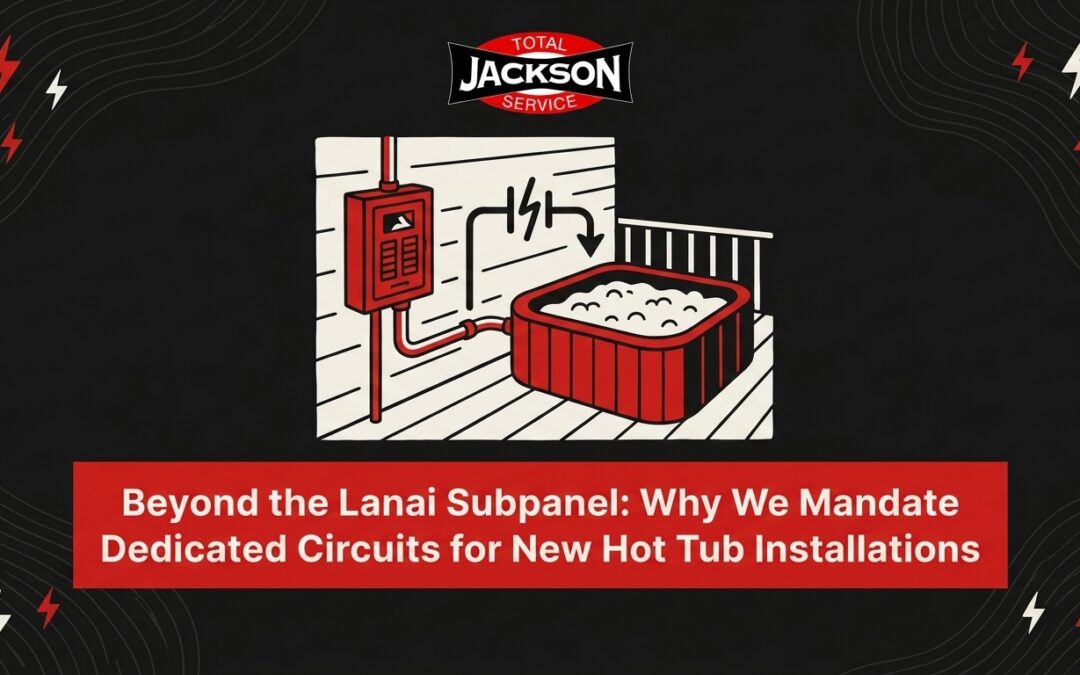
Planning for Fall: The Hidden Complexity of Hot Tub Wiring
You have the perfect spot picked out on the patio, and you are ready to relax in warm water as the autumn evenings finally cool down. But when the installation day arrives, you hit a frustrating roadblock. Your installer looks at your existing outdoor power setup and delivers the bad news: you cannot simply plug your new spa into the existing patio wiring. If you are wondering why we mandate dedicated circuits for new hot tub installations, you are not alone. Many homeowners assume that an existing outdoor subpanel has plenty of room to handle one more appliance. However, the reality of modern spa electrical requirements is far more complex.
As part of your September pre-fall outdoor prep, you might be tempted to look for a quick electrical fix to get the water heating up faster. We understand the frustration, but bypassing proper electrical protocols puts your entire property at risk. When you call on professionals for electrical services in Southwest Florida, our primary job is to protect your home from catastrophic failures. Mandating a brand new, dedicated electrical run straight from your main breaker panel is never about upselling a service. It is a strict safety requirement designed to prevent overloaded wires, melted insulation, and electrical fires. Let us look at exactly why your existing lanai subpanel simply cannot handle the massive power draw of a modern hot tub.
The Anatomy of a Dedicated Spa Circuit
To understand why your current outdoor wiring is insufficient, you first need to understand what a dedicated circuit actually does. A dedicated circuit is an electrical line that serves one single appliance and nothing else. It has its own dedicated breaker switch inside your main electrical panel, and the wiring runs uninterrupted from that breaker directly to the appliance. This ensures that the appliance has exclusive access to the power it needs, without competing with lights, outlets, or other heavy equipment.
Modern hot tubs are incredibly power-hungry machines. They require a 240-volt, 50-amp or even 60-amp circuit to function properly. This massive power draw is necessary because a hot tub often runs multiple high-demand components at the exact same time. When you turn on the jets, the heavy-duty water pumps kick into high gear. Simultaneously, the electric heating element is working hard to maintain the water temperature. If these components do not have a robust, uninterrupted power supply, the system will fail.
| Circuit Type | Typical Amperage | Voltage | Shared Appliances | Safety Risk for Spas |
|---|---|---|---|---|
| Standard Lanai Outlet | 15 to 20 Amps | 120V | String lights, chargers, fans | Extreme (Immediate overload) |
| Outdoor Subpanel | 30 to 50 Amps (Total) | 120V / 240V | Pool pumps, outdoor kitchens | High (Frequent nuisance tripping) |
| Dedicated Spa Circuit | 50 to 60 Amps | 240V | None (Hot tub only) | None (Safest installation) |
Contrast this intense power requirement with the typical setup found in most residential backyards. A shared outdoor subpanel is usually designed to handle a specific set of existing loads. Evaluating your home’s total electrical panel capacity is the crucial first step in any safe installation. If we simply attach a 50-amp hot tub to a subpanel that is already running your pool pump and outdoor kitchen, the total electrical demand will immediately exceed what the panel and its feeder wires were built to handle. This is why licensed electrical requirements and National Electrical Code (NEC) spa mandates dictate a completely separate, dedicated power source.
The Dangers of Piggybacking on Lanai Subpanels
The Problem: Many homes feature beautifully designed outdoor living spaces powered by a single subpanel. These subpanels are incredibly convenient for running ceiling fans, landscape lighting, and basic pool equipment. However, they are almost always maxed out by their current electrical loads. When a homeowner attempts to piggyback a new, high-draw hot tub onto these existing Naples lanai and pool cage setups, the electrical infrastructure is pushed far beyond its physical limits.
The Cause: Electricity generates heat as it travels through wires. Wires are sized specifically to handle a maximum amount of current. When you force 50 amps of hot tub power through a subpanel and feeder wires only rated for 30 amps of total capacity, the wires physically overheat. The protective plastic insulation surrounding the copper wiring begins to melt away. Once the insulation degrades, the exposed wires can easily arc or spark inside the panel box, creating a severe hazard.
The Solution: Installing a completely independent circuit removes this danger entirely. Just last fall, we saw firsthand what happens when outdoor electrical infrastructure is pushed too far. A local RV resort experienced sudden, severe issues with an outdoor electric pedestal failing under heavy use. We dispatched our technician, Jeff, within the hour to diagnose the overloaded system, repair the damaged components, and safely restore power. When you piggyback a massive appliance onto a residential subpanel, you risk exactly this kind of sudden, dangerous failure.
Here is what happens when outdoor panels are overloaded:
- Nuisance Tripping: This is the best-case scenario. The breaker recognizes the overload and shuts off the power constantly, leaving your hot tub cold and unusable.
- Flickering Outdoor Lights: As the spa heater kicks on, it starves the rest of the subpanel of power, causing lights to dim or flicker.
- Melted Components: The excess heat literally melts the breaker switches and the bus bars inside the panel.
- Electrical Fires: This is the worst-case reality. Overheated wires with degraded insulation will eventually catch fire, threatening your entire home.
If your current outdoor electrical setup is aging or undersized, you may need to consider electrical panel upgrades before bringing a new hot tub home. Stressed panels can fail violently when pushed beyond their limits, making dedicated wiring the only safe path forward.
Decoding NEC Article 680: The Law of Water and Electricity
The requirement for a dedicated circuit is not an arbitrary rule invented by local contractors. It is a strict federal safety standard. The National Electrical Code (NEC) is the benchmark for safe electrical design, installation, and inspection to protect people and property from electrical hazards. Specifically, NEC Article 680 governs the installation of swimming pools, fountains, and similar installations, including residential hot tubs.
Under these licensed electrical requirements and National Electrical Code (NEC) spa mandates, professionals cannot legally or ethically bypass the rules. One of the most prominent mandates is the “5-foot rule.” This rule states that a hot tub must have an emergency disconnect switch installed in a location that is readily accessible and within sight of the spa. However, this switch must be located at least 5 feet away from the water’s edge. The logic here is simple but life-saving: you must be able to cut the power quickly in an emergency, but the switch must be far enough away that a person cannot touch it while they are physically sitting in the water.
Why GFCI Breakers are Non-Negotiable
Another critical component of NEC Article 680 is the strict requirement for Ground-Fault Circuit Interrupter (GFCI) protection. A GFCI breaker is designed to detect microscopic current leaks. If the breaker senses that even a tiny fraction of electrical current is escaping its intended path—perhaps traveling through the water or wet concrete—it cuts the power instantly, usually within milliseconds.
Sharing a GFCI circuit with other outdoor appliances is a recipe for disaster. Different appliances have different electrical signatures, and when they share a single GFCI breaker, they create dangerous electrical interference. This interference can cause the breaker to trip constantly, or worse, cause it to fail completely when a real ground fault occurs. A dedicated GFCI breaker ensures that the safety mechanism is monitoring the hot tub, and only the hot tub, with perfect accuracy.

Environmental Hazards: Grounding in Tropical Weather
When you mix water, electricity, and the intense climate of Southwest Florida, the margin for error drops to zero. Environmental factors dramatically increase the risk of electrical shock around outdoor water features. Naples experiences intense tropical humidity, frequent torrential thunderstorms, and some of the highest lightning strike densities in the country. These specific weather conditions make proper outdoor GFCI protection and strict grounding absolutely critical compared to installations in dry, mild climates.
- Tropical Humidity: Constant moisture in the air can infiltrate poorly sealed outdoor subpanels, causing rapid corrosion on shared breaker switches and bus bars.
- Frequent Thunderstorms: Heavy rain creates standing water around your patio. If a shared circuit has a minor fault, that standing water can become electrified, creating a severe shock hazard for anyone walking barefoot nearby.
- Lightning Strikes: Dense lightning activity can cause massive power surges. A dedicated circuit with proper surge protection isolates your expensive hot tub from the rest of your home’s wiring.
Proper bonding and grounding are what protect you against stray voltage in these extreme conditions. Grounding provides a safe, direct path for excess electricity to empty into the earth rather than traveling through a person. Older, shared subpanels often lack the robust, heavy-gauge grounding wires necessary to safely manage the massive power of a modern spa during a severe storm. If your home’s grounding system is outdated, securing a professional panel upgrade service in Cape Coral or Naples is an essential step before installation.
Professional Ethics: Why We Refuse to Cut Corners
We know that hot tub installations are exciting, and waiting for proper electrical work can feel like a delay. This often leads homeowners to face a dangerous temptation: hiring an unlicensed handyman who promises a cheaper, faster installation by sharing an existing circuit. These individuals might tell you that piggybacking off your Naples lanai and pool cage setups is perfectly fine. It is not.
Agreeing to a “quick fix” makes the person doing the work liable, but it puts your family in immediate, physical danger. Jackson Total Service prioritizes strict code compliance and long-term safety over quick fixes. We firmly believe that true professionals will walk away from a job rather than compromise on electrical safety. Our mandate for dedicated circuits is not a suggestion; it is the ultimate form of consumer protection.
When you hire a licensed professional, you are investing in your home’s long-term infrastructure. A properly installed, dedicated circuit ensures that your hot tub will run efficiently for years without damaging your home’s main panel or risking an electrical fire. By adhering strictly to pool and spa wiring safety standards, we ensure that your backyard remains a place of relaxation, not a source of constant anxiety.
Protecting Your Home’s Infrastructure for the Long Haul
At the end of the day, a dedicated circuit protects much more than just your new hot tub. It protects your main electrical panel, your home’s wiring infrastructure, and, most importantly, the people enjoying the water. Attempting to force a massive electrical load onto a shared patio subpanel is a gamble with incredibly high stakes.
Your September pre-fall outdoor prep should be focused on getting your backyard ready for comfortable, relaxing evenings. It should never involve worrying about whether your electrical panel is going to overheat and spark. Before you purchase any heavy-draw outdoor appliances, we highly encourage a comprehensive evaluation of your home’s total electrical capacity. By planning ahead and insisting on professional, code-compliant installations, you guarantee that your new spa will be a safe, reliable retreat for many seasons to come.
Frequently Asked Questions
Does a hot tub need a dedicated circuit?
Yes, modern hot tubs absolutely require a dedicated circuit to operate safely. Because they draw a massive amount of continuous power to run heaters and jet pumps simultaneously, sharing a circuit with other appliances will cause immediate overloads. A dedicated line ensures the spa has exclusive access to the power it needs without stressing your home’s electrical system.
Can I run a hot tub off an existing subpanel?
In almost all cases, you cannot run a new hot tub off an existing lanai or pool subpanel. These shared panels are usually already maxed out by existing loads like pool pumps, outdoor lighting, and ceiling fans. Adding a 50-amp hot tub to an existing subpanel will overheat the wiring, melt insulation, and create a severe fire hazard.
What electrical is required for a hot tub?
Most standard hot tubs require a 240-volt, 50-amp or 60-amp dedicated electrical circuit. This setup must include a dedicated Ground-Fault Circuit Interrupter (GFCI) breaker installed in your main electrical panel. Additionally, the wiring must be properly sized copper, usually run underground in protective PVC conduit.
Where does a hot tub disconnect need to be located?
According to National Electrical Code (NEC) Article 680, the emergency disconnect switch must be readily accessible and within sight of the hot tub. However, it must be installed at least 5 feet away from the inside wall of the spa. This ensures the power can be cut quickly in an emergency, but prevents anyone from touching the switch while inside the water.
Why does my outdoor GFCI keep tripping after a heavy storm?
Outdoor GFCI breakers are highly sensitive to moisture and microscopic electrical leaks. After a heavy storm, high humidity or standing water can infiltrate outdoor outlets or poorly sealed junction boxes, causing a tiny amount of current to escape its path. The GFCI breaker detects this instantly and trips the power to prevent a shock hazard.