


The Hidden Cost of Coastal Aesthetics: Why Your Yard Lights Keep Failing
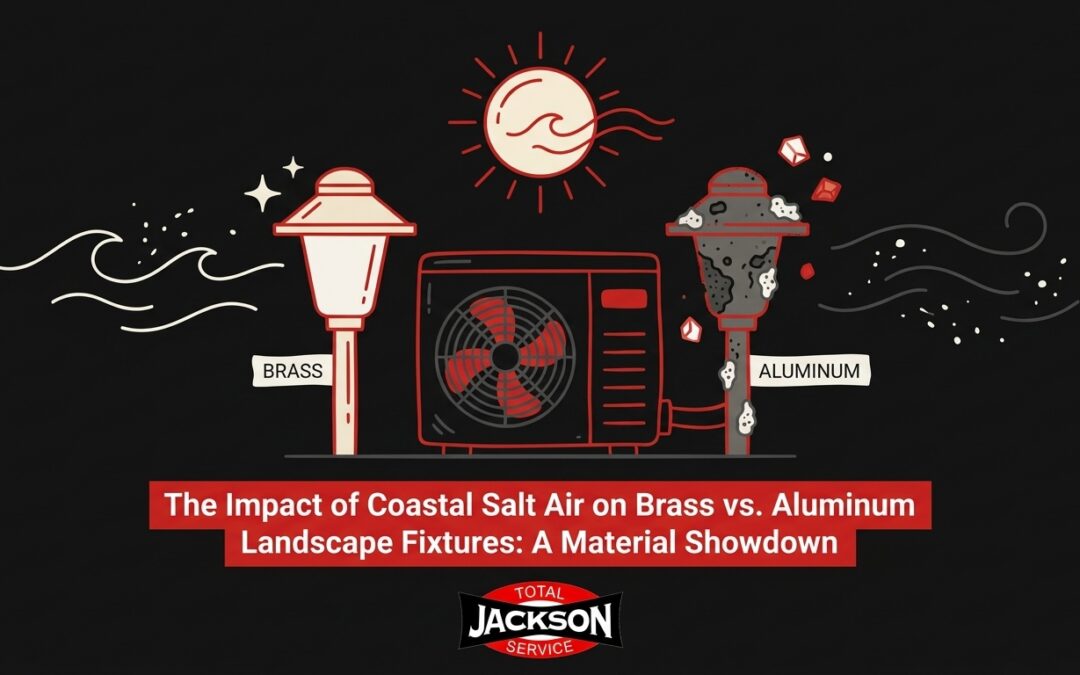
A common misconception among homeowners is that any fixture labeled “outdoor-rated” can survive the elements, but understanding the impact of coastal salt air on brass vs. aluminum landscape fixtures tells a very different story. You install beautiful yard lights, only to discover them pitted, flaking, and completely failing after just a few seasons. This cycle is incredibly frustrating for homeowners who expect their outdoor investments to last. It forces a tough decision: do you continue the cycle of replacing cheap fixtures every couple of years, or do you invest in materials specifically engineered to survive the Gulf Coast climate?
In beachfront Naples communities like Port Royal and Pelican Bay, the combination of high humidity and aerosolized salt from the Gulf of Mexico creates a uniquely corrosive environment within 500 yards of the shoreline that destroys standard metals fast. If you want to stop replacing your yard lights, you have to start with the right materials. To understand how material choice fits into a broader outdoor strategy, explore our guide to landscape lighting technology and see how professional lighting installation protects your investment.
The Chemical Reality of Gulf Coast Salt Air on Standard Metals
What makes standard metals degrade so rapidly near the water? The answer lies in the specific chemistry of the coastal environment. Material choice is not merely an aesthetic preference; it is a structural necessity for your outdoor electrical systems. When you place standard A360 die-cast aluminum metals in beachfront Naples communities, you are subjecting them to an invisible, ongoing chemical attack.
Aerosolized Chlorides and Galvanic Corrosion
The role of salt spray: Aerosolized chlorides—commonly known as salt air—are tiny salt particles carried inland by ocean breezes. When these particles settle on your landscape fixtures, they attract and hold moisture from the humid air. This constant layer of salty moisture acts as a highly effective electrolyte.
The galvanic process: Because salt water conducts electricity so well, especially when Naples’ relative humidity consistently exceeds 75%, it accelerates a process called galvanic corrosion. This is a chemical reaction that occurs when dissimilar metals come into contact in the presence of an electrolyte. It rapidly transfers electrons away from the weaker metal, eating away at materials that are not specifically alloyed for marine environments. For standard metals, this means rapid, irreversible structural degradation.
The Role of Intense UV Rays and High Humidity
Breaking down the defenses: The Florida sun is notoriously harsh. Intense ultraviolet (UV) rays constantly bombard your outdoor fixtures, breaking down the molecular bonds in standard paints, clear coats, and sealants. Once the UV rays create microscopic cracks in these protective coatings, the high humidity takes over.
Trapping the moisture: The thick, humid air penetrates these microscopic cracks, carrying aerosolized salt right to the bare metal underneath. Because the humidity is trapped beneath the compromised coating, it cannot evaporate properly. This trapped saltwater speeds up the oxidation process exponentially, eating the metal from the inside out while the exterior coating slowly bubbles and peels away.
Why Standard Aluminum Fixtures Fail Prematurely
At Jackson Total Service, our technicians have extensive hands-on experience pulling out heavily corroded aluminum fixtures from beachfront properties after just 24 to 36 months of exposure. While aluminum is lightweight and initially cost-effective, it is highly susceptible to the specific environmental stressors found along the Gulf Coast. Many homeowners only notice this extensive damage during the September 2026 early fall transition and post-summer storm season, right when they are preparing their yards for cooler weather.
The Breakdown of Protective Powder Coatings
Powder coating is often touted as a durable finish for aluminum, but in a coastal environment, it acts only as a temporary shield. The process of failure is predictable and rapid:
- Micro-abrasions: Wind-blown sand and landscaping tools create tiny, almost invisible scratches in the powder coat.
- Salt intrusion: Once the powder coat is scratched or UV-degraded, salt air enters the breach and reaches the raw aluminum.
- Oxidation and expansion: The raw aluminum oxidizes upon contact with the salt moisture. As aluminum oxidizes, it physically expands.
- Flaking and peeling: This expansion pushes upward against the powder coating, causing it to bubble, flake, and ultimately fall off in large chunks, leaving the fixture completely exposed.
Pitting and Structural Degradation
Once the bare aluminum is exposed to the elements, it does not just rust on the surface. It undergoes a destructive process known as pitting corrosion. Unlike surface rust on steel, pitting creates deep, localized cavities that bore directly into the body of the aluminum.
These deep cavities compromise the structural integrity of the fixture. More importantly, they create pathways for moisture to reach the internal electrical sockets and wiring. Once saltwater breaches the internal housing, electrical failure is inevitable. This is why standard 12-volt aluminum fixtures often short out entirely, requiring complete replacement rather than a simple bulb change.
The Solid Brass Advantage: Patina vs. Pitting
If standard aluminum cannot survive, what is the alternative? Marine-grade C36000 solid brass is the necessary standard for coastal environments. Its unique metallurgical properties make it uniquely suited to withstand the harsh realities of beachfront Naples communities. When you are highlighting royal palms with the right lighting, you need fixtures that will remain reliable and beautiful for years to come.
Copper and Zinc Alloys in Marine Environments
Solid brass is an alloy made primarily of copper and zinc. This specific composition prevents the deep cavity formation seen in aluminum. Because it is a dense, non-ferrous metal, brass remains structurally sound even under constant, daily exposure to aerosolized sea salt.
Unlike aluminum, which relies entirely on applied surface coatings (like paint or powder coat) for protection, brass is solid all the way through. There is no coating to scratch, bubble, or flake off. The metal itself is inherently resistant to the galvanic corrosion that destroys cheaper materials, making it a true long-term solution for beachfront properties.
Why Superficial Oxidation Protects the Fixture
The most fascinating characteristic of solid brass is how it reacts to the elements. Instead of degrading, brass undergoes a superficial oxidation process that actually forms a protective layer. This is known as a patina.
- The chemical shield: As the brass is exposed to salt air and moisture, the surface slowly darkens, turning a rich bronze or verdigris color.
- Self-healing properties: This “weathered” look is actually a chemical shield. The patina seals the microscopic pores of the metal, preventing further oxygen and salt from reaching the inner core.
- Long-term durability: Because the patina protects the metal underneath, the fixture never loses its structural integrity. It will not pit, it will not crumble, and it will keep your electrical connections safely sealed away from the humid coastal air.
Side-by-Side Material Showdown: Brass vs. Aluminum
When evaluating your landscape lighting options during the September 2026 early fall transition and post-summer storm season, a direct comparison clarifies exactly why material choice matters. While the initial investment differs, the long-term reality of maintaining outdoor electrical systems in a highly conductive environment strongly favors purpose-built materials. Keep in mind that proper material selection must always be paired with professional installation to ensure watertight electrical connections—always call a professional electrician for outdoor wiring.
| Feature | Standard Aluminum | Solid Brass |
|---|---|---|
| Corrosion Resistance | Low. Highly susceptible to deep pitting and structural breakdown in salt air. | Exceptional. Immune to pitting; thrives in humid, high-salt environments. |
| Finish Behavior | Powder coats bubble, flake, and peel as oxidation expands underneath. | Develops a natural patina that acts as a protective chemical shield. |
| Lifespan on the Coast | Short-term. Frequently requires complete replacement after 24 to 36 months. | Long-term. Designed to last for decades without structural failure. |
| Long-Term Value | Low. Constant replacement cycles and risk of electrical shorts. | High. One-time investment that outlasts multiple sets of aluminum fixtures. |

Timing Your Lighting Upgrades and Assessing Electrical Safety
High winds and severe weather routinely deposit heavy concentrations of salt spray far inland. This makes the early fall transition and post-summer storm season the most critical time to inspect your outdoor electrical systems. Saltwater intrusion can cause rapid, dangerous failures in compromised fixtures.
One local homeowner in the Moorings neighborhood experienced this firsthand during the fall when they noticed sparks coming from their 120-volt outdoor electrical panel on a Sunday, shortly after a late-summer Category 3 storm had passed through. They reached out for help, and our team immediately dispatched an electrician who arrived in less than an hour. The technician quickly diagnosed the storm-related electrical damage and completed the repairs efficiently, ensuring the home was safe. This highlights the importance of rapid, professional response when electrical issues arise after severe weather—never ignore sparking, buzzing, or failing fixtures. Rely on lighting experts in Fort Myers Beach to handle compromised wiring safely.
Assessing Post-Summer Storm Damage
After the heavy summer storms have passed, take time to carefully walk your property and inspect your outdoor electrical components. You are looking for the early warning signs of saltwater intrusion:
- Visual indicators: Look for bubbling paint, white chalky residue on aluminum stems, or fixtures that lean due to corroded stakes.
- Electrical symptoms: Take note of lights that flicker, bulbs that burn out unusually fast, or entire zones of lighting that have stopped working.
- Safety first: If you see exposed wires, heavily rusted junction boxes, or condensation inside the glass lenses, do not attempt to repair these compromised outdoor electrical connections yourself. Shut off the breaker and call a professional.
Upgrading Before the Entertaining Season
The transition into cooler weather is prime time for outdoor living in Florida. Replacing failed aluminum with solid brass ensures your yard is ready for guests and evening gatherings. Proactive replacement prevents the frustration of unexpected blackouts during holiday parties. By upgrading your materials now, you secure your home’s aesthetic and electrical safety long before the 2026 winter entertaining season begins.
Expert Answers on Coastal Landscape Lighting
Understanding the science of coastal lighting can save you significant time and frustration. Here are answers to the most common questions homeowners in beachfront Naples communities ask about protecting their outdoor investments.
Does aluminum corrode in salt air?
The short answer is yes, very quickly. Salt air acts as a highly conductive electrolyte that accelerates galvanic corrosion on standard aluminum. Once the protective clear coat or powder coating is breached by UV rays or minor scratches, the salt moisture reaches the raw metal. This causes the aluminum to oxidize, expand, and form deep pits that eventually destroy the structural integrity of the fixture.
What is the best material for coastal outdoor lighting?
Marine-grade C36000 solid brass is widely considered the superior choice. Because it is an alloy of copper and zinc, it does not suffer from the deep cavity pitting that destroys aluminum. Instead of breaking down in high humidity and salt spray, solid brass develops a natural patina on its surface. This patina actually seals the metal, protecting the internal electrical components from the harsh coastal environment for decades.
How long do aluminum landscape lights last near the beach?
A typical pattern we see is failure within 24 to 36 months. While aluminum fixtures might last for many years in dry, inland climates, the extreme conditions near the Gulf Coast drastically reduce their lifespan. Between the intense UV degradation of the powder coat and the relentless aerosolized salt spray, many homeowners find themselves replacing standard aluminum fixtures every two to three years as they short out or physically crumble.
Is brass or aluminum better for outdoor lighting?
For any property near the coast, brass is definitively better. Aluminum is lightweight and initially cheaper, making it acceptable for mild climates far from the ocean. However, brass provides unmatched durability, superior weight, and complete resistance to salt-induced structural failure. The upfront investment in brass pays off quickly when you eliminate the recurring costs of replacing corroded aluminum fixtures.
Why do my outdoor lights keep breaking or shorting out?
Continuous fixture failure is usually a symptom of poor material choice, not bad luck. If you are using standard metals near the beach, salt moisture is likely penetrating the compromised exterior and reaching the internal sockets. Once saltwater makes contact with the electrical wiring, it causes immediate shorts and bulb failures. Upgrading to solid brass fixtures with IP68-rated watertight, marine-grade seals is the only way to stop this cycle.
Can powder coating completely protect aluminum from salt spray?
No coating can offer permanent protection in a harsh marine environment. Powder coating is essentially a baked-on plastic layer; it looks great initially, but it is vulnerable to UV damage, weed-whacker strikes, and blowing sand. Once a microscopic crack forms, salt moisture gets trapped underneath the coating, causing the aluminum to corrode invisibly until the powder coat inevitably bubbles and flakes off in large sheets.
Secure Your Home’s Aesthetic with Coastal-Resilient Lighting
When you weigh the impact of coastal salt air on brass vs. aluminum landscape fixtures, the conclusion is clear: solid brass is the definitive standard for beachfront resilience. Surviving the harsh, humid coastal climate requires more than just standard outdoor ratings; it requires purpose-built materials and expert installation to keep moisture out of your electrical systems. Stop letting the Gulf Coast weather dictate the beauty of your yard. If you are tired of replacing corroded fixtures in your beachfront Naples community, schedule an inspection with a professional to explore durable, long-lasting C36000 solid brass upgrades ahead of the 2026 winter entertaining season today.