



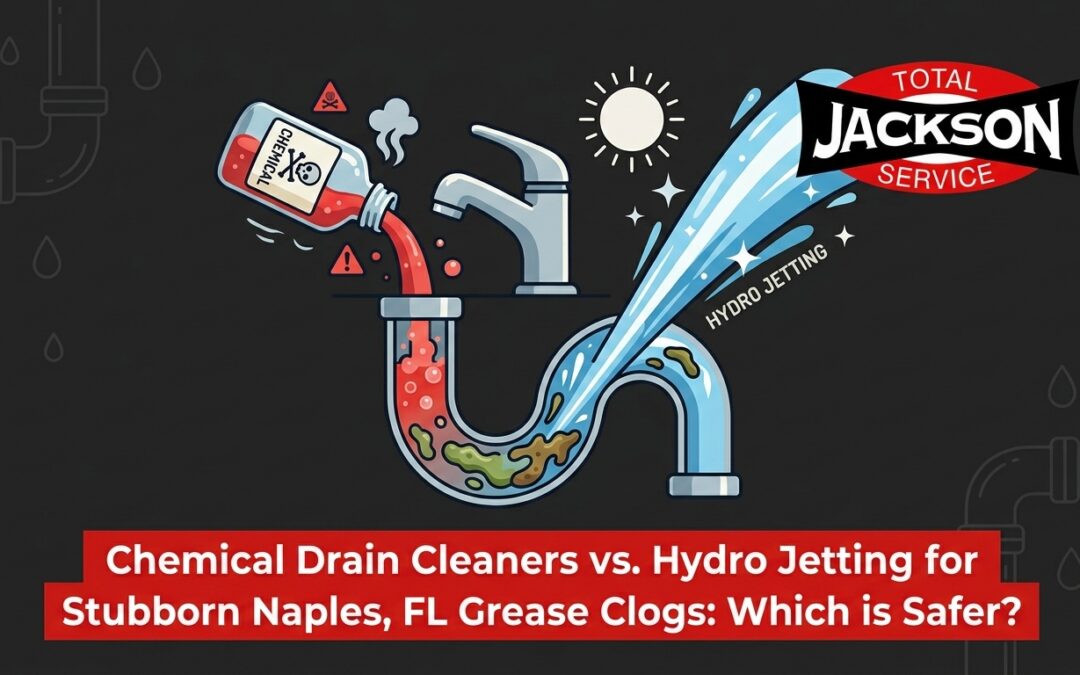
Myth: A Quick Bottle of Drain Cleaner is the Safest Fix for a Slow Sink
Pouring a bottle of liquid drain cleaner down the sink seems like the easiest way to solve a slow drain. It is a common misconception that store-bought liquids can safely dissolve all blockages without any negative side effects. When looking at chemical drain cleaners vs. hydro jetting for stubborn Naples grease clogs, most homeowners do not realize that the chemical route is actually a gamble with their home’s plumbing. The concrete problem many households face is recurring kitchen sink grease backups, especially during the busy late-summer August transition when routines shift and kitchen usage spikes.
The decision point comes down to this: do you risk hidden pipe damage with harsh chemicals, or do you choose a professional mechanical clearing method? To understand the safest path forward, you can review this comprehensive Southwest Florida plumbing and home systems guide. The science behind how these two methods interact with your plumbing is vastly different, and understanding that difference is critical to protecting your home.
The Anatomy of a Late-Summer Grease Clog in Naples
To understand why chemical cleaners often fail, you first have to understand how a grease clog forms. Grease blockages tend to peak during specific times of the year, forming impenetrable walls inside the pipes that standard liquids simply cannot bypass.
Increased Household Usage and Food Waste
As the late-summer August back-to-school season arrives, household routines undergo a dramatic shift. Families spend more time cooking at home, meal prepping, and washing dishes. This increased household activity naturally leads to higher food waste entering the plumbing system. Many common culinary fats—such as bacon grease, butter, cooking oils, and even dairy products—masquerade as safe liquids when they are warm. They pour down the drain easily, giving the illusion that they have successfully washed away. If you find yourself repeatedly dealing with kitchen sink drain clogs, this seasonal shift in cooking habits is often the primary culprit.
Common hidden fats include:
- Cooking oils: Olive oil, canola oil, and vegetable oil coat the inside of pipes.
- Dairy products: Heavy cream, butter, and cheese sauces solidify rapidly.
- Meat drippings: Fats from ground beef, bacon, and sausage are the worst offenders for solid blockages.
- Salad dressings: Oil-based dressings create a sticky film that traps other food particles.
Why Grease Solidifies in Florida Plumbing
Even though Florida is known for its heat, the ambient temperature underground and within the walls of your home is significantly cooler than the hot water used to wash dishes. When liquid fats travel down the drain, they quickly cool and solidify against the interior walls of the pipes. Over time, this creates a “sticky trap” effect. As the grease hardens, it catches secondary debris like coffee grounds, food scraps, and soap scum.
This process slowly chokes the diameter of the pipe. When a homeowner attempts a partial clearing—such as poking a small hole through the grease with a wire hanger or pouring a mild chemical that only melts a tiny channel—the relief is strictly temporary. The thick wall of grease remains intact, meaning the pipe will inevitably back up again within weeks. Resolving this requires removing the entire buildup, not just treating the symptom.
The Hidden Danger of Exothermic Heat on Older PVC Piping
The fundamental problem with chemical drain cleaners is not just their toxicity; it is the extreme heat they generate. Relying on store-bought liquids introduces a severe scientific danger to your plumbing infrastructure.
Understanding Sodium Hydroxide Reactions
Most liquid plumbers and chemical drain cleaners rely on active ingredients like sodium hydroxide (lye) or sulfuric acid. When these chemicals meet the standing water and organic matter inside a clogged pipe, they trigger an exothermic reaction. In chemistry, an exothermic reaction is one that releases energy in the form of heat. This heat is entirely intentional—the manufacturers design the chemicals to boil the water inside the pipe in order to melt the grease and dissolve the blockage.
However, this heat is largely uncontrollable. The chemical reaction can easily generate temperatures exceeding 200 degrees Fahrenheit. Because the pipe is clogged, this boiling, caustic sludge does not flow away. It sits stationary, concentrating intense thermal stress on one specific section of the pipe, usually at a joint or a bend where the clog has settled.
The 140-Degree Safe Operating Limit
The Problem: The intense heat generated by chemical cleaners is completely incompatible with standard residential plumbing materials. According to manufacturer specifications, standard PVC pipe has a maximum safe operating temperature of exactly 140 degrees Fahrenheit.
The Cause: When a chemical cleaner pushes the internal temperature past 200 degrees, the older PVC piping begins to soften. The extreme gap between the chemical’s heat output and the pipe’s thermal tolerance causes the plastic to expand unnaturally. The glue holding the pipe joints together begins to fail, and the structural integrity of the PVC is compromised.
The Solution: Avoiding chemical cleaners entirely prevents this thermal shock. When an older PVC pipe is exposed to this kind of heat repeatedly, it warps, melts, and eventually fails, turning a simple slow drain into a catastrophic hidden wall leak.
Why Aging Naples Plumbing Systems Are Highly Vulnerable
The scientific danger of exothermic heat is magnified when contextualized within the specific regional infrastructure of Southwest Florida. Many homes in this area were built decades ago and feature plumbing systems that are highly sensitive to sudden thermal stress.
The Legacy of Polybutylene and Early PVC
Aging Naples homes often feature older PVC or historical polybutylene pipes that have endured decades of extreme Florida humidity, high water tables, and subtle ground shifting. These environmental factors introduce micro-stresses to the plumbing infrastructure over time. Polybutylene, a gray plastic pipe widely used from the late 1970s through the mid-1990s, is particularly notorious for becoming brittle and degrading when exposed to harsh chemicals. Even early generations of standard PVC are less resilient than modern materials.
When you pour a 200-degree chemical reaction into older PVC piping that has already been weakened by decades of micro-stresses, the risk of a blowout is exceptionally high. A warped pipe joint inside a wall or under a concrete slab rapidly escalates from a slow drain to a severe structural issue. One local customer required general plumbing work over the summer after noticing issues with their aging system. A knowledgeable technician performed the necessary repairs and provided essential maintenance tips on how to care for older pipes without relying on harsh chemicals. This kind of professional maintenance advice is crucial for extending the life of historical plumbing materials.
If a pipe does fail due to chemical damage or age, knowing who to call is vital. You can rely on professional emergency plumbing repair in Naples to address hidden leaks before they cause widespread water damage to your drywall and flooring.
How Hydro Jetting Safely Scours Away Grease
Because chemical cleaners pose such a high risk to older PVC piping, professional mechanical clearing is the recommended alternative. Hydro jetting is a highly effective, safe method that removes the entire clog without generating dangerous heat.
Ambient-Temperature Pressurized Water
Hydro jetting is the use of controlled, ambient-temperature pressurized water to clean the interior of a plumbing system. By relying on ambient water temperature rather than the 200-degree heat of a chemical reaction, hydro jetting is fundamentally safer for aging pipes. The process is strictly a professional service, requiring specialized equipment and precise calibration.
The hydro jetting process involves specific, controlled steps:
- Video Inspection: A camera is routed into the pipe to assess the age, condition, and material of the plumbing, ensuring it can handle pressurized water.
- Pressure Calibration: The technician adjusts the PSI (pounds per square inch) of the hydro jetter to match the exact tolerance of the older PVC piping, ensuring the pressure is strong enough to clean but gentle enough to prevent damage.
- Mechanical Scouring: The specialized nozzle is inserted into the drain, using reverse-angled water jets to propel itself forward while blasting the walls clean.
- Final Flushing: The dislodged grease and debris are flushed safely into the municipal sewer system, leaving the pipe completely clear.
Mechanical Scouring vs. Chemical Burning
The true advantage of hydro jetting lies in its 360-degree cleaning nozzle. While chemical cleaners only burn a narrow channel through the bottom of a grease clog, hydro jetting mechanically scours the entire circumference of the pipe wall. The high-pressure water strips away the sticky residue that catches secondary debris, completely resetting the interior of the pipe to a like-new condition. This eliminates the “sticky trap” effect, providing a permanent solution to recurring clogs rather than a temporary fix.
Side-by-Side Comparison: Store-Bought Chemicals vs. Professional Hydro Jetting
When evaluating how to handle a stubborn grease clog, comparing the two methods directly highlights the severe drawbacks of relying on store-bought liquids.
| Feature | Store-Bought Chemical Cleaners | Professional Hydro Jetting |
|---|---|---|
| Temperature Impact | Creates exothermic heat exceeding 200°F. | Uses safe, ambient-temperature water. |
| Impact on Infrastructure | Warps and melts older PVC piping and joints. | Calibrated to be safe for aging pipes. |
| Clearing Effectiveness | Leaves a sticky grease residue behind. | Mechanically scours the entire grease wall. |
| Long-Term ROI | Requires repeat purchases and risks expensive repairs. | Provides a permanent, thorough clog solution. |

Protecting Your Home’s Long-Term Plumbing Infrastructure
Shifting the focus from a single slow drain to the overall health of your home’s plumbing is essential. Turning a simple drain clog into a massive pipe replacement job is a common, unfortunate consequence of chemical reliance. When you own a home with older PVC piping, proactive care is always more cost-effective than reactive damage control.
Why Quick Fixes Lead to Pipe Replacement Jobs
The financial and structural risks of hidden leaks caused by warped joints are substantial. Water leaking behind a wall or under a foundation can lead to mold growth, compromised drywall, and ruined flooring long before the homeowner notices a puddle. If a chemical application fails to clear a drain the first time, it is critical that you do not pour a second bottle down the sink. The chemicals will simply pool in the pipe, continuously eating away at the plastic and the glue.
With a 60-year family legacy in Southwest Florida, Jackson Total Service emphasizes a commitment to protecting your home’s long-term infrastructure rather than providing a quick, damaging fix. True plumbing care focuses on preserving the entire system. Rapid, professional response to major blockages or system failures prevents property damage. For example, during a severe winter cold spell, one local family found themselves without hot water for four days due to a malfunctioning water heater. Technicians expedited the service call, replaced the unit that same evening, and restored comfort with professional care. This same level of urgency and multi-trade expertise applies to major plumbing blockages. Having a trusted professional on hand ensures you can stop plumbing damage safely before it compromises your home.
Reassuring Solutions for Recurring Kitchen Backups
Dealing with a backed-up kitchen sink during the busy late-summer August weeks is incredibly frustrating, but the solution does not have to put your home at risk. The core message is simple: the exothermic heat from chemical cleaners severely damages older pipes, while hydro jetting cleans them safely and thoroughly. When looking at chemical drain cleaners vs. hydro jetting for stubborn Naples grease clogs, the mechanical approach is the only way to ensure your plumbing remains intact.
If your kitchen sink is draining slowly or completely blocked, do not reach for a bottle of liquid plumber. Instead, speak with a local expert who understands the unique vulnerabilities of Southwest Florida plumbing. Protect your home by scheduling regular drain maintenance and professional clearing to keep your pipes flowing smoothly without the risk of chemical damage.
Frequently Asked Questions
Do chemical drain cleaners damage PVC pipes?
Yes, chemical drain cleaners can severely damage PVC pipes. The chemicals create an exothermic reaction that can reach temperatures over 200 degrees Fahrenheit, which easily exceeds the 140-degree safe operating limit of standard PVC. This intense heat can warp the plastic, melt the glue at the joints, and lead to hidden leaks inside your walls.
Is hydro jetting safe for older plumbing?
Hydro jetting is extremely safe for older plumbing when performed by a trained professional. A technician will first inspect the pipes with a video camera to assess their condition, then calibrate the water pressure to a safe level. Because hydro jetting uses ambient-temperature water, it avoids the thermal shock that causes older pipes to crack or warp.
What is the best way to unclog a grease drain?
The best way to unclog a grease drain is through professional hydro jetting. While a mechanical snake can punch a small hole through the blockage, hydro jetting uses a 360-degree nozzle to scour the entire inner wall of the pipe. This completely removes the sticky grease residue and prevents the clog from reforming.
Why does my kitchen sink keep backing up with grease?
Your kitchen sink keeps backing up because liquid fats cool and solidify once they enter the underground plumbing. Over time, this hardened grease acts like a sticky trap, catching food particles and soap scum until the pipe is entirely choked off. If the pipe is only partially cleared, the remaining grease wall will quickly catch new debris and cause another backup.
Can the exothermic heat from liquid plumbers melt polybutylene pipes?
Yes, the heat from liquid plumbers is highly destructive to polybutylene pipes. Polybutylene is already prone to becoming brittle and degrading over time due to environmental factors and water chemistry. Introducing caustic chemicals and 200-degree heat will rapidly accelerate this degradation, often causing the pipe to rupture or the fittings to fail completely.