



Losing Power During the Fall Transition: Where to Start
Deciphering the difference between a tripped breaker and a blown fuse in vintage homes is a critical first step when your electrical system suddenly goes dark. At Jackson Total Service, our team frequently receives emergency calls during the September pre-heating season transition when a home’s power unexpectedly fails. The AC shuts down unexpectedly, or your early heating prep grinds to a halt, leaving your home uncomfortable and your appliances completely unresponsive. When this sudden power loss occurs during the early fall, it can be incredibly frustrating. The fluctuating weather means your home is likely demanding power for intermittent cooling, early heating test runs, and indoor air quality systems all at once.
For buyers of older properties, this moment of sudden silence introduces a primary point of confusion: identifying exactly what type of electrical panel is installed in the home. Vintage properties often hide legacy electrical systems behind small metal doors in hallways or basements. When a circuit overloads, knowing whether you are looking at a modern breaker panel or an outdated fuse box is the absolute foundation of restoring your power safely.
Before you even think about opening a panel or touching a component, you need to understand the visual and mechanical differences between these two completely different eras of electrical engineering. Upgrading your home’s infrastructure is often the safest long-term solution for managing modern energy demands. If you are tired of dealing with frequent power interruptions, consulting a professional for an electrical panel upgrade is the definitive way to bring your vintage property into the modern era safely.
Visual Identification: Switches vs. Screw-In Modules
When you approach your electrical panel after a power loss, visual identification is your first and safest diagnostic tool. Older Naples properties and vintage homes often retain their original wiring panels, which look drastically different from the standardized gray boxes found in modern construction.
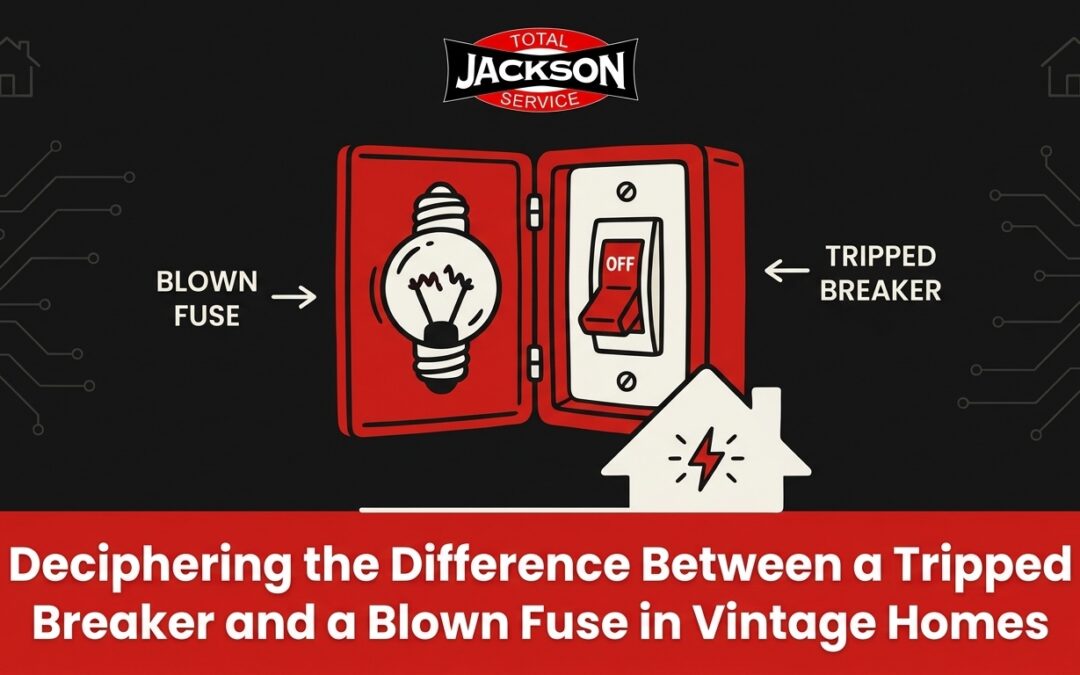
The modern circuit breaker panel is characterized by neat rows of rectangular, hard plastic toggle switches. These switches are typically black and are clearly labeled with numbers corresponding to a directory on the panel door. When a modern breaker trips due to an overload, the visual cue is distinct but subtle. The affected switch will no longer be in the “ON” position; instead, it will be resting in the middle, or it will have flipped entirely to the “OFF” position, often displaying a small red indicator window.
The legacy fuse box, on the other hand, relies on much older technology. Instead of switches, you will see round, screw-in glass or ceramic modules. These modules resemble the base of a traditional incandescent lightbulb. When a fuse blows, the visual evidence is usually much more dramatic than a tripped breaker. Because a fuse sacrifices itself to protect the circuit, a blown fuse will often have cloudy or blackened glass, visible scorch marks on the ceramic housing, or a visibly broken internal metal filament resting inside the window.
| Feature | Modern Circuit Breakers | Legacy Fuses |
|---|---|---|
| Appearance | Rectangular toggle switches in neat rows | Round glass or ceramic screw-in modules |
| Overload Indicator | Switch rests in the middle or “OFF” position | Cloudy glass, scorch marks, melted filament |
| Reset Method | Manually toggle fully OFF, then back ON | Permanent destruction; unit must be replaced |
| Typical Amperage | 150 to 200+ amps (Whole Home) | 60 to 100 amps (Whole Home) |
By understanding these visual cues, you can quickly assess what type of hardware is managing your home’s electrical load without needing to touch any potentially live components.

The Mechanics: How Fuses Melt vs. How Breakers Trip
Understanding the underlying physical mechanisms of both systems helps explain why outdated panels are a liability. While both devices serve the exact same fundamental purpose—interrupting the flow of electricity when a circuit draws too much current—the way they achieve this is completely different.
The Sacrificial Mechanism of a Legacy Fuse
Fuses are essentially sacrificial devices. Inside the glass or ceramic housing of a legacy fuse sits a very specific, carefully calibrated metal filament. This ribbon of metal is designed to carry a precise amount of electrical current. If the appliances on that circuit demand more power than the wiring can safely handle, the metal filament rapidly heats up. When it reaches a critical temperature, it intentionally melts, physically severing the connection and breaking the circuit.
Because the filament is completely destroyed in this process, a blown fuse is permanent. The physical unit is ruined and must be removed and replaced with a new fuse of the exact same amperage rating. In our experience evaluating older Naples properties and vintage homes, this constant need for physical replacement presents significant vintage home fire hazards, especially if a frustrated homeowner mistakenly installs a fuse with a higher amperage rating than the legacy wiring can support.
The Resettable Mechanism of a Modern Breaker
Modern circuit breakers eliminate the need for sacrificial components. Instead of a melting filament, a breaker uses a sophisticated internal switch mechanism—typically relying on an electromagnet or a bimetallic strip. When an overload occurs, the excess heat or magnetic force physically triggers a spring-loaded lever, snapping the switch to the “tripped” position and interrupting the current.
The beauty of this mechanism is its reusability. Once the overloaded appliance is unplugged and the circuit has cooled down, the homeowner can simply reset the breaker by firmly pushing the toggle switch all the way to the “OFF” position, and then snapping it back to “ON.” This makes breakers significantly more convenient, drastically reducing the temptation to bypass safety protocols.
Why Modern HVAC Demands Overwhelm Legacy Panels
The gap between the electrical capacity of vintage homes and the energy requirements of modern living is vast, and it becomes glaringly obvious during seasonal shifts. Most legacy fuse boxes our technicians encounter were installed in an era when a home’s electrical load consisted of some incandescent lighting, a refrigerator, and perhaps a small television. Consequently, these vintage panels typically provide only 60 to 100 amps of total power for the entire house.
Fast forward to today. Modern homes generally require a minimum of 200 amps to operate safely and efficiently. We expect our homes to simultaneously run high-efficiency heat pumps, advanced indoor air quality (IAQ) systems, electric water heaters, induction ranges, and multiple high-definition screens.
This massive disparity causes severe strain during the September pre-heating season transition. During this time of year, fluctuating temperatures mean a home might demand heavy air conditioning in the mid-afternoon, only to switch to early heating prep and heavy IAQ filtration in the evening. This combined, fluctuating demand easily overwhelms the fragile 60-amp limit of a legacy fuse box. The system simply cannot push enough power through the vintage wiring, resulting in constantly blown fuses, dimming lights, and overheating circuits.
When your vintage home’s electrical system is constantly bottlenecking your comfort, temporary fixes are no longer viable. Investing in a professional panel upgrade service is the definitive fix for chronic overloading, ensuring your modern HVAC equipment receives the clean, consistent power it needs to function without compromising your home’s safety.
The Regional Threat: Lightning Storms and Power Surges
Beyond the daily strain of modern appliances, older properties face severe environmental threats. The reality of living in Southwest Florida means dealing with extreme lightning density. Our crews at Jackson Total Service routinely see the aftermath of intense late-summer and fall thunderstorms that create massive atmospheric electrical discharges.
When lightning strikes near a power grid, it can send a catastrophic power surge traveling through the utility lines directly toward your home. Modern electrical panels are designed to interface with whole-home surge protection devices, which act as a heavy-duty gatekeeper, safely shunting these massive voltage spikes directly into the earth before they can enter your home’s internal wiring.
Legacy fuse boxes are highly susceptible to these surges. They often lack the capacity for modern whole-home surge protection, and vintage homes frequently feature outdated, ungrounded wiring systems (like knob-and-tube or early cloth-covered wire). When a severe storm-induced electrical spike hits a legacy fuse box, the fuses may not melt fast enough to stop the surge.
The risk of property damage is immense. A surge that bypasses an outdated panel can instantly fry the sensitive microprocessors in your modern HVAC system, destroy expensive smart home appliances, and severely degrade the insulation on your vintage wiring, increasing the hidden risk of electrical fires long after the thunderstorm has passed. For older Naples properties and vintage homes, relying on a 60-year-old fuse box during a severe thunderstorm is a gamble with your property’s safety.
Safety First: When to Call a Professional
When dealing with vintage electrical systems, the line between a simple reset and a dangerous situation is incredibly thin. We strongly advise a strict boundary against opening legacy panels or attempting any form of DIY electrical work on vintage wiring. The materials used decades ago degrade over time, and disturbing them without professional training can lead to severe injury or property damage.
You should immediately step away from the panel and contact a licensed professional if you notice any of the following warning signs:
- Visible sparks or arcing: Any flash of light coming from the panel when a system turns on.
- Burning odors: A distinct smell of melting plastic, ozone, or burning metal near the panel or wall outlets.
- Scorched components: Blackened marks around fuses, switches, or the metal housing of the box.
- Frequent overloads: The same circuit blowing a fuse or tripping a breaker multiple times a week.
- Audible buzzing: A constant crackling or loud humming sound emanating from the electrical box.
One local homeowner reached out to us during the fall when they noticed sparks coming directly from their electrical panel on a Sunday, just a week and a half after Hurricane Ian. An electrician from our team was dispatched within the hour, resolving the dangerous issue efficiently before it could escalate into a fire. This rapid, professional response is critical when dealing with compromised vintage systems.
A licensed electrician’s expertise extends far beyond just swapping out a panel; they understand the entire home’s wiring ecosystem. At Jackson Total Service, we leverage our 60-year family legacy to provide deep historical knowledge of how vintage homes in Southwest Florida were originally wired. We recommend professional assessment over any DIY approach because this historical context is vital for safely integrating modern power needs with legacy construction. Whether you need a full panel replacement or are consulting with lighting experts to safely illuminate an older property, a qualified electrician remains the absolute safest route.
Frequently Asked Questions About Vintage Electrical Systems
Homeowners dealing with older Naples properties and vintage homes often have pressing questions about the safety and functionality of their legacy panels. Here are the most common concerns addressed clearly and authoritatively.
How do you tell if a house fuse is blown?
Visual inspection is the key to identifying a blown fuse. Look closely at the small glass window on the front of the round fuse module; if the glass is cloudy, blackened with scorch marks, or completely opaque, the fuse has blown. Additionally, if you can see through the glass and notice that the internal metal piece is visibly separated, melted, or broken in half, the circuit is broken and a professional evaluation is required.
Are old fuse boxes safe in a house?
They are inherently less safe than modern circuit breaker panels because they lack current safety features, such as Arc Fault Circuit Interrupters (AFCIs) and Ground Fault Circuit Interrupters (GFCIs). Furthermore, legacy fuse boxes are easily overloaded by the heavy power demands of modern appliances and HVAC systems. This constant overloading increases the risk of overheating the vintage wiring hidden within your walls, which significantly elevates fire risks.
What happens when a fuse blows in an older home?
When a fuse blows, the internal metal filament melts, meaning the circuit is permanently broken to prevent the wiring from overheating and catching fire. Power is completely lost to that specific zone of the house, and it cannot be restored with a simple switch. The power will remain off until a licensed professional evaluates the electrical load to ensure safety, and the destroyed fuse is physically replaced with one of the exact correct amperage.
How do I know if my breaker tripped or a fuse blew?
The difference lies entirely in the hardware installed in your panel. Breakers are rectangular toggle switches that flip to a middle or “OFF” position during an overload, whereas fuses are round, screw-in modules that show physical damage like scorch marks or broken filaments. Breakers can be easily reset by hand to restore power, but blown fuses are permanently destroyed and require physical replacement.
Why do my vintage home’s fuses keep blowing during the fall?
Fall transitions involve running multiple high-draw systems simultaneously, creating a “perfect storm” of electrical demand. Homeowners often run early heating prep, heavy air conditioning during afternoon heat spikes, and advanced IAQ devices all at once. This massive, combined demand easily exceeds the strict 60-amp to 100-amp limit of legacy panels, causing the fuses to intentionally melt to protect the overloaded vintage wiring.
Can I install modern surge protection on a legacy fuse box?
No, modern whole-home surge protectors cannot be safely or effectively installed on outdated legacy fuse boxes. These advanced protective devices require up-to-date circuit breaker panels and, crucially, a proper, modern grounding system to safely divert massive voltage spikes away from your home. Upgrading the entire panel is a necessary first step to implement modern, reliable surge defense against severe regional lightning storms.
Secure Your Vintage Home’s Electrical Future
Living in a vintage home offers incredible charm, but it also requires a clear understanding of your property’s mechanical limits. Visually distinguishing between a tripped breaker and a blown fuse is vital for your immediate safety when the power goes out. However, recognizing the visual signs is only the first step; understanding that legacy fuse boxes have strict, unyielding limits when handling modern HVAC demands is what will ultimately protect your property.
Do not wait for a severe storm or an overloaded circuit to force your hand. If you are living in one of the older Naples properties and vintage homes with a legacy electrical system, we strongly encourage you to have your wiring evaluated by our local experts. Schedule a professional inspection with Jackson Total Service today to discuss safe, effective upgrade options that will secure your home’s electrical future and keep your family comfortable year-round.