



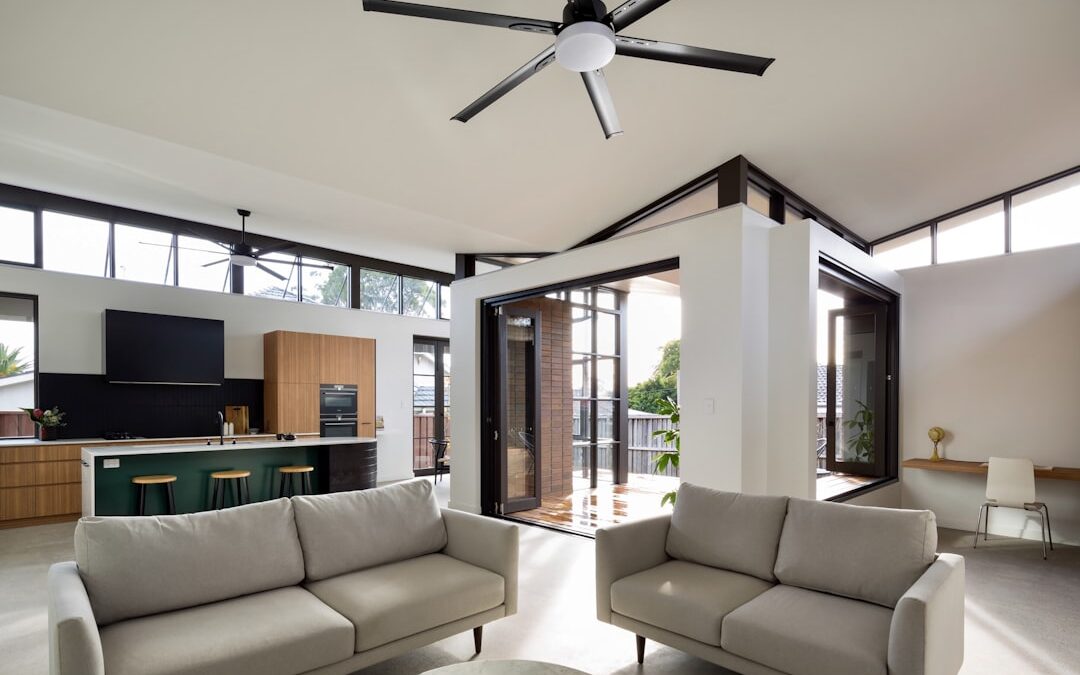
Why Choosing the Right Ceiling Fan for Your Room Size Matters in Southwest Florida
Choosing the right ceiling fan for your room size is the single most important step to keeping your home comfortable — especially in Southwest Florida’s hot, humid climate. Pick a fan that’s too small and you’ll barely feel it. Go too big and you’ll end up with an uncomfortable wind tunnel and wasted energy.
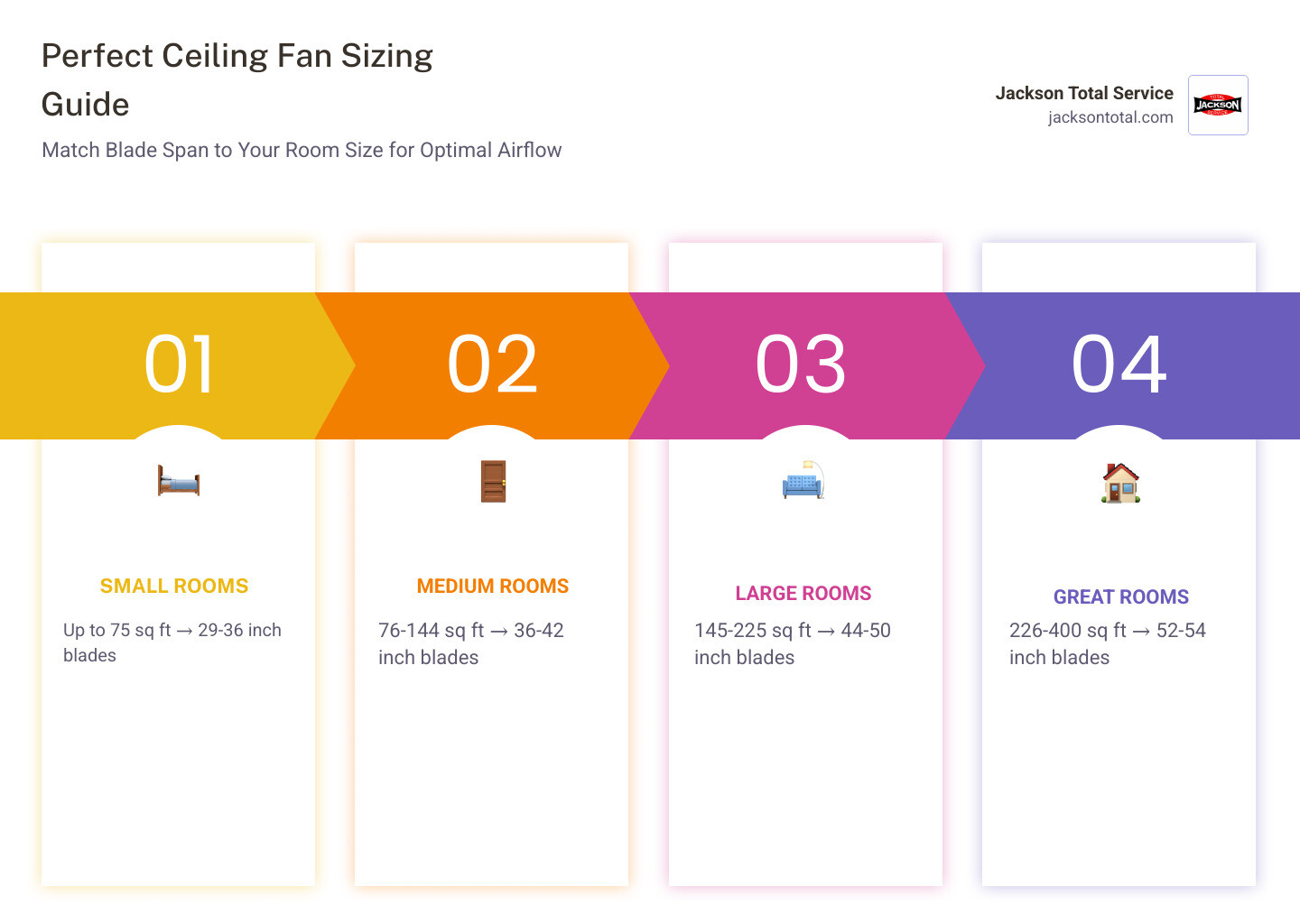
Here’s a quick reference to match your room to the right blade span:
| Room Size (Square Feet) | Recommended Blade Span |
|---|---|
| Up to 75 sq ft | 29 – 36 inches |
| 76 – 144 sq ft | 36 – 42 inches |
| 145 – 225 sq ft | 44 – 50 inches |
| 226 – 400 sq ft | 52 – 54 inches |
| Over 400 sq ft | 60 inches or larger |
The 52-inch model is the most popular size on the market — and for good reason. It fits the average living room or master bedroom perfectly. But averages don’t always match your specific space, and in Florida homes with open layouts, vaulted ceilings, and covered lanais, the right choice takes a little more thought.
In this guide, we’ll walk you through everything you need to know — from measuring your room and calculating downrod length, to understanding moisture ratings for fans near pools or patios.
Measuring Your Room for Optimal Airflow
Before you fall in love with a sleek, brushed-nickel fan at the store, you need to know the “math” of your room. In our decades of experience serving Naples and Fort Myers, we’ve seen many homeowners guess their room size, only to end up with a fan that looks like a postage stamp on a billboard.
To calculate your square footage, simply measure the length and width of the room in feet and multiply them together (Length x Width = Square Footage). For example, a standard 12′ x 12′ bedroom is 144 square feet.
However, Florida architecture often features L-shaped great rooms or open-concept floor plans. For these, we recommend dividing the space into smaller imaginary rectangles, calculating the square footage for each, and adding them together. This helps you decide if you need one massive fan or multiple smaller units to ensure there are no “dead zones” where the air sits still.
Don’t forget to look up! Ceiling height is just as critical as floor space. You also need to account for obstructions like recessed lighting, crown molding, or built-in shelving. For a safe and effective setup, follow this Ceiling Fan Installation Guide Cape Coral FL to ensure your measurements lead to a perfect fit.
The Essential Guide to Choosing the Right Ceiling Fan for Your Room Size
The “blade span” or diameter is the measurement from the tip of one blade to the tip of the opposite blade. This number dictates how much air the fan can move. Using the wrong size isn’t just an aesthetic “oops”—it’s a performance failure.
| Room Type | Square Footage | Recommended Blade Span |
|---|---|---|
| Small Office / Laundry | Up to 75 sq ft | 29″ – 36″ |
| Medium Bedroom / Kitchen | 76 – 144 sq ft | 36″ – 42″ |
| Large Bedroom / Dining | 145 – 225 sq ft | 44″ – 50″ |
| Typical Living Room | 226 – 400 sq ft | 52″ – 54″ |
| Great Rooms / Lofts | Over 400 sq ft | 60″ or larger |
For rooms that sit right on the edge of these measurements, we usually suggest “sizing up.” It is much easier to run a large fan on a lower, quieter speed than to run a small fan on high, which can create noise and wobbling. If you are aiming for Professional Perfection Your Guide to Expert Ceiling Fan Installation in Cape Coral, matching these proportions is the first step to success.
Why choosing the right ceiling fan for your room size matters for efficiency
In April 2026, energy efficiency is more than just a buzzword—it’s a necessity for managing Florida power bills. Choosing the right ceiling fan for your room size ensures you aren’t overworking your motor.
Look for the ENERGY STAR label; these fans are up to 60% more efficient than conventional models. Pay close attention to the CFM (Cubic Feet per Minute) rating. CFM measures the volume of air moved. A high CFM with a DC motor is the gold standard. DC motors are smaller, lighter, and use about 70% less energy than standard AC motors. They also offer more speed settings and whisper-quiet operation.
Blade pitch—the angle at which the blades are set—also plays a role. An ideal pitch is between 12 and 15 degrees. Anything less won’t move much air; anything more might require a motor so powerful it becomes inefficient.
Pro tips for choosing the right ceiling fan for your room size in open-concept spaces
If you live in a sprawling home in Ave Maria or a modern open-concept house in North Naples, one fan might not cut it. Large, rectangular great rooms often benefit from “zoning.” Instead of one 84-inch “industrial” style fan that might overwhelm the decor, consider two 52-inch fans centered over the two main seating areas.
When installing multiple fans, keep at least 30 inches of clearance between the blade tips and the walls or other fans. This prevents “air buffering,” where the air currents clash and create a choppy, uncomfortable breeze. Proper zoning ensures even air distribution and maintains the visual proportions of your home.
Ceiling Height and Mounting Options for Florida Homes
In Southwest Florida, we see everything from 7-foot cottage ceilings to 20-foot vaulted great rooms. How you mount your fan is just as important as the size.
- Flush Mount (Hugger Fans): Best for ceilings under 8 feet. These sit right against the ceiling. While they save space, they move about 20-30% less air because the blades are too close to the ceiling to “grab” enough air.
- Standard Mount: Uses a 3- to 5-inch downrod. Ideal for 8- to 9-foot ceilings.
- Extended Downrods: For ceilings 10 feet or higher. The goal is to get the fan blades to the “sweet spot”—about 8 to 9 feet above the floor.
The Downrod Formula: (Ceiling Height in feet – 9 feet) = Downrod Length. For example, if you have a 12-foot ceiling, you’ll want a 3-foot (36-inch) downrod.
Safety is paramount: per building codes, fan blades must be at least 7 feet off the floor. If you have a sloped or vaulted ceiling (common in many Marco Island homes), you’ll need a sloped ceiling adapter to ensure the fan hangs perfectly vertical. For more details on navigating these tricky heights, check out this Best Ceiling Fan Installation Guide Naples FL.
Environmental Ratings and Performance Metrics
Living in Collier or Lee County means dealing with extreme humidity and, for our coastal neighbors, salt air. You cannot simply take an indoor fan and put it on your lanai.
- Dry-Rated (Indoor): For bedrooms, living rooms, and hallways. These cannot handle moisture; the blades will warp and the motor will short out.
- Damp-Rated: Perfect for covered patios, screened-in porches, and bathrooms. They are designed to handle high humidity but cannot be directly rained on.
- Wet-Rated: These are built for pergolas, gazebos, or any area where they might be hit by a hose or a summer rainstorm. They feature sealed motors and rust-resistant hardware.
In coastal areas like Sanibel or Fort Myers Beach, salt air can corrode standard metal fans in months. We recommend looking for fans with “WeatherMax” or similar salt-spray-resistant finishes to ensure your investment lasts. Finding the right Naples FL Finding the Right Ceiling Fan Installation Service for Your Home ensures you get a technician who understands these environmental nuances.
Frequently Asked Questions about Ceiling Fan Sizing
How do I measure the blade span of my current fan?
Measuring the diameter depends on the number of blades:
- Even number of blades (2, 4, 6): Simply measure from the tip of one blade to the tip of the blade directly opposite it.
- Odd number of blades (3, 5, 9): Measure from the center of the fan (the middle of the motor) to the tip of one blade. This is your radius. Multiply that number by two to get the total blade span.
Is a 52-inch fan too big for a 12×12 room?
Technically, a 52-inch fan can be used in a 144-square-foot room, but it is often considered “oversized.” It can create a “wind tunnel” effect where papers blow off desks and the breeze feels aggressive rather than cooling. For a 12×12 room, a 42-inch to 44-inch fan is usually the “sweet spot” for both comfort and visual proportion.
Do more blades mean the fan moves more air?
Not necessarily! This is one of the biggest myths in the industry. Airflow is determined by the motor’s power and the pitch of the blades, not the count.
- 3-Blade Fans: Often move more air because there is less “drag” on the motor. They are popular in modern and industrial designs.
- 5-Blade Fans: Generally quieter and provide a more consistent, gentle breeze. They are the classic aesthetic choice for traditional homes.
Conclusion
Choosing the right ceiling fan for your room size is about more than just picking a style you like—it’s about engineering the perfect environment for your home. From the sandy shores of Sanibel to the growing communities in Lehigh Acres, a properly sized fan can make your home feel 6 to 8 degrees cooler and significantly reduce your reliance on the AC.
At Jackson Total Service, we’ve been the “all-in-one” comfort experts for Southwest Florida since 1964. Whether you need help with a tricky vaulted ceiling installation in Naples or want to upgrade your Cape Coral patio with a wet-rated fan, our team of licensed electricians is here to help. Don’t settle for a weak breeze or a wobbly DIY job.
Ready to feel the difference? Contact us today for professional Ceiling Fan Installation and let us help you stay cool all year long.