


When the Storm Passes but the Damage Lingers
It is incredibly frustrating when you realize the hidden damage lightning surges do to modern HVAC circuit boards isn’t always instant. Your air conditioner might turn right back on after a severe storm, leading you to believe the system escaped unharmed. Homeowners often assume that if the lights are on and the cooling cycle starts, the danger has passed. However, indirect lightning strikes create a stealthy form of electrical stress that compromises sensitive components without causing an immediate, catastrophic breakdown.
This delayed reaction means a cooling system can appear completely fine for weeks before failing suddenly under the heavy load of July peak summer thunderstorms. Recognizing this timeline is critical for diagnosing the root cause of erratic cooling behavior before a total system failure occurs. If you want to protect your home effectively, you need a comprehensive approach to your HVAC and electrical services.
When an air conditioner finally breaks down a month after a major weather event, it is rarely a coincidence. The microscopic pathways inside the unit have been struggling to carry the necessary voltage, generating excess heat and slowly burning out the components that keep your home comfortable.
Understanding ‘Electronic Rust’ and Micro-Surge Degradation
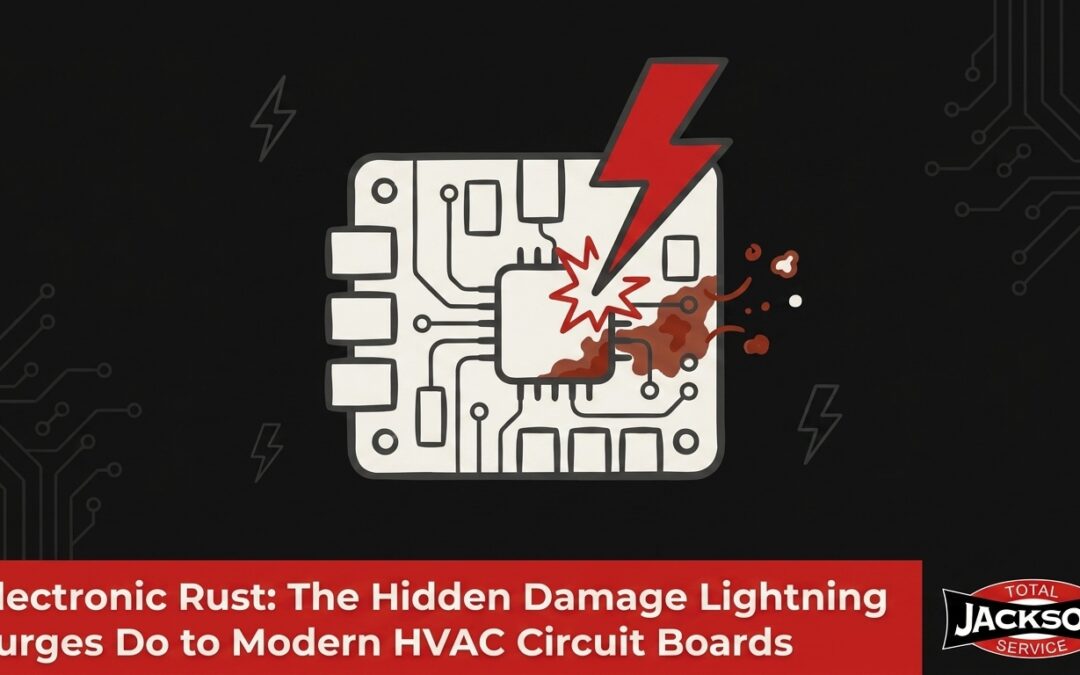
To fully grasp why systems fail on a delayed schedule, it helps to understand the concept of “electronic rust.” Direct lightning strikes cause immediate, visible destruction—melting wires, blowing fuses, and destroying compressors instantly. However, these direct hits are relatively rare compared to indirect strikes. Indirect strikes send micro-surges through the home’s electrical grid, causing voltage spikes that are too fast or too small to trip a standard breaker.
These micro-surges act exactly like rust on a piece of metal. They slowly pit, scar, and weaken the delicate printed pathways on an HVAC circuit board over time. A single indirect surge might not break the board, but it leaves behind microscopic damage that increases electrical resistance. As the system continues to run, this resistance creates heat, which further degrades the surrounding components. It is a compounding cycle of wear and tear.
Each subsequent storm compounds the degradation, making the eventual failure inevitable. This is why understanding the damage to your electronics during a power surge is so important. It is not just about the big, dramatic strikes; it is about the constant, low-level electrical stress that slowly eats away at the lifespan of your equipment.
The Difference Between Direct and Indirect Strikes
The distinction between these two types of electrical events dictates how your equipment responds:
- Direct Strikes: These are catastrophic events. The energy from a direct lightning strike overwhelms everything in its path, instantly melting wiring harnesses, blowing capacitors, and permanently destroying compressors. The failure is immediate and obvious.
- Indirect Strikes: These occur when lightning hits nearby power lines, transformers, or even the ground outside your home. The energy travels through the soil or wires, entering your electrical panel as a micro-surge. This causes stealthy, cumulative wear that goes unnoticed until the weakened component finally gives out.
Why Modern HVAC Circuit Boards Are Highly Vulnerable
The hidden damage lightning surges do to modern HVAC circuit boards is a relatively new phenomenon in the world of home comfort. Older air conditioning systems were built differently. They relied on robust, analog mechanical contactors and heavy-duty relays that could withstand minor voltage fluctuations without skipping a beat. If a small surge came through, the mechanical parts simply absorbed it or clicked a little louder.
Modern high-efficiency HVAC systems, however, operate using complex microprocessors, delicate sensors, and variable-speed inverters. These advanced electronics are designed to provide superior energy efficiency and precise temperature control. They constantly monitor indoor conditions, adjusting fan speeds and compressor output by the minute. Because they operate on such precise digital logic, they are highly sensitive to power quality.
These microprocessors can be permanently scarred by voltage spikes far below the threshold of older equipment. While they deliver incredible comfort and lower utility bills, they require much stricter power quality to survive a stormy season. The very technology that makes them efficient also makes them fragile in the face of unstable electrical grids.
| Feature | Older Analog HVAC Systems | Modern High-Efficiency HVAC Systems |
|---|---|---|
| Control Mechanism | Mechanical relays and heavy-duty contactors | Digital microprocessors and printed circuit boards |
| Surge Tolerance | High; can absorb minor voltage spikes | Low; highly sensitive to micro-surges |
| Failure Mode | Immediate mechanical breakdown (blown fuses) | Delayed degradation (electronic rust) |
| Repair Complexity | Simple part swaps (capacitors, contactors) | Complete circuit board diagnostics and replacement |
When a modern board experiences a micro-surge, the tiny printed traces on the silicon can literally vaporize on a microscopic level. The board might still function, but it is operating on borrowed time, forcing the remaining intact pathways to carry a heavier electrical load than they were designed for.
The Timeline of Delayed Air Conditioning Failure
Understanding the timeline of this delayed failure helps explain why a system might run perfectly for a month before suddenly quitting. In Southwest Florida, the sheer frequency of 70 to 100 thunderstorm days annually creates a continuous cycle of cumulative micro-surge exposure. The system never truly gets a break to recover, leading to a predictable pattern of degradation.
- Week 1: The Initial Compromise. An indirect lightning strike introduces a micro-surge into the home’s electrical system. The microscopic traces on the HVAC circuit board are weakened, and the internal dialectic material of the capacitors begins to break down. This is the onset of electronic rust.
- Week 2-3: Inefficient Operation. The system continues to run, and the house still feels cool. However, the compromised components begin to overheat due to increased electrical resistance. The system starts drawing slightly more amperage to achieve the same cooling output, straining the motors and the remaining healthy circuitry.
- Week 4+: Sudden Failure. The weakened circuit board is subjected to maximum cooling demands during peak daytime heat. The compromised pathways can no longer handle the thermal and electrical stress. A relay sticks, a microprocessor faults, or a trace burns completely through, causing the final component failure.
This delayed timeline frequently leads to confusion. Homeowners understandably assume the breakdown is completely unrelated to the storm that passed through a month prior. Recognizing this pattern is the first step in diagnosing the true root cause of the failure.

Warning Signs Your HVAC Electronics Are Failing
Before a circuit board fails completely, it usually exhibits erratic behavior. Because the microprocessors control the logic of the system, a degrading board will send confused or intermittent signals to the mechanical components. Catching these warning signs early can prevent a total shutdown during the hottest part of the day.
- Short cycling: The system turns on and off rapidly without ever reaching the set temperature on the thermostat. The board is losing its timing logic and shutting the compressor down prematurely.
- Intermittent thermostat drops: The thermostat loses communication with the main unit randomly, resulting in blank screens or error codes that disappear upon resetting.
- Random shutoffs: The system powers down unexpectedly despite having a steady flow of power at the main electrical breaker.
- Unusual clicking noises: The relays on the circuit board struggle to engage properly, creating a rapid clicking or chattering sound near the indoor or outdoor unit.
- Inconsistent fan speeds: Variable-speed blowers may ramp up and down erratically because the control board is sending fluctuating voltage signals.
When these symptoms appear mid-summer, fast professional intervention is required to restore cooling. A typical pattern we see—such as when one local homeowner experienced a complete air conditioning failure during mid-summer—often requires rapid intervention. In that specific instance, a technician arrived in less than two hours to diagnose the fried electronics and restore cooling before the house became dangerously hot. If you notice these erratic signs, reaching out for North Naples AC repair is the safest way to prevent further damage to the compressor.
Protecting Your Investment with Comprehensive Electrical Solutions
Replacing a damaged HVAC circuit board addresses the immediate symptom, but it leaves the home entirely vulnerable to the next storm. If the underlying lack of electrical defense is not addressed, you will likely find yourself replacing another expensive circuit board before the season is over. Basic plug-in surge protectors do not protect hardwired appliances like central air conditioners, meaning a different approach is necessary.
Installing whole-home surge protection at the main electrical panel intercepts voltage spikes before they ever reach the HVAC equipment. These devices act as a pressure relief valve for your home’s electrical grid, shunting excess voltage safely into the ground wire before it can travel to your delicate microprocessors. A comprehensive approach requires evaluating both the mechanical cooling components and the home’s overall electrical defense strategy.
Because Jackson Total Service operates as a multi-trade provider handling both HVAC and electrical systems, our technicians can uniquely diagnose the internal AC damage while simultaneously installing the panel-level protection needed to stop future strikes. We do not just treat the symptom; we address the root cause. Upgrading to whole house surge protection is one of the most effective ways to shield your high-efficiency cooling system from the continuous threat of electronic rust.
Frequently Asked Questions About Post-Storm HVAC Damage
Can a power surge slowly damage electronics?
Yes, power surges absolutely cause slow, cumulative damage to electronics. While massive surges cause instant destruction, smaller micro-surges degrade the microscopic pathways on a circuit board over time. This process, often called electronic rust, increases electrical resistance and heat, eventually leading to a complete component failure weeks or months later.
Why did my AC stop working weeks after a storm?
Your AC likely stopped working weeks later because the initial storm caused microscopic damage to the control board that took time to fail completely. As the weakened components continued to operate, they generated excess heat and electrical stress. Once the peak summer heat forced the system to run continuously, those compromised components finally burned out under the heavy load.
What are the signs of a failing HVAC circuit board?
The most common signs of a failing circuit board are erratic system behaviors that defy normal logic. You may notice the system short cycling, the thermostat randomly losing connection, or the unit shutting down even when the breaker is intact. Additionally, rapid clicking noises from the electrical cabinet often indicate that the board’s relays are struggling to maintain a connection.
How long does an AC circuit board last under normal conditions?
Under normal, stable electrical conditions, an AC circuit board is designed to last the lifetime of the system, typically 12 to 15 years. However, frequent exposure to power fluctuations, dirty power, and indirect lightning strikes can drastically reduce this lifespan. Proper panel-level surge protection is the best way to ensure the board reaches its intended longevity.
Does homeowners insurance cover delayed lightning damage to AC units?
Homeowners insurance policies vary, but many do cover lightning damage if it can be professionally verified. The challenge with delayed damage is proving that a specific storm caused the failure weeks later. A licensed electrical and HVAC diagnostic technician can often document the specific burn patterns and micro-surge evidence required to support a legitimate insurance claim.
Is a dedicated HVAC surge protector worth the investment?
A dedicated surge protector is highly recommended for modern, high-efficiency HVAC systems. Because these systems rely on sensitive microprocessors and expensive variable-speed inverters, the cost of replacing a fried circuit board far exceeds the cost of a surge protector. Intercepting the voltage spike at the panel is the most reliable way to protect your cooling investment.
Securing Your Cooling System Before the Next Strike
Do not wait for erratic cooling symptoms to turn into a complete system failure during the hottest weeks of the year. The hidden damage lightning surges do to modern HVAC circuit boards is progressive, meaning the longer a compromised system runs, the more strain it places on the expensive compressor and blower motors. Catching the issue early can save you from a major breakdown.
A thorough, professional diagnostic can identify degraded components before they leave you without air conditioning in Naples FL. By assessing both the mechanical health of the unit and the electrical integrity of the control boards, you gain a clear picture of your system’s reliability. If you suspect your system has suffered hidden damage, reaching out to contact our diagnostic team for a professional evaluation is the safest next step to ensure uninterrupted comfort.