



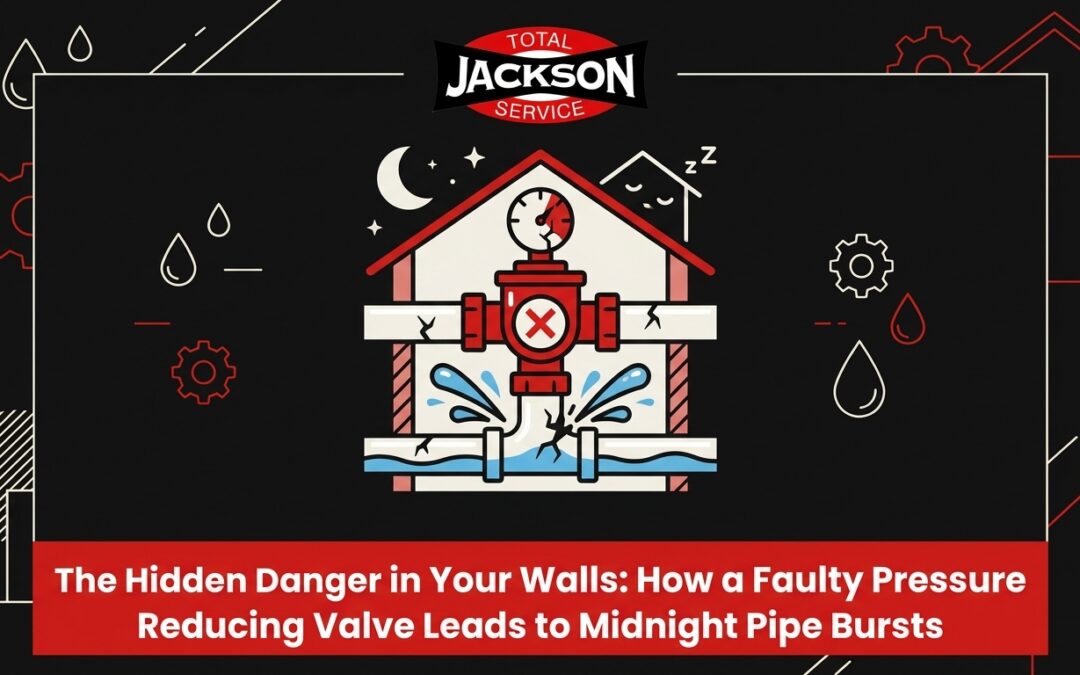
Waking Up to Water: The Silent Threat of Nighttime Pressure Spikes
You wake up at 2 AM to the sound of rushing water spreading across your hallway, which is a perfect example of how a faulty pressure reducing valve leads to midnight pipe bursts while you sleep. At Jackson Total Service, when we respond to these late-night calls across Naples, we find that homeowners’ first instinct is usually to blame the age of their plumbing fixtures. You might assume that an old pipe simply gave out or a fitting finally corroded through after years of use. However, sudden plumbing failures are rarely just a matter of bad luck or aging materials.
The true culprit is often something much less visible: silent municipal water pressure spikes. When the surrounding city goes to sleep and overall water usage drops, the water pressure in the municipal mains has to go somewhere. Without a properly functioning defense system, that massive pressure pushes directly into your home’s fragile supply lines. Dealing with the aftermath of these sudden overnight municipal PSI spikes requires immediate professional intervention to stop the damage and diagnose the root cause.
If you are currently dealing with a sudden plumbing failure, you need emergency leak repair to protect your property before the damage spreads further.
Understanding why these nighttime bursts happen is the first step in preventing them. In our years of servicing local homes, we’ve seen that most residential plumbing is simply not built to handle the sheer force of unchecked city water pressure. When the underlying issue is ignored, fixing one broken pipe usually just means waiting for the next weakest link in your plumbing system to blow.
Understanding the 2 AM Surge: Hydrodynamic vs. Hydrostatic Pressure
To understand why your plumbing is most vulnerable in the middle of the night, we need to look at the mechanical relationship between municipal water usage and pressure. The water flowing through city mains is kept at incredibly high levels—often well over 100 to 150 PSI. This immense pressure is necessary to push water up into multi-story buildings and to ensure fire hydrants have enough force to operate during an emergency.
During the day, thousands of homes are actively using water. People are showering, running dishwashers, and watering lawns. This constant movement creates hydrodynamic pressure (water in motion). Because the water is actively flowing out of the system at multiple points, the overall stress on the municipal lines is distributed and manageable. However, the situation changes drastically when the sun goes down.
If you need immediate help managing a sudden overnight plumbing failure, securing same-day leak repair in North Naples is critical to restoring your home’s safety.
By 2 AM, general water usage drops to its absolute lowest point. The water is no longer moving through the city in massive volumes. Instead, it sits still, shifting into hydrostatic pressure (water at rest). Without the daytime demand to bleed off the excess force, the pressure inside the municipal mains surges. This excess energy has nowhere to go but directly into the residential supply lines connected to the grid. These overnight municipal PSI spikes create maximum stress on your home’s plumbing right when you are asleep and least likely to notice a developing leak.
| Pressure Type | Time of Day | Water State | Impact on Home Plumbing |
|---|---|---|---|
| Hydrodynamic | Daytime (High Usage) | In Motion | Lower, distributed stress as water exits the system through community usage. |
| Hydrostatic | Nighttime (Low Usage) | At Rest | High, concentrated stress pushing directly against closed valves and fixtures. |
This daily cycle of pressure fluctuations puts an incredible strain on residential pipes. If your home is directly absorbing the full force of a 150 PSI hydrostatic surge every single night, it is only a matter of time before a connection fails.

Your Home’s First Line of Defense: The Mechanics of a PRV
Because municipal water pressure is inherently dangerous to residential plumbing, homes are equipped with a critical safeguard: the Pressure Reducing Valve (PRV). Typically located on your main water line right after the shutoff valve, the PRV is a brass, bell-shaped device that serves as a mechanical gatekeeper between the city’s infrastructure and your home’s fragile pipes.
The mechanics inside a PRV are relatively straightforward but incredibly important. Inside the brass housing, a heavy-duty spring and a flexible diaphragm work together to restrict the incoming flow. When water from the city main pushes into the valve at 120 PSI, the spring mechanism physically throttles the flow, stepping the pressure down to a safe residential range of 40 to 60 PSI. In fact, the Uniform Plumbing Code requires a PRV to be installed on any home where the local city water pressure exceeds 80 PSI, as anything higher is considered hazardous to standard fixtures.
However, PRVs are not invincible. Like any mechanical component under constant stress, they experience significant wear and tear over time. The internal diaphragm can tear, and the tension spring can weaken or snap after years of fighting back high-pressure water. Our technicians frequently notice this wear being especially pronounced in Naples FL residential utility zones, where the baseline pressure can fluctuate heavily.
When a PRV fails, it rarely shuts off the water completely. Instead, it fails “open,” allowing the full force of the municipal main to bypass the safety mechanism and flood your home’s plumbing system. Our licensed plumbers at Jackson Total Service always emphasize that because replacing a PRV requires cutting into the main water line and correctly calibrating the new valve’s tension spring, this is definitely not a DIY project. It requires a licensed professional to ensure the new valve is properly sized and set to the correct pressure for your specific home.
How Seasonal Population Shifts Stress Local Plumbing Infrastructure
The stress on your PRV isn’t just a matter of daily day-and-night cycles; it is also heavily influenced by regional climate and population changes. Here in coastal Florida, our team sees firsthand how municipal water demand fluctuates drastically with the seasons. During the peak winter months, the local population swells as seasonal residents return to enjoy the warmer weather. The municipal water facilities increase their output to meet this massive spike in demand.
When those seasonal residents leave in the late spring and summer, the overall demand plummets. However, the municipal pumps are still pushing massive amounts of water into the grid. This creates a scenario where the baseline pressure in municipal lines shifts upward for months at a time, forcing your home’s PRV to work much harder to regulate the flow. Coastal Florida municipal water pressure fluctuating significantly based on these seasonal population changes puts accelerated wear on PRVs compared to areas with highly static, year-round populations.
Homes located within Naples FL residential utility zones are highly susceptible to sudden pressure differentials if their PRV is aging. The valve might hold up fine during the busy winter months when overall hydrodynamic pressure keeps the mains balanced. But when the population drops and the hydrostatic pressure spikes during the off-season nights, a weakened PRV is much more likely to give out, leaving your home completely unprotected.
The Domino Effect: What Happens to Aging Fixtures When a PRV Fails
When a PRV finally fails, the immediate consequence is severe: the sudden transfer of 100+ PSI directly into your home’s supply lines. Standard residential plumbing is designed to operate comfortably at 50 PSI. Doubling or tripling that force creates a dangerous domino effect throughout the house. Continuous high pressure degrades pipe joints, stretches washing machine hoses, and overwhelms the internal seals of your water heater.
This stress almost always culminates in a burst pipe during the night when the hydrostatic pressure is at its absolute peak. Because everyone is asleep, these midnight bursts often cause extensive water damage before they are finally discovered the next morning. Water can flow at a rate of several gallons per minute, quickly ruining drywall, flooring, and personal belongings.
We recently helped a local homeowner who experienced this exact nightmare during an early fall family gathering. Right after dinner, a pipe broke under the sudden pressure and rapidly began flooding the house. Because our team at Jackson Total Service provides a 24/7 emergency response, we dispatched a technician immediately to repair the leak and stop the water flow, preventing further property damage and ensuring the family wasn’t left stranded with a flooded home in the middle of the night.
If your home has suffered a sudden pressure-related failure, reaching out for professional burst pipe repair is the only way to ensure the damaged section is safely replaced and the root cause is addressed.
Vulnerable Appliances and Connections
When overnight municipal PSI spikes breach a failed PRV, the weakest points in your plumbing system are the first to give way. Here is what our plumbers typically see taking the hit:
- Water heaters facing excessive tank pressure: High incoming pressure can cause the temperature and pressure relief (T&P) valve to leak, or worse, stress the internal tank until it cracks.
- Braided hoses on washing machines giving way: The rubber interior of washing machine supply hoses will balloon and eventually burst under sustained high PSI.
- Toilet fill valves failing: The delicate plastic floats and valves inside your toilet tank cannot hold back 100 PSI, leading to continuous running and wasted water.
Subtle Warning Signs Your Home is Experiencing Dangerous PSI Levels
Fortunately, a failing PRV usually provides a few subtle warning signs before a catastrophic midnight burst occurs. The key is knowing what to look and listen for, as these symptoms indicate that your home is already experiencing dangerous PSI levels.
When seasonal residents return to Naples in the fall, we often see plumbing systems face sudden stress after sitting idle. Just recently, our crew assisted a homeowner who, back in town for just a few days, faced a major sewer line blockage affecting their toilets, sinks, and shower. We had a technician on-site within an hour and a half to clear the blockage and explain the root cause. This same urgency applies to pressure issues—ignoring the early warning signs of high PSI can lead to a disaster that ruins your return home.
If you are unsure how to handle a plumbing emergency when it strikes, knowing what to do when the main water shutoff valve won’t budge is a vital skill for protecting your property.
Watch out for these specific indicators of high water pressure:
- Water Hammer (Banging Pipes): If you hear a loud thud or banging sound inside your walls when you turn off a faucet or when the washing machine stops filling, this is known as “water hammer.” It happens because fast-moving, high-pressure water suddenly slams into a closed valve, causing the pipes to physically shudder.
- Running Toilets in the Middle of the Night: If you frequently wake up to the sound of your toilet randomly running, it is likely because overnight municipal PSI surges are pushing water past the fill valve, forcing the tank to overflow into the bowl.
- Unexplained, Intermittent Leaks: Finding small puddles under your sinks or around your water heater that seem to dry up during the day but reappear in the morning is a classic sign of nighttime hydrostatic pressure spikes.
- Spitting Faucets: When you first turn on a tap in the morning, water that violently spits or splashes out of the aerator indicates that pressure built up significantly overnight.
These symptoms should never be ignored or patched with DIY fixes. Replacing a toilet flapper won’t solve the problem if 120 PSI is pushing against it. These signs point to a systemic pressure issue that requires a professional PRV replacement.
Why Early Fall is the Critical Window for PRV Inspections
Timing your plumbing maintenance can make a massive difference in preventing emergencies. Late summer and early fall are major transition periods for municipal water systems. Before the seasonal populations return and alter the municipal water demand patterns once again, the baseline pressure in the city mains can be highly unpredictable.
That is why Jackson Total Service strongly recommends making September and early fall prep the perfect time for a professional PRV inspection. Framing a pressure test as a necessary preventative step in your broader fall home maintenance checklist ensures your plumbing is fortified before the highest-stress months begin. You don’t want to wait until the municipal demand shifts dramatically to find out your PRV has failed.
During a professional inspection, our licensed plumbers will attach a pressure gauge to an exterior hose bib to take a static PSI reading. We will check the integrity of the valve, look for signs of corrosion on the brass housing, and ensure the locknut and adjustment screw are functioning correctly. If the static reading comes back above 80 PSI, we know immediately that the PRV is no longer doing its job. Replacing a failing PRV now prevents the immense cost, property damage, and stress of an emergency midnight burst later in the year.
Securing Your Home Against Unpredictable Plumbing Emergencies
Midnight pipe bursts are completely preventable when you understand the mechanics of your home’s water pressure. You don’t have to cross your fingers and hope your aging pipes survive another night of intense municipal stress. The sudden leaks that homeowners often blame on old fixtures are almost always the result of a failed pressure reducing valve letting dangerous levels of hydrostatic pressure into the home.
Identifying a failing PRV early is your absolute best defense against these surges. By paying attention to warning signs like banging pipes and running toilets, and by prioritizing September and early fall prep, you can stop a disaster before it starts. If you suspect your water pressure is too high, or if you’ve never had your PRV checked, the smartest move is to have your water pressure tested and your PRV evaluated by our local professionals today.
Frequently Asked Questions
Why is water pressure higher at night?
Water pressure increases at night because overall municipal usage drops significantly when people go to sleep. This lack of demand means the water in the city mains stops moving, shifting into high hydrostatic pressure. Without a functioning PRV, this excess force pushes directly into your home’s plumbing system.
What are the signs of a failing pressure reducing valve?
The most common signs include loud banging noises in the walls when turning off faucets (water hammer), toilets that run randomly during the night, and water that violently spits from the tap when first turned on. You may also notice intermittent leaks around appliances that seem to happen only overnight. These symptoms indicate that high municipal pressure is bypassing the valve.
Why do pipes burst at night?
Pipes typically burst at night because municipal water systems reach their peak hydrostatic pressure around 2 AM when city-wide demand is at its lowest. If a home’s pressure reducing valve has failed, this massive surge of pressure hits the residential pipes all at once. The sudden strain easily overwhelms aging joints, appliance hoses, and weak connections.
Can high water pressure cause pipes to burst?
Yes, sustained high water pressure is the leading cause of sudden pipe bursts in residential homes. Standard plumbing is designed to handle about 50 to 60 PSI, while unregulated municipal water can easily exceed 100 PSI. This excessive force degrades pipe joints and stretches hoses until they eventually rupture.
How often should a residential PRV be inspected by a professional?
A residential PRV should ideally be inspected by a professional plumber once a year as part of routine home maintenance. Having the static water pressure tested annually ensures the valve is still properly stepping down the municipal pressure. If your home experiences frequent pressure fluctuations, an early fall inspection is highly recommended.