


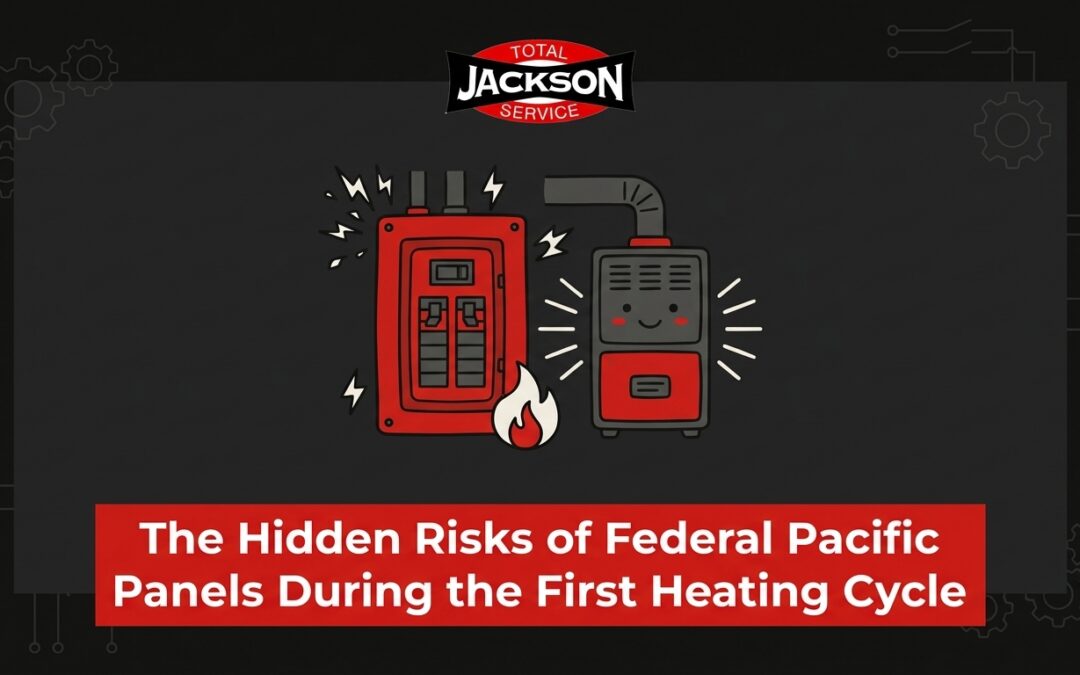
The Hidden Electrical Danger Lurking in Your First Fall Heating Cycle
Auxiliary heating elements represent one of the largest sudden electrical loads in a residential home, which is why understanding the hidden risks of Federal Pacific panels during the first heating cycle is critical for your family’s safety. As temperatures finally begin to dip in the fall, it is completely natural to bump up the thermostat and turn on the heating system for the first time in months. What most homeowners do not realize is the immense, immediate stress this action places on their home’s electrical infrastructure. If your home relies on an outdated or compromised vintage electrical panel, that sudden demand for power can quickly escalate from a routine comfort adjustment into a severe fire hazard.
The core conflict occurs when modern, high-draw HVAC components meet obsolete circuitry that was never designed to handle such massive, instantaneous spikes in amperage. When the October first heating cycle or cold snap arrives, deciding whether to proactively evaluate your home’s electrical capacity is a critical decision point. Addressing this latent hazard requires a thorough understanding of your system’s limits. For a complete breakdown of how modern power demands interact with older infrastructure, review our guide to electrical panel capacity and modern home safety.
Understanding the Legacy of FPE Stab-Lok Panels in Vintage Homes
To grasp why this specific electrical hazard exists, you have to look at the history of residential construction. From the 1950s through the 1980s, Federal Pacific Electric (FPE) Stab-Lok panels were installed in millions of homes across the country. They were affordable, widely available, and became the industry standard for builders. Today, you will still find these original panels functioning in many older Naples FL properties built before 1990. On a normal day, they appear to work perfectly fine, quietly distributing power to your lights, outlets, and standard appliances without any obvious signs of distress.
The Mechanical Flaw Behind the Danger
The danger of an FPE Stab-Lok panel lies in a well-documented mechanical defect that remains hidden until the system is pushed beyond its limits. Consumer Product Safety Commission (CPSC) data and independent testing have repeatedly shown that these specific breakers have an unacceptably high failure rate under overload conditions. A circuit breaker has one primary job: to trip and cut off the flow of electricity when a circuit draws more power than the wiring can safely handle.
When an FPE Stab-Lok breaker is overloaded, the internal mechanisms often seize. Instead of tripping to break the circuit, the breaker jams in the “on” position. This allows excessive, unregulated electrical current to continue flowing through wires that are rapidly overheating. Because these panels can function normally under light loads for decades, homeowners are often lulled into a false sense of security. It usually takes a massive, sudden electrical load to expose the defect, which is why is your vintage home a fire hazard remains a critical question for properties that have never had their electrical service upgraded.
Why Electric Heat Strips Demand Massive Power
To understand the other side of this perfect storm, you have to look at how your heat pump operates. Heat pumps are incredibly efficient at transferring ambient heat from the outside air into your home. However, when the temperature drops sharply, or when you adjust the thermostat upward by more than two degrees at once, the system requires assistance to meet the demand. This is when the auxiliary, or emergency, electric heat strips engage.
Electric heat strips are essentially large resistance coils located inside your air handler—functioning much like the glowing coils inside a toaster, but on a massive scale. They do not transfer heat; they generate it directly from electricity. Because of this, they require an immense amount of power.
The Naples Climate Context
In Southwest Florida, our climate creates a unique and specific risk factor. With our long, hot summers and mild winters, your heat pump’s electric heat strips sit completely dormant for 10 to 11 months out of the year. They draw zero power. Then, a rare October first heating cycle or cold snap arrives. You turn on the heat, and those dormant strips activate instantly, creating a massive, unexpected electrical demand that the panel hasn’t experienced since the previous winter.
To put this sudden spike into perspective, consider the typical electrical loads in a home:
| Household Appliance / Component | Typical Amperage Draw | Load Type |
|---|---|---|
| Standard Refrigerator | 5 to 8 Amps | Gradual / Cycling |
| Microwave Oven | 10 to 15 Amps | Short Duration |
| AC Compressor (Running) | 15 to 20 Amps | Gradual / Cycling |
| Electric Heat Strips (10kW – 20kW) | 40 to 80 Amps | Sudden / Sustained |
This sudden leap from a resting state to an 80-amp draw is a violent shock to an aging electrical system. Unlike the gradual loads your home experiences throughout the year, heat strips demand their full power immediately and sustain that draw until the thermostat is satisfied.
The Perfect Storm: When High Amp Draw Meets Defective Breakers
The intersection of these two factors—the massive power demand of the heating system and the mechanical failure of the electrical panel—creates a severe safety hazard. Let’s break down exactly how this failure sequence unfolds when high-draw HVAC components meet FPE Stab-Lok electrical panels.
The Problem: The thermostat registers a drop in indoor temperature and calls for auxiliary heat. The heat strips engage, instantly demanding between 40 and 80 amps of electricity. This power must flow from the utility line, through the main breaker, through the specific circuit breaker dedicated to the air handler, and finally to the unit itself.
The Cause: If the wiring or the circuit is only rated for 60 amps, but the system pulls 70 amps due to a malfunction, age, or improper sizing, the breaker is supposed to trip. However, because the FPE Stab-Lok breaker is mechanically defective, the internal trip mechanism binds. The breaker stays engaged, allowing the excessive current to continue flowing unabated.
The Consequence: As the excessive current forces its way through the circuit, the copper wiring begins to heat up exponentially. The protective plastic insulation surrounding the wires melts away. Once the bare wires are exposed, electrical arcing occurs inside the panel box. This arcing can easily ignite the melted insulation, nearby combustible materials, or the panel housing itself, leading to a devastating electrical fire. Preventing this sequence of events is why following essential electrical safety tips and keeping your infrastructure updated is so vital.

Recognizing the Warning Signs Before System Failure
While the internal failure of a breaker is invisible, an overloaded electrical system often produces subtle warning signs before a catastrophic event occurs. Educating yourself on these symptoms can give you the critical time needed to shut off the system and call a professional. If you live in one of the older Naples FL properties built before 1990, you should be hyper-vigilant when turning on your heat for the first time.
Here are the observable signs of electrical stress you should look for:
- Noticeably dimming or flickering lights: If your overhead lights dim significantly and stay dim while the heat is running, the HVAC system is pulling voltage away from other circuits, indicating an overloaded main panel.
- Faint burning plastic odors: A burning smell near the utility room, electrical panel, or coming through the air vents is a major red flag. This often indicates wire insulation is actively melting.
- Buzzing or humming sounds: A healthy electrical panel should operate silently. If you hear an audible buzz, hum, or crackle coming from the breaker box, arcing may already be occurring.
- Warm or hot breaker switches: While you should never open the panel cover if you suspect an issue, simply touching the outside metal door of the panel can reveal problems. If the door is hot to the touch, shut off your system immediately.
A critical safety warning: Never attempt to open the panel cover, remove the dead front, or manually test the breakers yourself. FPE panels are notorious for arc flashes and exposing homeowners to live bus bars when the cover is removed. Inspecting and diagnosing these panels requires specialized protective gear and training. If you notice any of these signs, you need to rely on licensed electricians for panel upgrades and safety assessments.
The Advantage of a Dual-Trade Safety Assessment
Evaluating the hidden risks of Federal Pacific panels during the first heating cycle requires a unique combination of expertise. The danger exists precisely because of how the HVAC equipment interacts with the electrical infrastructure. Relying on a single-trade inspection often leaves dangerous blind spots.
If you hire only an HVAC technician, their primary focus is the mechanical operation of the heat pump. They will verify that the heat strips activate, the blower motor pushes air, and the thermostat communicates correctly. However, they are not licensed to evaluate the internal condition of an FPE Stab-Lok electrical panel or measure the integrity of the home’s main service lines.
Conversely, if you hire only an electrician, they will assess the panel’s safety and capacity. But they may not fully understand the specific staging sequences of a multi-stage heat pump or how the auxiliary heat strips cycle during a defrost mode, missing the exact catalyst that causes the overload.
The Unified Solution
This is where working with Jackson Total Service provides a distinct advantage. As a multi-trade contractor specializing in both HVAC and Electrical services, we uniquely understand how high-draw HVAC components directly impact aging electrical infrastructure. A dual-trade assessment ensures that the actual amp draw of your specific heating unit is measured directly against the capacity and mechanical condition of your breaker panel.
A comprehensive, unified inspection ensures that upgrading one component doesn’t inadvertently overload another. It provides the peace of mind that comes from knowing your entire home infrastructure is synchronized, properly rated, and completely safe. This holistic approach is also exactly why your home needs surge protection that covers both the mechanical equipment and the electrical pathways simultaneously.
Frequently Asked Questions About Vintage Panels and Heating Loads
Why are Federal Pacific panels considered a fire hazard?
Federal Pacific (FPE) Stab-Lok panels are considered a fire hazard because their circuit breakers have a high failure rate when overloaded. Instead of tripping to cut off the power, the defective breakers often jam in the “on” position. This allows excessive electrical current to continue flowing, which overheats the wiring, melts the protective insulation, and frequently leads to electrical fires inside the panel box.
How much power do electric heat strips use?
Electric heat strips typically draw between 40 and 80 amps of electricity, depending on their kilowatt (kW) rating and the size of your HVAC system. This is a massive electrical load compared to standard household appliances, which usually draw between 5 and 15 amps. When these heat strips engage, they create one of the largest sudden spikes in power demand your home’s electrical panel will ever experience.
What happens when a circuit breaker fails to trip?
When a circuit breaker fails to trip during an overload, the electrical current continues to flow uncontrollably through wires that are not rated for that capacity. The immediate result is severe overheating of the copper wiring. Within minutes, the plastic insulation surrounding the wires melts away, exposing bare metal, which leads to electrical arcing, sparks, and a high probability of a localized fire.
Do I need to replace my Federal Pacific panel?
Yes, industry safety standards and consumer protection agencies strongly recommend replacing Federal Pacific Stab-Lok panels entirely. Because the defect is a latent mechanical flaw within the breaker design itself, you cannot simply repair or tune up the panel. Replacing the entire panel with a modern, properly rated system is the only way to eliminate the fire hazard.
Can an HVAC technician inspect my electrical panel?
While a licensed HVAC technician understands the electrical requirements of your heating and cooling equipment, they are not licensed or trained to perform comprehensive electrical panel inspections. Evaluating the safety, internal condition, and total load capacity of a breaker panel requires a licensed electrician. For the best results, utilize a dual-trade company that can assess both the HVAC equipment and the electrical panel together.
Secure Your Home Before the October Cold Snap Arrives
The hidden risks of Federal Pacific panels during the first heating cycle are not a matter of if the system will be stressed, but exactly when. The critical link between long-dormant heat strips and the known mechanical failures of vintage breaker panels creates a hazard that should never be ignored. Waiting until you smell burning plastic or hear buzzing from your utility room means the failure is already happening.
Proactive, pre-season preparation is the only way to ensure your home is protected. Before the October first heating cycle or cold snap forces your system into overdrive, take control of your home’s safety. Schedule a comprehensive, dual-trade HVAC and electrical inspection today. By having a licensed professional verify that your electrical infrastructure can safely handle your heating demands, you ensure your family stays warm, comfortable, and thoroughly protected all season long.