


The Mathematical Reality of a 3,000-Hour Cooling Season
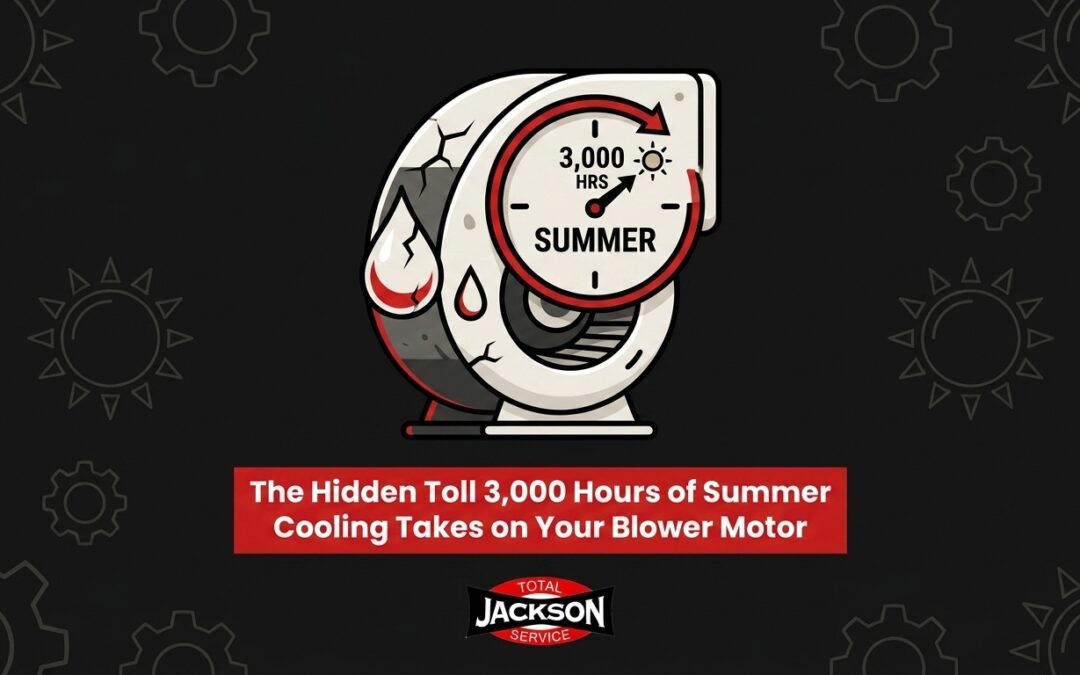
By the time late August arrives in Southwest Florida, your air conditioner hasn’t just been working hard—it has achieved a marathon of mechanical endurance. The hidden toll 3,000 hours of summer cooling takes on your blower motor is a mathematical reality every local homeowner eventually faces. Nearly 75% of unexpected late-season air conditioning breakdowns trace back to the sheer, compounding fatigue placed on this single, critical component. While many homeowners assume a sudden breakdown is the result of a defective part or random bad luck, the truth usually comes down to the staggering volume of hours the system has been forced to run without a single day of rest.
Understanding this reality is the first step in protecting your system. If you want to dive deeper into how often you should be checking these components, reviewing your Florida AC maintenance frequency can provide a helpful baseline. Your blower motor is the workhorse of your entire HVAC setup. Its sole responsibility is to pull warm indoor air over the freezing evaporator coils and push the newly cooled air through your ductwork. In our brutal climate, this means pushing dense, humid air continuously for months on end.
This staggering workload is not a design flaw in your equipment. It is simply what is required to survive a climate where the heat index consistently hovers in the triple digits. By the time the back-to-school season rolls around, a local unit will easily log 3,000 hours of continuous summer operation. The decision point for homeowners is learning to recognize the subtle, early warning signs of this extreme mechanical fatigue. Catching a struggling motor before it completely seizes is the difference between a scheduled tune-up and an emergency replacement when the house is 85 degrees inside.
To truly grasp why your system feels so strained by the end of summer, we have to look at the numbers. The wear and tear on an air handler pushing air in late August is vastly different from the strain it experiences in April, and understanding that progression is the key to extending the life of your equipment.
National Averages vs. the Southwest Florida Climate Load
When you read national HVAC blogs or look at manufacturer lifespan estimates for a new air conditioning system, those numbers are almost always based on a moderate, blended national climate. They typically assume an annual run time of roughly 1,000 to 1,500 hours. In Naples FL, relying on those national averages is a recipe for premature equipment failure.
According to data from the U.S. Energy Information Administration (EIA), air conditioning accounts for more than 27% of all residential energy consumption in Florida. This is vastly higher than the national average, and it paints a clear picture of the localized burden placed on our mechanical systems. If you have ever wondered why your AC runs constantly, it is because the extreme heat and oppressive humidity force the system to operate continuously just to maintain a baseline temperature of 75 degrees.
Average August highs in the low 90s, combined with stifling atmospheric moisture, mean the air inside your home is physically denser and heavier to move. Your blower motor must work significantly harder to pull that thick air through the return filter and distribute it across the house.
| Metric | National Average Climate | Southwest Florida Climate |
|---|---|---|
| Annual Cooling Hours | 1,000 – 1,500 hours | 3,000+ hours (often higher) |
| Air Density Burden | Moderate humidity, lighter air | High humidity, dense/heavy air |
| Component Rest Periods | Frequent off-cycles, cool nights | Rare off-cycles, warm humid nights |
| Expected Bearing Wear | Gradual over 10-15 years | Accelerated, requiring frequent checks |
This continuous operation essentially doubles the expected mechanical friction and heat retention compared to northern climates. A blower motor in Ohio might get to rest for several hours every night when temperatures drop into the 60s. A blower motor in Naples rarely gets that luxury. The ambient heat remains trapped within the air handler casing, meaning the motor never fully cools down before it is called to start up again. This relentless cycle is exactly why standard, once-a-year national maintenance advice falls woefully short for local homeowners.

Mechanical Friction: Inside the Blower Motor Bearings
To understand exactly how 3,000 hours of continuous summer operation degrades your system, we have to look inside the blower motor itself. The heart of this component’s smooth operation relies on heavy-duty, factory-sealed bearings. These bearings are designed to allow the motor’s internal shaft to spin at high speeds—often up to 1,200 revolutions per minute—while remaining quiet, balanced, and friction-free.
The Role of Factory Lubrication
When a blower motor leaves the manufacturing floor, those bearings are packed with a specific, high-grade factory lubrication. Under normal conditions, this lubrication lasts for years, creating a microscopic barrier of fluid between the rapidly spinning metal components. However, continuous operation in a high-heat environment fundamentally changes the chemistry and viscosity of this lubricant. Over months of non-stop use, the constant spinning generates internal heat that slowly bakes the lubrication, causing it to break down, thin out, or dry up entirely.
The Compounding Effect of Heat and Friction
Once that lubrication begins to fail, the system enters a compounding cycle of degradation. Less lubrication equals increased metal-on-metal friction. Increased friction generates excess heat. That excess heat is then trapped within the tight confines of the indoor air handler, which further accelerates the breakdown of whatever lubrication remains. It is a vicious, self-sustaining loop.
The cascading failure: As the bearings lose their smooth glide, the motor has to work harder just to achieve its normal spinning speed. This physical resistance forces the motor to draw more electrical amperage. Suddenly, your system is consuming more electricity to produce less airflow, all while generating dangerous levels of waste heat. This is the exact mechanical friction that turns a healthy, quiet air conditioner in May into a struggling, noisy energy hog by late August.
Electrical Strain and Capacitor Degradation
While mechanical friction attacks the motor’s bearings, a completely different type of strain is attacking its electrical support system. The blower motor does not start on its own; it relies on a small, cylindrical component called a run capacitor. You can think of the capacitor as a powerful, rechargeable battery that provides the necessary jolt of electrical energy to start the motor and supplies a steady, continuous voltage to keep it running efficiently.
Capacitors are incredibly sensitive to prolonged high-heat environments. They are filled with a dielectric fluid that helps them store and discharge electricity. When subjected to the trapped ambient heat of an air handler that has been running almost non-stop since April, this fluid can begin to degrade. The internal pressure of the capacitor rises, sometimes causing the top of the component to bulge outward like a swollen tin can.
As we reach late August / end-of-season conditions, months of continuous cycling take their toll. Every time your thermostat calls for cooling, the capacitor must discharge a massive spike of energy. When a capacitor begins to lose its ability to hold a full charge, it sends a weaker, insufficient jolt to the blower motor.
This weak electrical supply creates a severe problem for the motor. Without the proper voltage, the motor struggles to get up to speed. It draws excessive amperage from your home’s electrical panel to compensate, which causes the internal copper windings of the motor to overheat. Over time, this electrical strain will literally melt the protective insulation off the motor’s internal wiring, leading to a complete electrical short and a dead system. Differentiating between a failing $50 capacitor and a failing $800 motor is nearly impossible without professional diagnostic tools, which is why early intervention is critical.
Subtle Warning Signs of Late-Summer Motor Fatigue
Because blower motor failures rarely happen overnight, your system will almost always try to warn you that it is struggling. The key to preventing a total late-summer breakdown is knowing exactly what these subtle symptoms look and sound like. If you notice any of the following signs as we approach late August / end-of-season, your motor is likely crying out for help.
- Weak airflow at the vents: You may hear the system running loudly, and it may sound like it is operating at full capacity, but when you place your hand over the supply vents, the air feels like a weak trickle. This indicates the motor can no longer spin fast enough to overcome the static pressure of your ductwork.
- New, persistent humming or screeching noises: A loud, metallic screeching sound is the classic hallmark of dry, failing bearings grinding against each other. A deep, vibrating hum coming from the air handler usually indicates electrical strain—often a failed capacitor trying and failing to jump-start a seized motor.
- Intermittent or short cycling: If the blower motor shuts off prematurely before the house reaches the target temperature, it may be tripping its internal thermal overload protector. The motor gets too hot, shuts itself down to prevent a fire, cools off for twenty minutes, and then tries again.
- The air handler casing feels unusually hot: If you place your hand on the metal cabinet of your indoor unit and it feels exceptionally warm or hot to the touch, the motor inside is generating dangerous levels of friction and waste heat.
- Unexplained spikes in energy bills: If your thermostat habits haven’t changed, but your August electricity bill is drastically higher than your July bill, a struggling blower motor drawing high amperage is a very common culprit.
Ignoring these signs does not make them go away; it simply guarantees that the eventual repair will be more extensive and more disruptive to your daily life.
Why Late August Triggers a Spike in AC Breakdowns
When you synthesize the mechanical wear of bearing friction with the electrical strain of capacitor degradation, it becomes clear why failures cluster so heavily at the end of the summer. Blower motors rarely fail suddenly out of nowhere. They succumb to the cumulative effect of continuous run-time without rest days.
By the time late August arrives in Naples FL, the compounded friction and electrical strain reach a tipping point. The factory lubrication is depleted, the capacitor is exhausted, and the motor windings have been subjected to thousands of hours of high-heat stress. It is a predictable pattern based on usage math, not random bad luck.
With a 60-year family legacy serving Southwest Florida, we have tracked and anticipated this exact late-summer breakdown pattern for decades. We know exactly when these systems hit their breaking point because we see the call volume shift year after year. For example, one local homeowner recently reached out for an unspecified AC maintenance check right as the late-summer heat peaked. Because they didn’t wait for a total failure, the technician was able to work efficiently, answer all their questions pleasantly, and resolve the underlying strain before the motor seized completely. The customer was thrilled to have the problem handled proactively.
When these mid-to-late summer failures inevitably occur, having a fast, professional response is vital. This is why so many homeowners rely on North Naples AC repair experts who understand the specific regional math of a 3,000-hour cooling season. We don’t just look at the broken part; we look at the historical wear and tear that caused it to fail in the first place.
Interrupting the Cycle: Professional Evaluation
The most important takeaway for any homeowner is that you do not have to wait for the blower motor to completely seize before taking action. In fact, waiting for a total failure is the worst approach, as a seized motor can cause severe secondary damage to other HVAC components, including melting wires, blowing fuses, or even damaging the expensive compressor outside.
Interrupting this cycle of degradation requires a professional evaluation. A licensed technician doesn’t just guess at the motor’s health; they use precision digital tools to measure exactly how the system is performing against its factory specifications.
What a professional evaluation entails:
- Checking capacitor charge: We measure the microfarad reading of the run capacitor to ensure it is still delivering the exact voltage required to start the motor smoothly.
- Measuring motor amp draw: By testing the electrical current the motor is pulling while running, we can immediately tell if internal friction is forcing the motor to work too hard.
- Inspecting the bearings and wheel: We check the physical balance of the blower wheel and listen for the microscopic vibrations that indicate early bearing failure.
- Evaluating static pressure: We ensure that dirty filters or clogged evaporator coils aren’t adding unnecessary resistance to the motor’s workload.
Preemptive maintenance can restore lost efficiency and catch failing components before you lose cooling entirely. Recently, another customer’s air conditioner system needed service right as the late-summer fatigue set in. The technician provided highly knowledgeable service, fixed the immediate strain, and took the time to explain the ongoing system maintenance required to survive the Florida heat. The customer received the exact advice needed to keep their home comfortable.
This is the true value of a structured approach to home comfort. By securing a reliable maintenance agreement, you ensure your system is monitored by professionals throughout its heaviest, most demanding usage periods, right up until the late August / end-of-season finish line.
Frequently Asked Questions About Blower Motor Wear
What are the signs of a failing blower motor in late summer?
The most common signs include weak airflow from your vents, even when the system is running constantly. You should also listen for new humming, grinding, or metallic screeching noises coming from the indoor air handler. Finally, notice if the system short-cycles or shuts down unexpectedly, which often indicates the motor is overheating and tripping its thermal safety switch.
How does continuous running affect my AC blower?
Continuous operation rapidly degrades the factory lubrication packed inside the motor’s sealed bearings. Without off-cycles to cool down, this constant spinning increases internal friction and traps heat inside the cabinet. Over thousands of hours, this relentless heat strains both the mechanical bearings and the electrical wiring, drastically reducing the motor’s lifespan.
Why is my air handler humming but not blowing hard?
A deep humming noise usually indicates an electrical struggle, often pointing to a failing run capacitor that can no longer jump-start the motor. It can also mean the motor bearings have completely seized due to a lack of lubrication, causing the motor to hum as it tries and fails to spin the heavy blower wheel. Both scenarios require immediate professional attention.
How long do AC blower motors last in extreme climates?
While national averages suggest a blower motor should last 10 to 15 years, extreme continuous usage in places like Naples FL can significantly shorten this lifespan. Pushing dense, humid air for 3,000 hours a year accelerates wear and tear. Regular preventative maintenance is absolutely critical to maximizing the longevity of these motors in hot, demanding climates.
Can a dirty filter ruin a blower motor?
Yes, a clogged or overly restrictive air filter forces the blower motor to work significantly harder to pull air into the system. This added static pressure acts like a vacuum seal, making the motor draw excess electrical amperage to keep spinning. This added strain rapidly accelerates overheating, electrical burnout, and mechanical fatigue.
Protect Your Comfort Before the Season Ends
Enduring 3,000 hours of continuous summer operation is a massive undertaking for any mechanical system, and your blower motor bears the absolute brunt of that workload. The mathematical reality of our local climate means that by late August, your system is tired, strained, and highly vulnerable to failure. The friction has compounded, the electrical components are fatigued, and the margin for error is gone.
Catching the subtle signs of wear now—whether it is a strange hum, a weak breeze from the vent, or a climbing energy bill—is the only way to prevent a total failure later. Don’t wait for the system to seize completely on a sweltering afternoon. If you suspect your motor is struggling under the weight of the season, scheduling urgent AC maintenance can restore its performance, protect your home’s comfort, and give you the clear, regionally-grounded answers you need to keep your family cool.