



How Duct Cleaning Improves AC Efficiency in Humid Climates — And Why It Matters in Southwest Florida
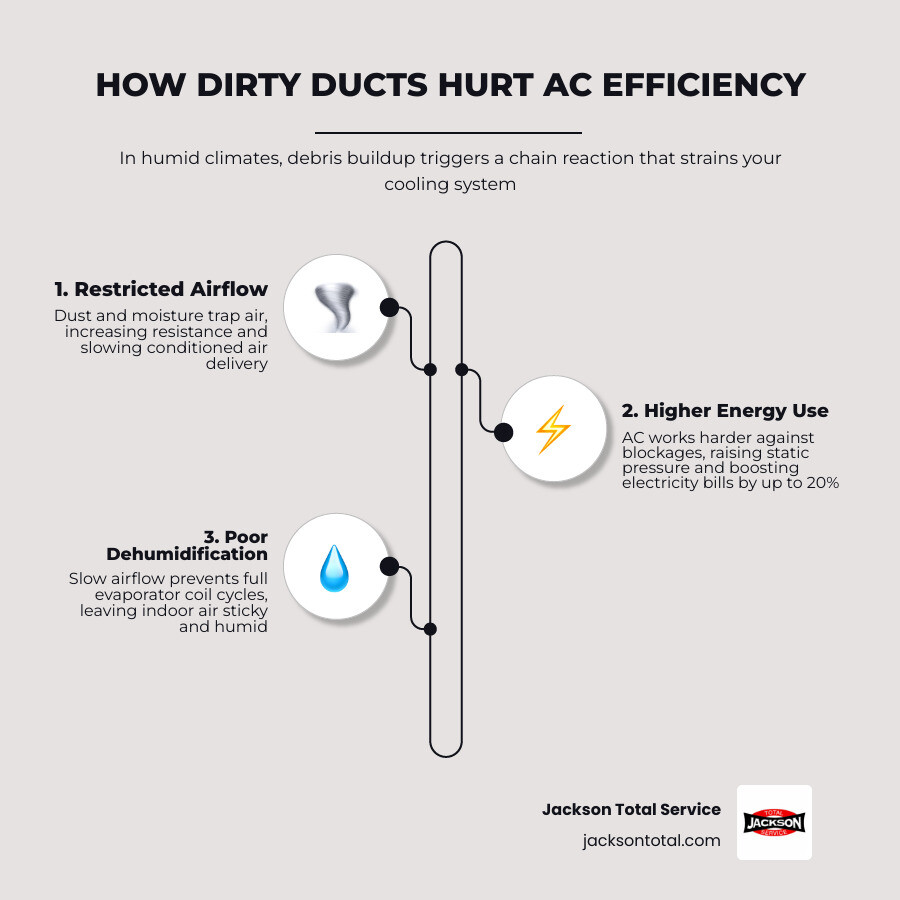
How duct cleaning improves AC efficiency in humid climates comes down to a simple chain reaction: cleaner ducts mean better airflow, and better airflow means your AC doesn’t have to fight as hard to cool and dehumidify your home.
Here’s a quick breakdown of the key efficiency gains:
- Restored airflow – Removing dust, debris, and moisture-trapping buildup lets conditioned air move freely through your system
- Reduced blower strain – Your AC fan motor works less when it isn’t pushing air through clogged passages
- Better dehumidification – Clear ducts allow the evaporator coil to complete its full condensation cycle, pulling more moisture out of the air
- Lower energy use – The U.S. Department of Energy links clean duct systems to efficiency improvements of up to 20%
- Mold prevention – Removing organic debris eliminates the breeding ground that humidity creates inside ductwork
- More consistent cooling – Balanced airflow means fewer hot, sticky spots in your home
In Southwest Florida, where humidity is relentless from spring through fall, these gains aren’t just comfortable — they’re necessary. The combination of high outdoor moisture levels and a constantly running AC system creates the perfect conditions for debris to accumulate fast inside your ducts. When that happens, your system starts working harder, your bills creep up, and the air inside your home never quite feels as fresh or dry as it should.
This guide walks you through exactly what’s happening inside your ductwork, why humid climates accelerate the problem, and what a professional cleaning actually does to restore your system’s performance.
Why does my home feel so sticky? The unique challenges of cooling in Southwest Florida
If you’ve lived in Naples or Fort Myers for even one summer, you know that heat is only half the battle. The real enemy is the “latent load”—that invisible weight of water vapor in the air. In our April 2026 climate, humidity levels frequently soar, forcing your air conditioner to act as both a refrigerator and a giant sponge.
Your AC’s evaporator coils are designed to pull heat out of the air, but in a humid environment, they spend a massive amount of energy pulling out moisture instead. This process relies on a delicate balance of airflow. When your Indoor Air Quality is compromised by blocked ducts, the air moves too slowly or sporadically over the coils. This prevents the system from effectively removing moisture, leaving your home feeling “sticky” even if the thermometer says it’s 72 degrees.
How moisture-trapping debris creates a “perfect storm” in your vents
In drier states, dust is just… dust. It’s light and fluffy. But in Southwest Florida, dust behaves differently. High humidity causes dust particles to absorb water, making them heavy and sticky. This leads to dust adhesion, where debris glues itself to the interior walls of your ductwork.
Once a thin layer of damp dust forms, it acts like a magnet for more debris. This creates a “perfect storm” of:
- Water particles getting trapped in the buildup, further increasing the humidity inside the HVAC system.
- Microbial growth finding a feast in the organic matter (skin cells, pet dander) combined with the dark, damp environment.
- Airflow blockage that narrows the “arteries” of your home, forcing the blower motor to work double-time to push air through.
How duct cleaning improves AC efficiency in humid climates

When we talk about how duct cleaning improves AC efficiency in humid climates, we are really talking about physics. Every bend and every inch of debris in your ductwork creates “static pressure.” Think of it like trying to breathe through a straw that has a bit of wet paper stuck inside. You can do it, but you have to puff your cheeks out and work much harder.
By removing that “wet paper” (the debris), we reduce the resistance the air faces. This allows for better heat exchange at the coils and significantly lower energy consumption. According to the U.S. Department of Energy, cleaning the entire system—including the ducts and coils—can lead to a 20% efficiency gain. For a home in Cape Coral or Marco Island, that’s a massive difference in your monthly overhead. Professional Duct Cleaning ensures your system operates at the peak performance it was designed for.
Specific ways how duct cleaning improves AC efficiency in humid climates
The benefits go beyond just “cleaner air.” Here is the mechanical reality of a clean system:
- Airflow Optimization: When ducts are clear, the air moves at the exact velocity the manufacturer intended. This ensures the air stays in contact with the cooling coils just long enough to be cooled and dried, but not so long that the coils freeze over.
- Reduced Friction: Smooth duct walls mean less turbulence. Less turbulence means the air reaches the furthest rooms in your house—like that back bedroom in Ave Maria—without losing its “cool.”
- Blower Motor Strain: The blower motor is the heart of your AC. When it fights against clogged ducts, it runs hotter and uses more amps. Cleaning the ducts lowers the “head pressure,” extending the motor’s life.
- Coil Protection: Dirty ducts often lead to dirty coils. By keeping the delivery system clean, you prevent debris from “blow-back” onto the sensitive fins of your evaporator coil.
Enhancing dehumidification through clear airflow
A major part of how duct cleaning improves AC efficiency in humid climates is how it handles the condensation cycle. Your AC needs to run long enough to actually pull water out of the air. When ducts are clogged, the system often “short-cycles”—it turns on and off rapidly because it can’t move enough air to satisfy the thermostat correctly.
Short-cycling is an efficiency killer. It leaves the air cold but damp. A clean system maintains steady, balanced airflow, allowing the AC to reach the 30-50% relative humidity target that experts recommend for Florida homes. This balanced environment makes you feel cooler at higher temperatures, meaning you might find yourself bumping the thermostat up a few degrees because the air is finally dry and comfortable.
Is mold growing in my vents? Preventing system strain in Florida’s heat
It’s the question every homeowner in Naples or Immokalee dreads. In our climate, the inside of your ducts can become a breeding ground for mold. Dust provides the food, and the AC’s condensation provides the water. When mold takes hold, it doesn’t just sit there; it releases spores that circulate every time the fan kicks on.
This creates a massive amount of “system strain.” Mold and mildew are sticky and thick; they can physically coat the interior of your vents, creating even more airflow resistance. Furthermore, the presence of these organic particles forces your filters to clog faster, leading to a rapid decline in Duct Cleaning Naples Fl performance.
Why professional maintenance matters: how duct cleaning improves AC efficiency in humid climates
You might be tempted to stick a vacuum hose down your register, but in a humid climate, that can actually make things worse by stirring up spores without removing them. Professional Duct Cleaning Fort Myers Fl requires a specialized approach:
- HEPA-Filtered Vacuums: These ensure that 99.97% of particles—including tiny mold spores—are trapped and removed from your home, not just blown back into the living room.
- Compressed Air & Agitation Tools: These “scrub” the sticky, humid debris off the duct walls so it can be vacuumed away.
- Component Cleaning: We don’t just look at the pipes; we ensure the registers, grilles, and plenums are clear.
This level of care is what leads to true system longevity. It prevents the “cascading failure” where a dirty duct leads to a frozen coil, which leads to a burnt-out compressor.
How can I tell if my AC is struggling? Signs of dirty ductwork
Sometimes the signs are subtle, and sometimes they hit you the moment you walk through the door. If you live in a high-humidity area like Pine Island or Sanibel, keep a close eye on these indicators.
| Symptom | What it Means for Your AC | Efficiency Impact |
|---|---|---|
| Musty Odors | Mold or mildew is growing in the damp debris inside your ducts. | High – System works harder to move “heavy,” contaminated air. |
| Visible Dust on Vents | Debris is so thick it’s being pushed out into your living space. | Medium – Indicates significant airflow restriction. |
| Rising Utility Bills | Your AC is running longer cycles to achieve the same cooling. | Severe – Can indicate a 15-20% drop in efficiency. |
| Uneven Cooling | Some rooms feel like a sauna while others are freezing. | Medium – Air is being diverted by blockages. |
| Frequent Filter Clogs | Your filter is “working overtime” to catch debris coming out of the ducts. | High – Clogged filters are the #1 cause of AC failure. |
If you notice these signs, it’s time to consider Duct Cleaning Cape Coral Fl to restore your home’s comfort.
Frequently Asked Questions about AC Efficiency and Duct Cleaning
How often should I clean my ducts in a humid region like Florida?
While the general rule of thumb in drier climates might be every 3 to 5 years, Southwest Florida is a different beast. In regions like Lehigh Acres or North Fort Myers, we recommend a professional inspection every 2 years.
If you live in a high-pollen zone, have multiple pets, or live in a coastal area where salt air can contribute to corrosion and debris stickiness, you might even benefit from annual inspections. Keeping your ducts clean on a 2-year cycle prevents the “caked-on” buildup that is so common in our humid environment.
Can cleaning my ducts really lower my monthly cooling bills?
Absolutely. Real-world data shows that properties often cut their monthly cooling bills by 10–20% after a thorough duct cleaning. The Department of Energy has noted that dirty ducts cause systems to run longer and harder, raising energy consumption by 15% or more.
In one case study involving a multi-unit building, energy use dropped by 18% following a full duct cleaning and coil treatment. When you consider that your AC is likely the largest consumer of electricity in your Florida home, those percentage points add up to significant savings over a single summer.
What maintenance should I do after a professional duct cleaning?
To maximize the ROI of your Duct Cleaning Bonita Springs Fl service, follow these steps:
- Change Filters Regularly: In Florida, check your filter every 30 days. If you have pets or allergies, consider upgrading to a MERV 13 filter, but consult with us first to ensure your system can handle the increased filtration without losing airflow.
- Control Humidity: Use your AC’s “Auto” setting rather than “On” to ensure moisture doesn’t blow back into the house during the off-cycle.
- Annual Tune-ups: Pair your clean ducts with a professional coil treatment and drain line flush to keep the whole system in harmony.
Conclusion
At the end of the day, your air conditioner is the most important appliance in your Southwest Florida home. It is the barrier between you and the oppressive “humid hustle” of the outdoors. Understanding how duct cleaning improves AC efficiency in humid climates is the first step toward a more comfortable, affordable, and healthier home.
Since 1964, Jackson Total Service has been the trusted name for homeowners from Naples to Sanibel Island. We understand the unique challenges of the Florida climate because we’ve lived and worked here for over six decades. Our “total service” approach means you don’t have to juggle multiple contractors—we handle the HVAC, plumbing, and electrical needs that keep your home running smoothly.
Whether you need Duct Cleaning Estero Fl or a full system evaluation in Marco Island, we are here to help. Don’t let dirty ducts drain your wallet and dampen your comfort. Schedule your professional cooling service today and feel the difference that clean air can make.