



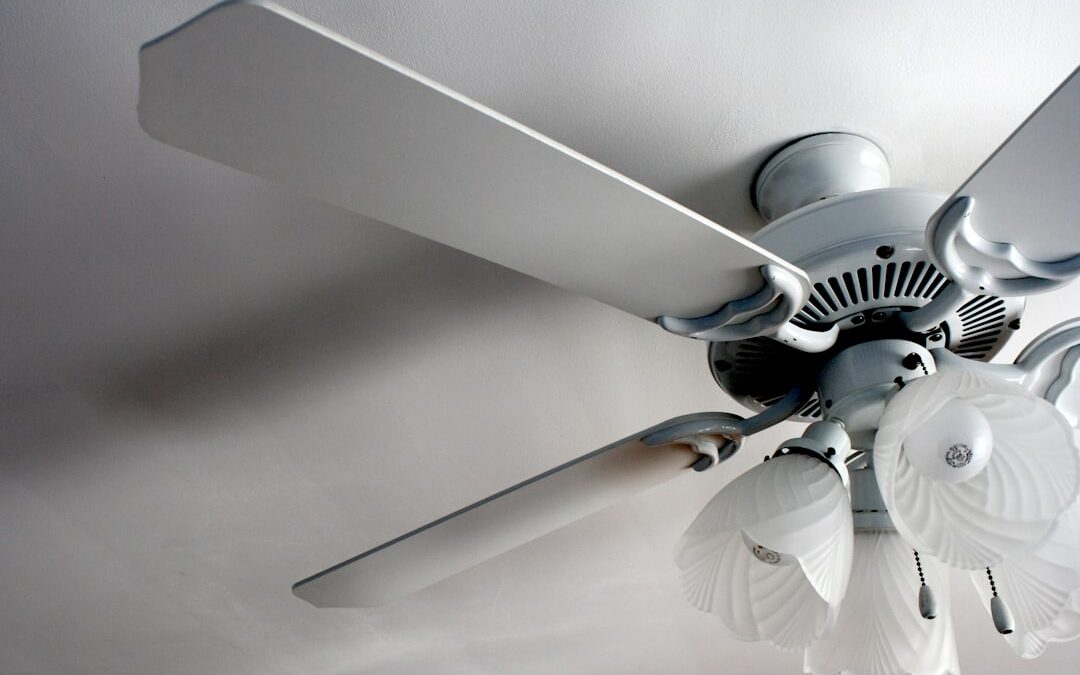
The Right Ceiling Fan Direction for Summer vs Winter (Quick Answer)
Ceiling fan direction for summer vs winter is simpler than most people think — but getting it wrong means wasted energy and less comfort year-round.
Here’s the quick answer:
| Season | Direction | Speed | Effect |
|---|---|---|---|
| Summer | Counterclockwise | Medium to high | Pushes air down, creates cooling wind chill |
| Winter | Clockwise | Low | Pulls cool air up, pushes warm air down from ceiling |
That one small switch on your fan’s motor housing — or a button on your remote — can reduce your summer cooling costs by up to 30% and trim winter heating bills by 15% or more, according to home energy data. The U.S. Department of Energy notes that running your fan correctly can let you raise your thermostat by about 4°F with no drop in comfort.
Most homeowners in Southwest Florida run their fans year-round, but many never flip that direction switch — and that’s leaving real money on the table.
This guide walks you through exactly how to set your fan for each season, how to check which way it’s currently spinning, and how to get the most out of every room in your home.

The Science of Ceiling Fan Direction for Summer vs Winter
At Jackson Total Service, we’ve been helping our neighbors in Naples, Fort Myers, and Cape Coral stay comfortable since 1964. One of the most common questions we get during a Ceiling Fan Installation is: “Does the direction really matter?”
The answer is a resounding yes. It all comes down to the physics of airflow, specifically the concepts of “downdraft” and “updraft.”
Summer: The Downdraft
In the summer, your fan should spin counterclockwise. Because of the angle (pitch) of the blades, this rotation slices into the air and pushes a concentrated column of air directly downward. This is called a downdraft.
It’s important to remember that fans don’t actually lower the temperature of the room. Instead, they create a “wind chill effect.” Just like a breeze on a pier in Marco Island makes a 90-degree day feel like 82, the downdraft helps evaporate moisture from your skin, which carries away body heat and makes you feel significantly cooler.
Winter: The Updraft
In the winter (or those rare chilly January nights in Ave Maria), you should flip the switch to clockwise. When the blades spin this way at a low speed, they pull cool air up toward the center of the fan. This displaces the warm air that naturally rises and gets trapped at the ceiling, pushing it out toward the walls and back down into the living space. This is an updraft.
| Feature | Summer Setting | Winter Setting |
|---|---|---|
| Rotation | Counterclockwise (Left) | Clockwise (Right) |
| Airflow | Downdraft (Blown Down) | Updraft (Pulled Up) |
| Speed | Medium to High | Low |
| Goal | Create Wind Chill | Redistribute Trapped Heat |
| Thermostat | Raise 4°F | Lower 2-4°F |
Why Ceiling Fan Direction for Summer vs Winter Matters for Your AC
In Southwest Florida, our air conditioners work harder than almost anywhere else in the country. Using the correct ceiling fan direction for summer vs winter is one of the best ways to give your HVAC system a break.
When you run your fan counterclockwise at high speed during a humid July afternoon in Estero, you can comfortably increase your thermostat by about 4 degrees. For example, if you usually set your AC to 74°F, you can bump it to 78°F and feel just as cool.
According to the U.S. Department of Energy, this simple adjustment can reduce energy costs by up to 30%. In fact, using a fan with your AC can save roughly $38 per month on cooling costs. If you find your current fans aren’t moving enough air to allow for these savings, it might be time to Beat The Heat Your Guide To Urgent Ceiling Fan Installation In Cape Coral.
Step-by-Step: Adjusting Your Ceiling Fan Direction for Summer vs Winter
Changing your fan’s direction is a quick DIY task, but it must be done safely. Whether you are in a high-rise in North Naples or a ranch home in Lehigh Acres, follow these steps:
- Turn Off the Power: Never attempt to flip the switch while the blades are moving. Turn the fan off and wait for it to come to a complete stop.
- Locate the Switch: For most standard fans, there is a small toggle switch on the motor housing (the metal part just above the blades).
- Summer: Push the switch down or to the left.
- Winter: Push the switch up or to the right.
- Check for Remote/Smart Controls: Many modern fans installed in newer Bonita Springs homes don’t have a physical switch. Look for a “reverse” button on your remote control or a toggle within your smart home app. Some smart fans even allow for voice commands like, “Set fan to winter mode.”
- Test the Airflow: Turn the fan back on. In summer mode, you should feel a distinct breeze standing directly under the blades. In winter mode, you should feel almost no air movement at all while standing underneath.
If you find that your fan doesn’t have a reversal feature or the switch is stuck, we can help. Our team provides Professional Perfection Your Guide To Expert Ceiling Fan Installation In Cape Coral to ensure your home is equipped with the latest, most efficient models.
How Do I Identify and Change My Fan Rotation?
If you’ve lived in your home for a while, you might have forgotten which way the fan is currently spinning. Identifying the rotation is easy with a simple visual check.
The Visual Check
Stand directly under the fan blades and turn it on at a low speed. Watch the blades as they begin to rotate:
- Counterclockwise: The blades will move from the right, across the top, to the left (like the top of a circle moving toward the left). This is your summer setting.
- Clockwise: The blades will move from the left, across the top, to the right (following the direction of a clock’s hands). This is your winter setting.
The Blade Pitch Test
If you can’t tell by looking, pay attention to the “leading edge” of the blade. The side of the blade that is slightly higher should be the one leading the rotation in the winter to pull air up. In the summer, the lower edge should lead the rotation to “scoop” the air and push it down.
If you’re still unsure, check out our Best Ceiling Fan Installation Guide Naples Fl for more visual aids and tips on fan mechanics.
Troubleshooting Non-Reversible Fans
Not every fan is built to reverse. Some older models or very specific designer fans are “single-direction” units.
- Check the Motor: If there is no switch on the housing and no button on the remote, the fan likely only spins counterclockwise (summer mode).
- Blade Pitch Impact: If your fan isn’t reversible but you want more warmth in the winter, you can try running it on the lowest possible speed, though it won’t be nearly as effective as a true clockwise rotation.
- Replacement Indicators: If your fan is wobbling, making clicking noises, or simply won’t reverse, it’s often a sign that the motor is reaching the end of its lifespan. For homeowners in Naples Fl Finding The Right Ceiling Fan Installation Service For Your Home is the first step toward better year-round comfort.
Maximizing Home Comfort and Efficiency in Southwest Florida
Living in places like Sanibel Island or Fort Myers Beach means dealing with unique environmental factors like high humidity and salt air. Proper fan usage goes beyond just flipping a switch.
Outdoor Patios and Lanais
For our outdoor spaces, the ceiling fan direction for summer vs winter stays consistent: Counterclockwise.
In addition to the wind chill effect, running an outdoor fan on high speed is a fantastic way to deter mosquitoes and flies. These pests are weak fliers, and the downdraft created by a counterclockwise rotation makes it nearly impossible for them to land on you while you’re enjoying a sunset on your lanai.
High and Vaulted Ceilings
If your home in Golden Gate or Immokalee has cathedral or vaulted ceilings (higher than 12 feet), the rules change slightly.
- Summer: Keep it counterclockwise on high. You may need a longer downrod to bring the fan closer to the living area (ideally 8 to 9 feet above the floor).
- Winter: You can actually leave the fan in counterclockwise mode but on a very low speed. Because the ceiling is so high, you won’t feel the wind chill, but the fan will still help mix the air layers. However, the clockwise “updraft” method is still the gold standard for pushing that trapped heat down from a high peak.
Maintenance: The “Dirty Blade” Drain
Did you know that dirty blades can reduce your fan’s efficiency by up to 20%? Dust buildup changes the aerodynamics of the blade, making the motor work harder and move less air. We recommend cleaning your blades every time you change your HVAC filters. If you need help with more affordable options for your home, check out Cape Coral Cool On A Budget Your Guide To Affordable Fan Installation.
Room-Specific Fan Strategies
Every room in your Florida home has different needs. Here is how we recommend tailoring your fan usage:
- Dining Rooms: In the summer, keep the fan on a medium setting. If it’s on high, the downdraft might cool your food faster than you can eat it! In the winter, use the clockwise/low setting to circulate air without a breeze.
- Home Offices: If you have papers on your desk, a high-speed downdraft can be a nightmare. Try switching the fan to clockwise (winter mode) even in the summer. It provides circulation and a slight cooling effect without blowing your documents across the room.
- Bedrooms: Since we spend 7 to 8 hours a night here, comfort is key. Use a counterclockwise setting on medium to help you sleep without over-taxing the AC.
- Garages and Attics: These unconditioned spaces benefit greatly from constant circulation. We often recommend damp-rated fans for these areas to help reduce humidity and prevent mold growth. For residents in our newer communities, we are Ave Marias Top Choice For Professional Affordable Ceiling Fan Installation.
Frequently Asked Questions about Seasonal Fan Settings
How can I tell which way my fan is spinning?
The easiest way is to stand directly under the blades and turn the fan on. If you feel a breeze immediately, it’s spinning counterclockwise (summer). If you don’t feel a breeze but can see the blades moving, it’s likely spinning clockwise (winter). You can also look up and see if the blades are moving to the left (counterclockwise) or right (clockwise).
Do all ceiling fans have a reverse switch?
Most modern fans do. It is usually a small black slide switch on the side of the motor. However, some “hugger” or flush-mount fans might have the switch hidden inside the light globe or on top of the motor housing near the ceiling. If your fan is controlled by a remote, the reverse function is almost always a button on the handset.
When is the best time to flip the switch?
A great rule of thumb is to change your fan direction when you change your clocks for Daylight Saving Time. Since we are currently in April 2026, you should already have your fans set to counterclockwise for the upcoming Florida summer. Making this a biannual habit ensures you never forget to optimize your home’s efficiency.
Conclusion
Understanding the correct ceiling fan direction for summer vs winter is a small change that yields big results. Whether you’re trying to stay cool in the Fort Myers sun or keep your home cozy during a Pine Island cold snap, your ceiling fan is your HVAC system’s best friend.
At Jackson Total Service, we’ve spent over 60 years perfecting home comfort in Southwest Florida. By using these tips, you can enjoy a more comfortable home, lower utility bills, and a longer lifespan for your air conditioning unit.
If you’re ready to upgrade your home with new, energy-efficient fans, or if you need professional help with any electrical, plumbing, or HVAC needs, we are here for you. We provide all your comfort solutions in one place, so you never have to juggle multiple contractors.
Ready to optimize your home? Contact us today for expert Ceiling Fan Installation and let us help you stay comfortable all year long!