



How Plumbing Leaks Create Mold Risk in Humid Weather — What Southwest Florida Homeowners Need to Know
How plumbing leaks create mold risk in humid weather is a serious concern for homeowners in Southwest Florida, where high humidity gives mold spores almost everything they need to thrive — and a small drip behind a wall can turn into a major infestation before you ever see it coming.
Here’s a quick breakdown of how it happens:
| Factor | What It Means for You |
|---|---|
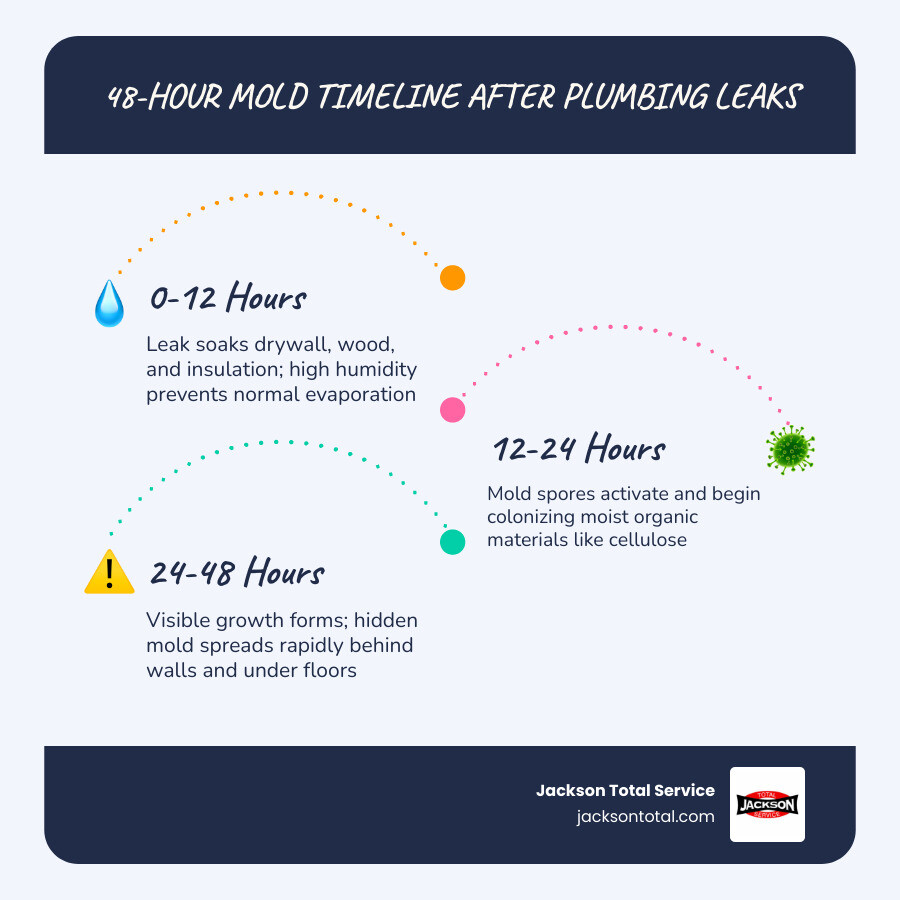
| Mold growth timeline | Mold can begin colonizing damp surfaces in as little as 12–48 hours after a leak |
| Humidity’s role | High outdoor humidity slows indoor drying, keeping leak-soaked materials wet far longer |
| Hidden risk | Leaks inside walls, under slabs, and behind appliances go undetected while mold spreads |
| Health impact | Mold exposure causes respiratory issues, skin irritation, and worsens asthma |
| Property impact | Untreated water damage can reduce home value by 15–25% |
In a place like Naples or Bonita Springs, where summer humidity regularly pushes above 80%, you have a much shorter window to act than homeowners in drier climates. What might take three or four days to become a mold problem elsewhere can happen overnight here.
A slow drip under a sink or a pinhole leak inside a wall might not look like much. But when warm, moisture-laden air surrounds wet drywall, wood framing, or cabinet materials, mold spores — which are always floating in the air — land, activate, and start feeding. The damage builds quietly, often for weeks or months, before a musty smell or a soft spot in the floor reveals what’s been happening out of sight.
This guide walks you through exactly how to identify the risk, stop it early, and protect your home.
Why Humid Weather Accelerates Mold Growth from Plumbing Leaks

In the industry, we often say that mold doesn’t start as a mold problem; it starts as a moisture problem. In Southwest Florida, moisture is our constant companion. When a plumbing leak occurs, it introduces liquid water into your home’s structure. Normally, some of that water would evaporate into the air. However, when the outdoor humidity is high, the air inside your home is already “full” of moisture.
This creates a state of moisture saturation. Because the air cannot absorb more water vapor effectively, damp building materials like drywall, baseboards, and carpet padding stay wet for much longer. Mold spores are opportunistic; they require three things to grow: moisture, warmth (70°F to 90°F), and an organic food source. Our homes are built with organic materials like cellulose (found in drywall and wood), which acts as a buffet for mold.
In May 2026, as we face another humid season, it is vital to understand that in these conditions, mold can start colonizing surfaces in as little as 12 hours. This rapid spore activation means that by the time you notice a leak repair is needed, the biological growth may already be underway.
How plumbing leaks create mold risk in humid weather through slow evaporation
The science of how plumbing leaks create mold risk in humid weather centers on evaporation rates. In a dry climate, a small spill might air-dry in a few hours. In Lee and Collier Counties, if your indoor humidity crosses the 60% threshold, evaporation practically stops.
Stagnant air in cabinets or wall cavities further complicates the issue. Without airflow, the moisture remains trapped against porous materials. These materials soak up water like a sponge, allowing mold to begin the process of cellulose digestion. Once the mold begins to eat the paper backing of your drywall or the wood of your floor joists, the structural integrity of your home begins to decline.
Common Plumbing Leak Locations That Lead to Hidden Mold
Not all leaks result in a dramatic flood. In fact, the most dangerous leaks are the ones that “sip” water rather than “gulp” it. We frequently see hidden mold caused by:
- Toilet Wax Rings: If a toilet rocks slightly when you sit on it, the wax seal may be broken. This allows a tiny amount of water to seep under the tile or into the subfloor every time you flush.
- Appliance Hoses: Rubber washing machine and dishwasher hoses can develop cracks over time. A slow drip behind a heavy appliance can create a massive mold colony before it’s ever discovered.
- P-Trap Failures: The U-shaped pipe under your sink can develop slow leaks at the seals.
- Pipe Sweating: This isn’t technically a leak, but in humid weather, cold water pipes can “sweat” (condense moisture). This constant dripping onto wooden joists is a major mold trigger in crawlspaces and basements.
If you notice moisture in your home, stop the flood with same day leak repair in North Naples to prevent these small issues from becoming structural nightmares.
Identifying how plumbing leaks create mold risk in humid weather behind walls
The most insidious way how plumbing leaks create mold risk in humid weather is through pinhole leaks in copper piping or loose fittings inside wall cavities. Because these areas are dark and lack ventilation, they are the perfect incubators for mold.
Drywall is incredibly porous. Water from a small leak inside a wall will wick upward and outward, saturating the insulation. Because you can’t see behind the wall, the mold can grow undisturbed for months. By the time you see a dark stain on the paint, the entire interior of the wall may be covered in black mold (Stachybotrys chartarum), which releases toxins that can severely affect your family’s health.
How to Detect Hidden Plumbing Leaks Before Mold Develops
Since you can’t always see the water, you have to use your other senses — and perhaps a bit of technology. One of the easiest DIY methods is the water meter test. Ensure all faucets and water-using appliances are turned off, then go check your water meter. If the dial is still moving, you have a leak somewhere in your system.
We also recommend trusting your nose. A persistent musty or “earthy” odor is often the first sign of mold metabolizing organic matter behind the scenes. Professional teams use specialized tools like infrared cameras, which can “see” temperature differences in walls caused by moisture, and moisture meters that detect dampness deep within wood or drywall. To keep your home safe, don’t let leaks drip away your peace with expert repair in Fort Myers.
Warning signs of how plumbing leaks create mold risk in humid weather
Keep an eye out for these subtle red flags:
- Warped Cabinets: If the bottom of your kitchen or bathroom cabinet looks “wavy,” there is a moisture source nearby.
- Peeling Paint or Wallpaper: Moisture behind the drywall causes the adhesive to fail.
- Unexplained Humidity: If your AC is running but the house still feels “sticky” or humid, you might have a significant amount of standing water or a large hidden leak.
- Respiratory Symptoms: If family members experience unexplained headaches, coughing, or sinus congestion that improves when they leave the house, mold may be the culprit.
- Spiking Water Bills: A sudden increase in your monthly bill without a change in usage almost always indicates a leak.
Immediate Steps to Prevent Mold After a Plumbing Leak
If you discover a leak, the clock is ticking. You have a 24-to-48-hour window to get things dry before mold takes hold.
First, shut off the water source immediately. For a burst pipe, use the main shutoff valve; for an appliance, use the local valve behind the unit. Next, extract as much standing water as possible. A wet/dry vacuum is significantly more effective than just using towels. For larger leaks, professional-grade extraction is necessary to pull moisture out of carpets and subfloors.
Speed is everything when you need fast and reliable emergency leak repair in Fort Myers. Once the water is gone, the drying phase begins.
Critical actions for Southwest Florida homeowners
In our humid climate, simply opening a window won’t work — it will actually make the problem worse by letting in more humid air. Instead:
- Close Windows and Run the AC: Your air conditioner acts as a primary dehumidifier.
- Use High-Velocity Fans: Position fans to blow directly across wet surfaces to encourage evaporation.
- Deploy Dehumidifiers: You need to pull the moisture out of the air as fast as the fans pull it out of the walls.
- Remove Porous Materials: If drywall or carpet padding has been soaked for more than 48 hours, it usually cannot be saved and must be discarded to prevent mold spread.
- Disinfect: Clean hard surfaces with detergent and water, then dry them thoroughly.
For residents in coastal areas, we offer 24/7 emergency leak repair in Fort Myers Beach FL to ensure you don’t miss that critical 48-hour drying window.
Long-Term Strategies for Humidity Control and Mold Prevention
Prevention is always more cost-effective than remediation. In Southwest Florida, managing your indoor environment is a full-time job for your home’s systems.
| Strategy | Benefit |
|---|---|
| Whole-Home Dehumidifier | Maintains humidity between 30-50% regardless of AC cycles. |
| Pipe Insulation | Prevents “pipe sweating” and condensation drips in crawlspaces. |
| Braided Stainless Steel Hoses | Significantly less likely to burst than standard rubber hoses. |
| Annual Plumbing Inspections | Catches pinhole leaks and failing seals before they cause mold. |
| Smart Leak Detectors | Sensors that alert your phone and shut off water automatically. |
Regular maintenance by the A-Team of leaks: professional emergency plumbing in Fort Myers FL can identify aging components before they fail. We also recommend replacing rubber washing machine hoses every five years and checking your toilet wax rings if you notice any movement in the fixture.
Frequently Asked Questions about Plumbing Mold Risks
How quickly can mold begin growing after a plumbing leak in humid weather?
In the warm, damp conditions typical of Naples or Fort Myers, mold can begin to germinate in as little as 12 to 24 hours. Full colonies can become visible within 3 to 7 days, and airborne spores can be released into your HVAC system within two weeks if the moisture source isn’t removed.
When should I call a professional for leak detection or mold remediation?
You should call a professional if you cannot find the source of a musty odor, if you see water stains on the ceiling, or if you have standing water that you cannot extract yourself. If mold has already appeared and covers more than 10 square feet, the EPA recommends professional remediation to ensure spores aren’t spread throughout the home. For guidance on local services, see our emergency leak repair Naples FL guide.
Does proper ventilation really prevent mold after a leak?
Yes, but with a caveat: in Southwest Florida, “ventilation” must be controlled. Using exhaust fans in bathrooms and kitchens is vital to remove localized steam. However, after a leak, you need high-volume airflow combined with dehumidification. Moving air prevents the “stagnant pockets” where mold loves to grow.
Conclusion
Since 1964, Jackson Total Service has been the trusted name for home comfort in Southwest Florida. We understand exactly how plumbing leaks create mold risk in humid weather because we’ve been helping our neighbors in Naples, Cape Coral, and Fort Myers fight this battle for generations.
Our unique strength is that we handle it all — plumbing, HVAC, and electrical. If a leak has caused a moisture problem, we can fix the pipe, ensure your AC is dehumidifying correctly, and check the wiring behind damp walls. We are also experts in keeping your enterprise dry with professional commercial leak repair in Fort Myers.
Don’t wait for the musty smell to take over your home. Schedule your professional inspection today and let us help you keep your home dry, healthy, and mold-free.