


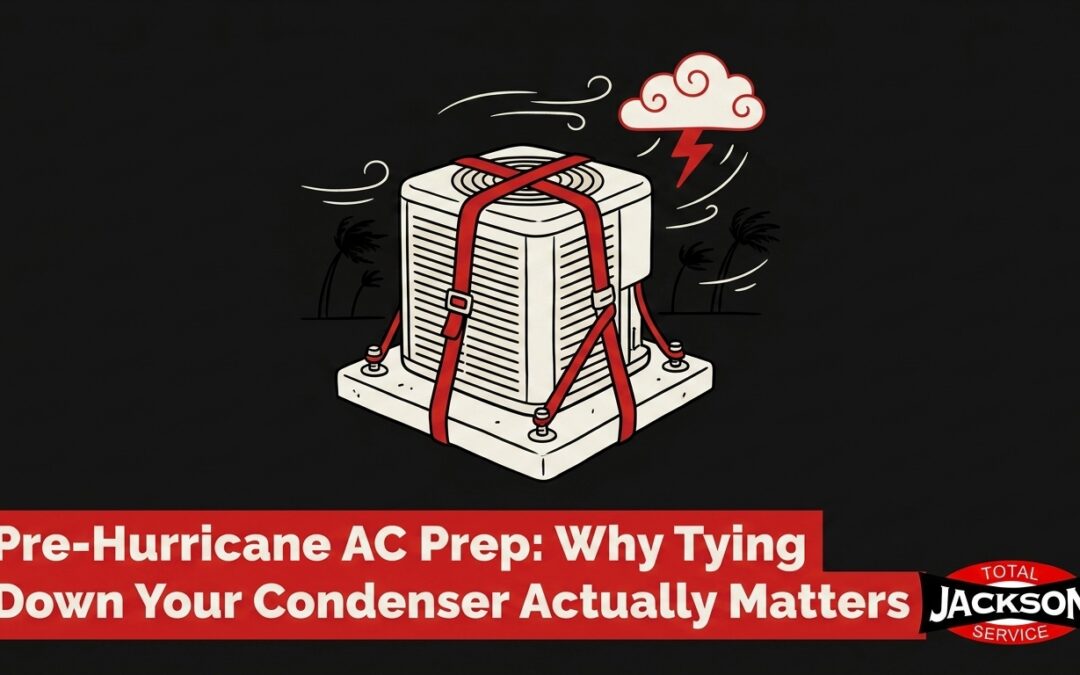
The Hidden Threat to Your AC During Peak Hurricane Season: Pre-Hurricane AC Prep: Why Tying Down Your Condenser Actually Matters
At Jackson Total Service, we see it every summer: July peak hurricane prep is fully underway, and as you secure your windows and stock up on water, there is a massive vulnerability sitting right outside your house. If you are researching Pre-Hurricane AC Prep: Why Tying Down Your Condenser Actually Matters, the short answer is that skipping this step usually leads to catastrophic mechanical failure. Most homeowners assume that a heavy metal box is safe from the wind. Unfortunately, that assumption leaves your most expensive home appliance completely exposed to the elements.
As you gather supplies and check off your mid-summer readiness lists, prioritizing your cooling system is a vital step. Partnering with our trusted local team for comprehensive home services ensures that every part of your property, including your climate control system, is ready for severe weather before the first warning is issued.
The Danger of the Waiting Game
The window for effective preparation closes rapidly once a named storm enters the Gulf. By the time the local news stations are broadcasting tracking cones, our technicians at Jackson Total Service are already booked solid. Deciding to proactively anchor your AC condenser right now prevents panic later. The goal is to secure the hardware while the skies are clear, ensuring that your system remains structurally sound no matter what the Atlantic hurricane season brings.
Common signs our team typically sees when a unit is currently vulnerable:
- Missing hardware: You can see empty bolt holes on the base pan of your outdoor unit.
- Rusted straps: Existing metal tie-downs are heavily corroded from salt air and humidity.
- Loose footing: The condenser rocks or shifts slightly when you push against the top panel.
- Sunken pads: The concrete or composite pad beneath the unit has sunk unevenly into the soil.
Why 300 Pounds Isn’t Enough to Defeat Gulf Coast Winds
A standard air conditioning condenser is a heavy piece of machinery. Depending on the tonnage, these units easily weigh between 200 and 300 pounds. Because of this static weight, a dangerous myth persists among homeowners: the belief that the unit is too heavy to be moved by the wind. However, across the Naples FL coastal and inland properties we serve, the specific high-velocity wind gusts generated by tropical cyclones play by entirely different rules of physics.
The Aerodynamics of a Rectangular Box
To understand the risk, you have to look at how wind interacts with large, flat surfaces. A Category 3 hurricane brings sustained winds of 111 mph or higher. When wind hits the broad side panels of your condenser, it creates immense lateral pressure. Simultaneously, the wind rushing over the top of the unit creates a low-pressure zone—generating aerodynamic lift.
Your heavy AC unit essentially acts like a short, blocky airplane wing. The combination of lateral pushing and upward lifting easily overcomes the static weight of the machine. It does not matter if the unit weighs 300 pounds; the wind forces at play are exponentially stronger.
| Wind Condition | Force Exerted on Flat Surfaces | Impact on Unanchored Condensers |
|---|---|---|
| Tropical Storm (39-73 mph) | Moderate lateral pressure | Vibration and minor rocking on the pad. |
| Category 1 (74-95 mph) | High lateral pressure, slight lift | Potential for sliding a few inches off-center. |
| Category 2 (96-110 mph) | Severe lateral torque | High risk of shifting, twisting, and line stress. |
| Category 3+ (111+ mph) | Extreme aerodynamic lift | Unit is lifted and slammed down, causing total structural failure. |
The “Lawn Furniture” Misconception: Many people picture an unanchored AC unit blowing away across the yard like a plastic patio chair. Because they know that won’t happen, they assume the unit is safe. The reality is far more subtle and dangerous. The unit does not need to blow into the neighbor’s yard to be destroyed. It only needs to slide two inches.
The Domino Effect: How a Few Inches of Movement Destroys Your System
The true danger of high wind torque is not about losing the physical box; it is about what happens to the connections keeping that box tied to your house. Your outdoor condenser is connected to your indoor air handler by two primary lifelines: the electrical whip and the refrigerant lines. Understanding the mechanical differences between these two connections reveals exactly why tie-downs are mandatory for July peak hurricane prep.
The Rigid Vulnerability of Copper
The electrical connection (the whip) is housed in a flexible conduit. If the condenser shifts slightly, this flexible line has enough slack to stretch without immediately breaking.
The refrigerant lines, however, are made of rigid copper. These lines are brazed together to form a highly pressurized, airtight seal that circulates chemical refrigerant between the indoors and outdoors. Copper is strong, but it is incredibly brittle when subjected to lateral torque. It has zero flexibility.
Based on our team’s firsthand field experience at Jackson Total Service diagnosing electrical failures and snapped lines in Southwest Florida after named storms, the sequence of failure we see is remarkably consistent. When wind forces push an unanchored condenser just a few inches across its pad, the rigid copper lines act as an anchor point. They take the full force of the shifting 300-pound machine.
The sequence of total system failure:
- The Shift: Wind gusts lift and push the condenser laterally across the concrete pad.
- The Snap: The rigid copper lines bend past their breaking point, snapping at the brazed joints or directly at the service valves.
- The Vent: Highly pressurized refrigerant instantly vents into the atmosphere, emptying the system entirely.
- The Surge: If the unit is running when this happens, the compressor continues to pump without refrigerant (which acts as its coolant), rapidly burning out the internal motor.
Once the lines snap and the compressor burns out, you are no longer looking at a minor fix. You are looking at a total system replacement. If you are dealing with the aftermath of severe weather, securing prompt AC repair in North Naples is the first step toward getting your home comfortable again.

Florida Building Code and Wind-Load Anchoring Requirements
Because the physics of wind torque are so destructive, local regulations have strict mandates in place. Across Naples FL coastal and inland properties, the Florida Building Code requires all exterior mechanical equipment—including HVAC condensers—to be securely anchored to resist specific wind loads. This isn’t merely a suggestion for peace of mind; it is a structural requirement designed to protect property and prevent airborne debris.
What the Regulations Demand
Proper anchoring involves more than just throwing a rope over the machine. The code dictates that the concrete pad itself must be of sufficient weight and thickness to act as a proper counter-weight, or it must be anchored into the earth. The condenser is then secured to this pad using rated stainless steel hardware and engineered tie-down straps or brackets that can withstand sustained aerodynamic lift.
Why our experts warn that DIY straps are a costly mistake:
- Improper Tension: Ratchet straps from a hardware store stretch under extreme load, allowing the exact lateral shift you are trying to prevent.
- Coil Punctures: Attempting to drill brackets into the casing of an AC unit without knowing the internal layout frequently results in a punctured condenser coil, destroying the unit instantly.
- Corrosion: Non-rated metal hardware will rust rapidly in the coastal Florida environment, snapping just when you need it most.
- Code Violations: Unapproved anchoring methods will fail home inspections and can complicate insurance claims if the unit is damaged during a storm.
Because of the precision required to secure the casing without damaging the internal coils, installation requires a licensed professional. If you suspect your unit is loose, missing hardware, or improperly secured, scheduling urgent AC maintenance to have rated tie-downs installed is the safest course of action.
Completing Your Mid-Summer AC Preparedness Checklist
While securing the unit to the pad is the most critical mechanical step for July peak hurricane prep, it is only one part of a comprehensive strategy. Protecting the delicate aluminum fins and internal electrical components from power surges and flying debris ensures your system will fire right back up once the grid is restored.
48 Hours Before the Storm
Clear the perimeter: High winds turn everyday yard items into destructive projectiles. Walk the perimeter of your home and remove anything that could strike the condenser. This includes patio furniture, potted plants, garden hoses, and loose children’s toys. Trim back any dead palm fronds or weak branches overhanging the equipment.
Covering the unit safely: If you choose to cover your AC to protect the internal fan from debris, use a breathable, specially designed hurricane cover. Never wrap the unit tightly in plastic tarps or garbage bags. Non-breathable materials trap coastal humidity inside the machine, accelerating corrosion on the electrical contacts and coils.
12 Hours Before the Storm
Shut off the power: As the storm bands approach, turn off your air conditioning system completely. Do not just turn it off at the thermostat; flip the dedicated breaker switch in your main electrical panel. Power outages during a hurricane are rarely clean breaks. The grid will likely flutter, sending massive electrical surges through the lines. If your AC is running when a surge hits, it will fry the compressor and the internal circuit boards.
Post-Storm Recovery
Inspect before you start: Once the storm passes, do not immediately flip the breaker back on. Walk outside and inspect the unit. Look for any signs that the unit shifted, check for dented panels, and ensure the copper lines look straight and intact. Most importantly, remove any protective cover you placed over the machine. Running an air conditioner while it is covered will suffocate the system and burn out the motor in a matter of minutes.
For more detailed strategies on safeguarding your entire system from severe weather, reviewing a complete guide on protecting your AC during a hurricane will provide the next steps you need.
Frequently Asked Questions About AC Hurricane Preparation
Why do AC units need to be tied down?
Hurricane-force winds can shift the unit, snapping the rigid copper refrigerant lines and causing catastrophic system failure. Because the unit acts like a large sail, aerodynamic lift easily overcomes its heavy static weight. Professional tie-downs anchor the unit to its concrete pad, eliminating the lateral movement that destroys the connections.
What happens if an AC condenser shifts during a storm?
Even a shift of a few inches creates lateral torque that breaks refrigerant lines and damages electrical whips. Once those copper lines snap, the highly pressurized chemical refrigerant instantly vents out of the system. If the system has power, the compressor will run dry and burn out, requiring a complete replacement.
Should I turn off my AC during a storm?
Yes, you should turn off the power at the main electrical breaker before the severe weather hits. Power grids frequently experience violent surges as lines go down and transformers blow. Shutting off the breaker isolates your expensive HVAC equipment from these surges, protecting the sensitive circuit boards and motors.
Do I need to cover my AC during a hurricane?
Covering the unit can protect the internal fan blades from flying debris, but you must use a breathable cover. Wrapping the condenser in a plastic tarp traps moisture and promotes severe rust on the electrical components. Always remember to completely remove the cover after the storm passes before turning the power back on.
Can I install AC hurricane straps myself?
No, installing wind-load anchoring requires a licensed professional to ensure structural integrity and code compliance. Drilling into the base pan or casing of an AC unit without exact knowledge of the internal layout often results in a punctured condenser coil. Furthermore, DIY straps rarely meet the strict wind-load requirements established by the Florida Building Code for Naples FL coastal and inland properties.
Secure Your System Before the Next Storm Strikes
A clear mechanical understanding of wind torque proves that professional tie-downs are non-negotiable for anyone living in a high-wind zone. The sheer force of a hurricane will easily push a 300-pound box across a concrete pad, snapping the rigid copper lines and leaving you with a completely destroyed system. Proactive preparation during your July peak hurricane prep is the only reliable way to safeguard your investment against extreme wind forces.
Do not wait until the local meteorologists are tracking a named storm toward the coast. Take control of your home’s readiness today. The Jackson Total Service team encourages you to schedule a pre-storm AC inspection to verify your unit’s anchoring status. Ensuring your equipment is properly secured is the foundation of effective Pre-Hurricane AC Prep: Why Tying Down Your Condenser Actually Matters is a lesson you never want to learn the hard way.