



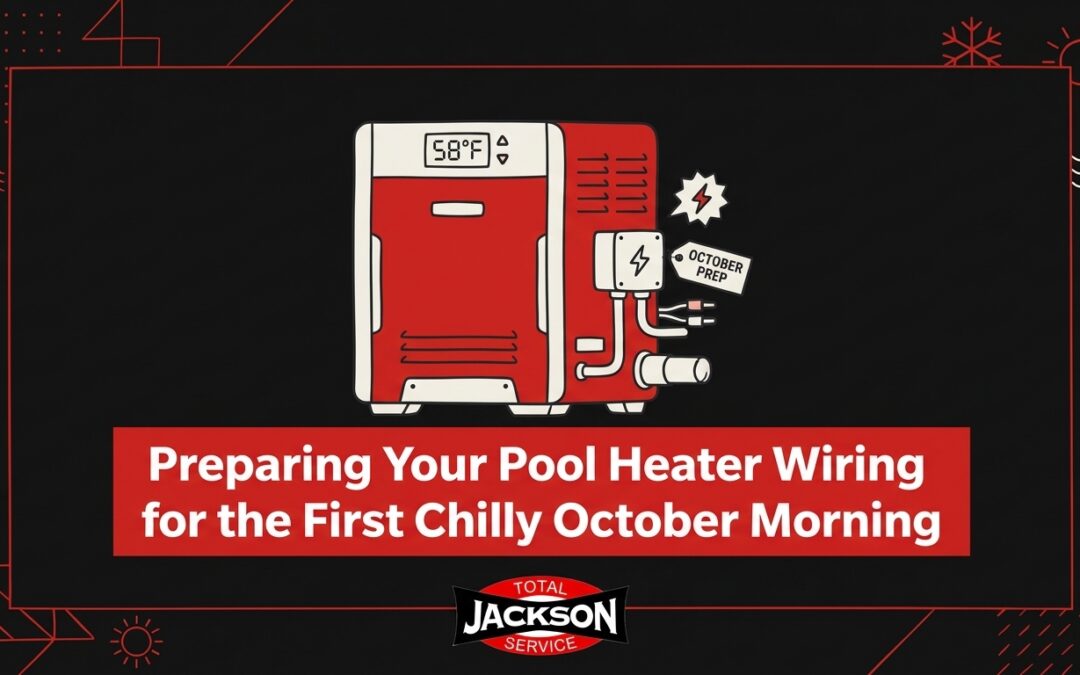
The Hidden Electrical Strain Waiting for the Fall Season
The long, blistering summer is finally breaking, and as the first October cold front in Southwest Florida approaches, our Naples customers are eager to turn their outdoor spaces back into comfortable evening retreats. Preparing Your Pool Heater Wiring for the First Chilly October Morning is a crucial step that we often see homeowners overlook, simply assuming that a system sitting quietly all summer is ready to perform on demand. At Jackson Total Service, our technicians frequently witness the massive, immediate electrical strain that firing up a dormant pool heat pump places on components exposed to harsh weather for months. Before you switch that heater on, you face a critical decision point: determining whether the visible pool heater conduit is intact enough to handle the startup surge safely, or if hidden damage requires professional intervention.
When a high-amperage appliance sits unused from May through September, the electrical connections, protective conduits, and internal contactors are subjected to extreme environmental stress. Dust, humidity, and fluctuating temperatures take a toll on the system’s external defenses. A simple visual inspection serves as your first line of defense against unexpected electrical hazards. By taking a few minutes to assess the situation before demanding peak performance from your equipment, you protect your property and your family. If you are ever in doubt about the integrity of your home’s infrastructure, relying on comprehensive Southwest Florida electrical and HVAC services from our experienced team ensures that your system is evaluated safely and accurately.
The Reality of Dormant High-Voltage Equipment
Pool heat pumps are not like standard light fixtures; they are heavy-duty industrial machines operating in a residential setting. In our experience servicing these units, we know that when they remain dormant, several hidden issues can develop:
- Contact oxidation: The metal contactors inside the electrical panel can develop a thin layer of oxidation from high humidity, increasing electrical resistance.
- Material fatigue: The constant expansion and contraction of plastic and metal components during daily temperature swings weakens protective casings.
- Moisture accumulation: Morning dew and heavy summer rains can lead to microscopic moisture pooling inside compromised junction boxes.
Understanding these hidden strains is the foundation of safe fall preparation. The goal is to identify the outward signs of this environmental wear and tear before introducing 50 amps of electricity into the circuit.
How Summer Weather Quietly Degrades Outdoor Pool Wiring
In our decades of serving Naples coastal and inland properties, we’ve seen firsthand how the summer environment creates a perfect storm for electrical degradation. The combination of intense ultraviolet (UV) radiation, daily heavy rainfall, and high humidity works relentlessly to break down the materials designed to protect your high-voltage wiring.
Intense UV radiation is the primary enemy of the flexible non-metallic conduit (FNMC) that typically connects your pool equipment pad to the main electrical supply. Over the long summer months, the sun’s rays actively break down the polymers and plasticizers within the conduit. This chemical degradation causes the once-flexible material to become rigid, faded, and highly brittle. What starts as microscopic surface damage eventually leads to micro-cracking, compromising the waterproof seal that protects the sensitive copper wiring inside.
The Threat of Monsoon Rains and Local Wildlife
Once the UV rays have weakened the conduit, the heavy monsoon-season rains from June through September finish the job. Water intrusion becomes a severe threat as these daily downpours force moisture through the tiny cracks and fissures in the sun-baked plastic. When water reaches the internal wiring, our electricians frequently find rapid corrosion, ground faults, and a significantly increased risk of electrical shorts upon startup.
Furthermore, the extreme weather drives local pests to seek shelter. Rats, mice, and insects frequently look for dry, elevated spaces during heavy flooding, and the area around a warm, dry pool equipment pad is a prime target. Rodents are notorious for chewing on exposed wiring insulation to file down their teeth or gather nesting materials. A chewed wire hidden behind a pool pump is a ticking time bomb that can easily result in a catastrophic electrical failure the moment the system is energized.
The Massive Electrical Demand of a Heat Pump Startup
To understand why compromised wiring is so dangerous, it is essential to look at the technical reality of what happens when a pool heater is turned on. Pool heat pumps are high-demand appliances that typically require dedicated 40 to 50-amp circuits. This is a massive amount of electricity—roughly equivalent to the power required to run an entire small apartment.
The moment the thermostat calls for heat, the system experiences what is known as a “startup surge” or inrush current. To get the heavy compressor motor turning from a dead stop, the heat pump draws a spike of electricity that can be two to three times higher than its normal running amperage. This surge lasts only for a fraction of a second, but it places extreme thermal and physical stress on the wiring, the breaker, and every connection point in between. If your home’s electrical infrastructure is outdated or struggling to handle these loads, exploring electrical panel upgrades with our licensed team is often a necessary step to ensure safe, reliable operation.
Understanding the Startup Surge
Pushing this high amperage through sun-baked, frayed, or water-compromised wiring is a severe hazard. Electricity always seeks the path of least resistance. If the insulation around the wire is cracked, the electrical current can arc to nearby metal, jump to the wet ground, or create intense localized heat that melts the remaining plastic and starts a fire. The combination of high-voltage electricity, compromised conduit, and nearby pool water is one of the most dangerous scenarios our service professionals encounter.
| Equipment Phase | Typical Amperage Draw | Stress on Wiring Infrastructure |
|---|---|---|
| System Idle (Dormant) | 0 Amps (or minimal for digital display) | None. Environmental wear and tear occurs here. |
| Startup Surge (Inrush) | Up to 100+ Amps (briefly) | Maximum thermal stress. Weak points will arc or fail. |
| Continuous Running | 25 to 40 Amps | Sustained heat generation. Requires fully intact insulation. |
The technical takeaway: The startup surge acts as a stress test for your entire electrical circuit. If the conduit has failed during the summer, the startup surge is the exact moment that failure will manifest into a dangerous electrical fault.
Safe Visual Inspection Steps for Dormant Pool Heaters
Because of the massive electrical loads involved, we strongly advise our homeowners to perform a strict, visual-only inspection before touching the power switch on the first chilly morning. This checklist is designed to help you spot obvious signs of danger without ever putting yourself at risk of electrical shock. Strict Warning: Do not touch exposed wires, do not attempt to open electrical panels, and do not poke inside conduit with metal tools. This is strictly a hands-off assessment.
- Inspect the flexible conduit: Look closely at the gray or black tubing connecting the electrical panel to the pool heater. Check for visible cracks, severe fading (turning powdery white), or a brittle appearance.
- Look for exposed wire insulation: Check the connection points where the conduit enters the heater and the junction box. If the outer protective casing has pulled away or shrunk back, exposing the colored individual wires inside, the seal is broken.
- Check for pest activity: Examine the area immediately around and beneath the equipment pad. Look for chewed plastic, small droppings, or piles of debris that indicate a rodent has built a nest near the wiring.
- Examine the electrical panels: Look at the exterior of the main electrical panel and the pool sub-panel. Look for signs of scorching (black marks), heavy rust trails, or visible moisture intrusion around the edges of the box.
- Verify proper clearances: Ensure that summer vegetation, vines, or heavy debris have not grown over or buried the electrical connections, which can trap moisture against the conduit.
When to Stop and Call a Professional
During your visual inspection, certain red flags mean you must immediately abandon the startup process and call a licensed professional. Stop immediately if:
- Any cracking, fraying, or bare copper wire is visible anywhere on the equipment pad.
- The conduit feels brittle or crumbles if accidentally brushed against with a non-conductive item like a wooden broom handle.
- There is visible water pooling inside the conduit, dripping from the bottom of the electrical panel, or immediately surrounding the electrical connections.

Why a Tripping Breaker Means Stop, Not Reset
If you perform your visual inspection, find no obvious faults, and turn the heater on only to have the breaker immediately trip, you have encountered a critical safety mechanism in action. Circuit breakers and Ground Fault Circuit Interrupter (GFCI) devices are explicitly designed to trip in order to prevent electrical fires, severe equipment damage, and fatal electric shocks. They monitor the flow of electricity and cut the power the millisecond they detect an anomaly, such as power leaking to the ground or a massive overcurrent.
A common, yet highly dangerous, habit we see among homeowners is repeatedly resetting a breaker that trips immediately upon pool heater startup. When a breaker trips instantly, it is not a nuisance trip; it is a hard fault. Ignoring this and forcing the breaker back into the “on” position forces massive amounts of power through a failing system. This can weld internal components together, melt the remaining wire insulation, or start a fire inside the panel.
Real-World Consequences of Electrical Faults
The danger of electrical faults near water is severe, especially following extreme weather events that can invisibly compromise your equipment. For example, following a severe fall weather event—just a week and a half after Hurricane Ian—our emergency dispatch team received a call from a local property owner facing a highly dangerous situation. After they attempted to restore power to their outdoor equipment on a Sunday, sparks began shooting directly from the electrical panel. Instead of trying to reset the system or handle it themselves, they immediately reached out to us for help. We dispatched a technician and had a licensed electrician on-site in less than an hour, safely resolving what could have been a catastrophic fire hazard.
This scenario underscores the absolute necessity of respecting your electrical panel’s safety mechanisms. If your system trips, leave it off. Understanding the danger of ignoring a tripping GFCI breaker on your pool pump or heater is essential for protecting your home.
The Dangers of DIY Electrical Repairs Near Water
When a visual inspection reveals damaged conduit, or a breaker refuses to stay on, the next step must always involve a licensed professional. The combination of high-voltage electricity and standing water is heavily regulated for a reason. The National Electrical Code (NEC) Article 680 outlines incredibly strict safety standards specifically regarding swimming pools, spas, and their associated equipment.
These codes exist because the human body becomes highly conductive when wet, drastically reducing the amount of electrical current required to cause fatal harm. NEC Article 680 mandates specific grounding requirements, equipotential bonding grids (which ensure all metal parts around the pool remain at the same voltage to prevent shock), and specialized GFCI protection for outdoor circuits. These are highly complex electrical engineering principles that go far beyond basic home maintenance.
Knowing Your Boundaries as a Homeowner
There is a massive difference between basic pool maintenance—such as skimming leaves, balancing water chemistry, or cleaning filter cartridges—and high-voltage electrical work. Replacing brittle conduit, upgrading worn-out breakers, testing live wires for continuity, or repairing frayed connections must be done by a licensed professional.
Attempting DIY repairs on a 50-amp pool heating circuit carries immense liability and safety risks. A single improper connection can energize the pool water, bypass safety breakers, or start an electrical fire that spreads to the main house. When it comes to the safety of your family and guests, knowing when to call a professional electrician from a trusted company like Jackson Total Service is the most important maintenance skill you can possess.
Why Multi-Trade Expertise Matters for Pool Heating
Addressing a malfunctioning or damaged pool heat pump often requires a specialized skill set that falls outside the scope of standard service companies. Standard pool cleaning services are fantastic at maintaining water clarity and chemical balance, but they are generally not licensed or trained to handle heavy electrical panel repairs, breaker replacements, or high-amperage wiring upgrades. Conversely, a standard electrician might understand the wiring but lack the specific knowledge required to diagnose the refrigeration cycle of the heat pump itself.
This intersection of HVAC technology (the heat pump mechanism) and high-amperage electrical systems (the power supply) is where our multi-trade expertise becomes invaluable. Working with our team at Jackson Total Service, which features comprehensive multi-trade capabilities across HVAC, plumbing, and electrical disciplines, ensures that every aspect of your system is evaluated holistically. Assessing and repairing high-amperage electrical loads requires our licensed electricians, while diagnosing the compressor’s efficiency falls perfectly into our HVAC expertise. If an upgrade is necessary, we can also advise you on generic federal tax credits or utility incentive programs that may apply to qualifying heat pump installations (though you should always verify current programs with your tax professional).
A comprehensive approach ensures that both the heating mechanism and the electrical supply are safe, efficient, and up to current NEC codes. This eliminates the frustration of calling a pool company, only to be told you need to hire a separate electrician, and then having to coordinate between two different contractors. Having our fully licensed, multi-trade team handle the entire system provides unparalleled peace of mind.
Ensuring a Safe Startup for Your Pool Heater This Fall
As the first October cold fronts roll into the region, taking the time to properly prepare your dormant pool heater is an investment in safety and comfort. By recognizing the visual signs of UV degradation, storm damage, and pest interference on your electrical conduit, you can prevent major electrical failures and dangerous startup surges. A proactive, hands-off visual inspection is all it takes to spot the red flags.
There is immense satisfaction in knowing exactly when it is safe to operate your system and when it is time to step back and call for professional help. If your visual check reveals brittle wiring, exposed insulation, or if your breaker trips upon startup, do not push the system. Schedule a professional electrical assessment with our team to ensure your pool heater is safe, efficient, and ready to provide reliable comfort all season long.
Frequently Asked Questions
What should I visually check on my pool heater before turning it on?
We recommend inspecting the flexible conduit for cracks, brittleness, or severe UV fading. Look closely at the connection points to ensure no internal wire insulation is exposed. Additionally, check the surrounding equipment pad for signs of rodent nests or chewed plastic, and ensure no water is pooling near the electrical panel.
Why is my pool heater tripping the electrical breaker immediately?
An immediate trip usually indicates a hard fault, such as a short circuit or a ground fault within the system. This can be caused by compromised wiring, water intrusion into the electrical connections, or a seized compressor motor drawing excessive amperage. Our electricians warn that you should never repeatedly reset a tripping breaker, as this forces dangerous power levels through a failing circuit.
How do you maintain a pool heat pump safely?
Safe maintenance involves keeping the area around the unit clear of vegetation and debris to ensure proper airflow and prevent moisture buildup. Homeowners can safely rinse the exterior coils with a gentle hose stream to remove dirt. However, any internal cleaning, wiring checks, or refrigerant diagnostics must be left to licensed HVAC and electrical professionals.
Can a damaged pool heater cause an electrical fire?
Yes, a damaged pool heater can absolutely cause an electrical fire. If the protective conduit is cracked and the internal wire insulation is compromised, the massive startup surge can cause the electricity to arc. This arcing generates intense heat that can melt surrounding plastics and ignite nearby debris or the equipment pad itself.
Why does extreme summer heat damage outdoor electrical wiring?
Extreme summer heat, combined with intense UV radiation, causes the polymers in plastic and flexible conduits to break down over time. The plasticizers leach out, leaving the material brittle and prone to micro-cracking. Daily thermal expansion and contraction further weaken these materials, eventually breaking the waterproof seal and exposing the wires inside.
When should I call an electrician instead of a pool service company?
You should call a licensed electrician anytime the issue involves the main electrical panel, a tripping circuit breaker, damaged conduit, or exposed high-voltage wiring. While pool service companies are excellent for water chemistry and basic filter maintenance, they are typically not licensed to perform repairs on 50-amp electrical circuits or upgrade home breaker panels.