



Why Does the Guest Bathroom Keep Backing Up?
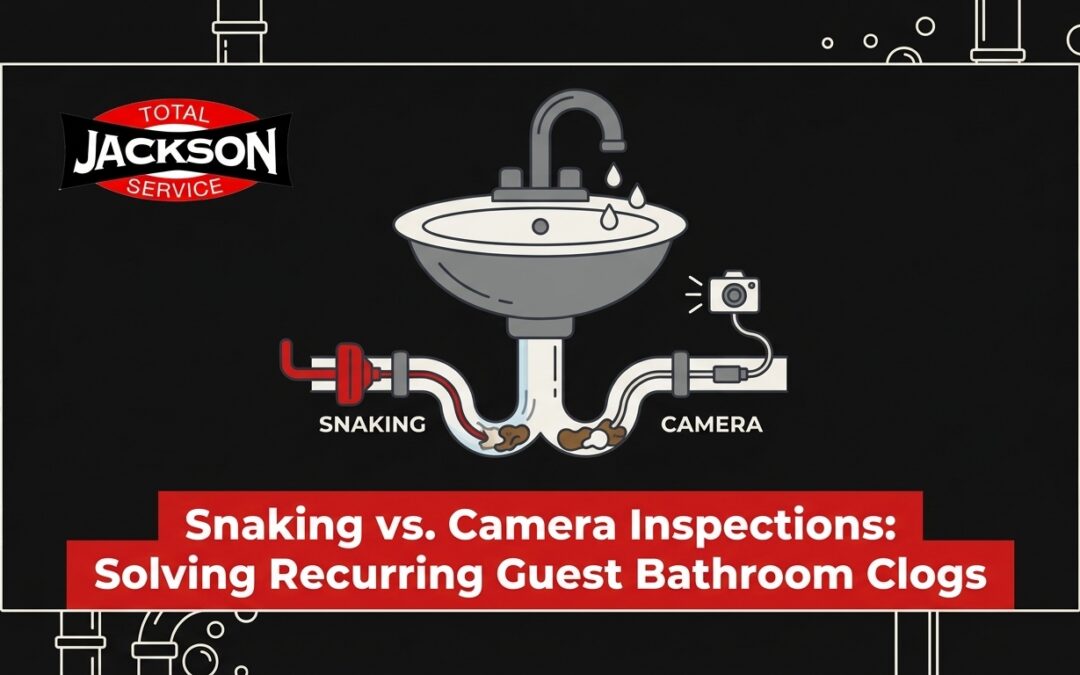
Are you tired of calling for drain clearing only to have the same toilet or shower back up weeks later, leaving you constantly weighing snaking vs. camera inspections for recurring guest bathroom clogs? When a plumbing fixture stops draining, the most common immediate reaction is to reach for a plunger or call a professional to snake the line. For a simple, one-time blockage, that straightforward approach usually works perfectly. However, if you find yourself dealing with the exact same slow drain or sewage backup repeatedly, our team at Jackson Total Service can tell you first-hand that you are likely facing a structural failure rather than a simple nuisance clog. As we move into September pre-fall guest preparation, ensuring your home’s plumbing is permanently fixed becomes a top priority before visitors arrive.
To keep your entire system flowing smoothly year-round, prioritizing regular drain maintenance is essential.
The Frustration of the Recurring Clog
The guest bathroom presents a unique challenge in many homes. Because it often sits unused for long stretches of time, the plumbing lines do not receive the regular flow of water needed to keep minor debris moving toward the main sewer. When guests arrive and the bathroom suddenly sees heavy use, any underlying restriction in the pipe quickly turns into a full backup. Homeowners often assume someone flushed something they shouldn’t have, leading to another routine drain clearing appointment. But when the problem returns a month later, we typically find the true culprit hiding deep underground.
Understanding the difference between a temporary blockage and a permanent structural issue is the first step in protecting your property. Continuing to treat a broken pipe as if it were just a simple clog wastes your time, damages your fixtures, and puts your home at risk for a messy sewage overflow.
The Limits of the Drain Snake: A Temporary Fix for a Permanent Problem
A traditional drain snake, or plumbing auger, is an incredibly useful tool when deployed for the right kind of problem. The device consists of a long, flexible metal cable with a specialized cutting or grabbing head attached to the end. As the cable is fed down the drain, a motor spins the head, allowing it to hook onto and pull out soft blockages. For common household issues—like a buildup of hair in a shower drain, excessive toilet paper, or a misplaced small toy—snaking is highly effective and relatively quick.
If you are dealing with a sudden, localized overflow that threatens your floors, professional emergency plumbing and leak repair in Naples can quickly mitigate the immediate damage.
Why Snaking Fails on Hard Structural Issues
The fundamental limitation of a drain snake is that it only clears the physical space occupied by the cable itself. When dealing with hard structural issues deep within the sewer line, the auger merely punches a temporary hole through the obstruction. It leaves the root cause entirely intact. Once the cable is retracted, the temporary pathway immediately begins to fill back in with daily waste and debris.
This limitation is especially obvious in Naples FL homes with mature landscaping and root systems. When our technicians snake a line and encounter a dense mass of tree roots inside a sewer pipe, the spinning head might tear away the center of the root ball, allowing water to drain temporarily. However, the roots remaining on the walls of the pipe will rapidly regrow through that temporary hole. Continuing to snake a structural blockage essentially guarantees a future backup, locking you into a frustrating cycle of temporary fixes.
| Plumbing Issue | Effectiveness of Snaking | Long-Term Result |
|---|---|---|
| Hair & Soap Scum | Highly Effective | Permanent clear (until buildup recurs naturally) |
| Excess Toilet Paper | Highly Effective | Permanent clear |
| Tree Root Intrusions | Poor | Roots regrow through the temporary hole within weeks |
| Bellied (Sagging) Pipes | Ineffective | Standing water immediately catches new debris |
Hidden Structural Culprits: Bellied Pipes and Root Intrusions
When a guest bathroom consistently backs up despite recent clearing attempts, the problem almost always lies in the integrity of the underground pipe itself. Two of the most common and destructive structural failures our plumbers diagnose are bellied pipes and aggressive root intrusions. Neither of these issues can be resolved with a standard plumbing auger.
The Mechanics of a Bellied Pipe
A bellied pipe is a section of the underground sewer line that has lost its proper slope and sagged downward, creating a low spot. Because residential sewer systems rely entirely on gravity to move wastewater away from the home, a bellied section disrupts the flow. Instead of draining away, wastewater pools in the sagging area. This standing water creates a permanent trap that repeatedly catches toilet paper, organic waste, and debris. You can snake a bellied pipe to push out the accumulated solids, but the belly itself remains. The very next time the toilet is flushed, the low spot simply begins collecting debris all over again.
This structural failure is particularly common due to local climate and geological factors. In our experience working across Naples, the high water table, sandy soil profile, and intense wet-to-dry seasonal shifts cause the ground to expand and contract. Over time, this constant soil movement leads to ground settling, dragging sections of the heavy sewer pipe down with it and creating severe bellies.
The Silent Threat of Root Intrusions
Tree roots are naturally programmed to seek out moisture and nutrients, and a residential sewer line provides an endless supply of both. Even the tiniest, microscopic leak in an underground pipe joint releases enough moisture into the surrounding sandy soil to attract aggressive root growth. Roots exert immense hydrostatic pressure, forcing their way into the pipe’s seams and expanding as they grow.
Once inside, the roots act like a dense net, catching every solid particle that flows down the drain. The intense climate shifts that encourage ground settling also encourage these root systems to dig deeper during dry spells, seeking the constant moisture inside your plumbing lines. Until the physical pipe is repaired and sealed, the roots will continue to invade, eventually crushing the pipe entirely.
Signs You Need a Camera Inspection Instead of a Snake
Knowing when to stop paying for routine drain clearing and start demanding proper diagnostics is crucial for protecting your home. If you are experiencing any of the following symptoms, a standard auger is no longer sufficient, and it is time to request a high-definition video inspection from our team.
- The clog returns rapidly: The fixture backs up again within a few weeks or months of being professionally snaked.
- Multiple fixtures fail simultaneously: The guest bathroom toilet, sink, and shower all back up at the same time, indicating a severe blockage in the main lateral line rather than a localized pipe.
- Strange gurgling sounds: Bubbling water or loud gurgling noises occur in the toilet bowl when the sink or shower is running.
- Persistent sewage odors: Foul smells linger in the guest bathroom or surrounding hallways even after thorough cleaning and plunging.
- Unexplained yard changes: Lush, abnormally green patches of grass appear in the yard directly above the sewer line path, indicating underground sewage leakage fertilizing the soil.
Real-world plumbing failures rarely resolve themselves. A pattern we see often is homeowners waiting until a full house exacerbates the issue. For example, one homeowner visiting town during the winter experienced a major sewer line blockage that affected their toilets, sinks, and shower all at once. Jeremy from our service team was scheduled within an hour and a half, not only clearing the immediate blockage but utilizing proper diagnostics to identify the exact underlying cause of the failure. Catching these signs early prevents catastrophic indoor flooding.

What a Professional Video Inspection Reveals
A professional video inspection takes the guesswork out of plumbing diagnostics. Instead of blindly feeding a metal cable down a dark pipe and hoping it hits the right spot, our technicians use advanced visual technology to see exactly what is happening underground. A high-definition, waterproof camera attached to a flexible fiber-optic rod is fed through the home’s clean-out access point. As it travels down the sewer line, it transmits a real-time, brightly lit video feed back to a monitor.
Mapping the Underground Sewer Line
The camera does more than just show a picture of the blockage. Modern inspection cameras are equipped with built-in radio transmitters. When the camera head reaches the exact location of a bellied pipe, a cracked joint, or a massive root intrusion, the technician uses an above-ground locator wand to pinpoint the precise location and depth of the camera head in the yard. This means that if a repair is necessary, the excavation can be highly targeted, saving your landscaping from unnecessary trenching.
By providing clear visual evidence of the pipe’s condition, a camera inspection prevents homeowners from wasting money on ineffective clearing methods. It also highlights the danger of attempting harsh DIY fixes. Pouring corrosive chemicals down a line that is completely blocked by tree roots will not clear the line; it will merely leave dangerous acid sitting in your pipes. Understanding the physical reality of the blockage is why professionals often weigh chemical drain cleaners vs. hydro jetting and almost always recommend mechanical or water-based clearing over harsh liquids.
Beyond Diagnostics: Fixing the Root Cause
Identifying the problem via a camera inspection is a critical milestone, but it is ultimately only half the battle. Once you have visual confirmation that a bellied pipe or a severe root intrusion is causing your recurring guest bathroom clogs, the next step is executing a permanent structural repair. A diagnosis without a repair plan leaves you exactly where you started.
Repair Options for Structural Damage
Depending on what the camera reveals, your repair options will vary. If the pipe is heavily infiltrated by roots but still structurally sound, high-pressure hydro-jetting might be used to scour the pipe walls clean, followed by regular root-inhibiting treatments. If the pipe is cracked but has not collapsed, trenchless pipe relining (cured-in-place pipe) can create a brand new, seamless pipe inside the old one without digging up your yard. However, if the camera reveals a severe belly holding standing water, localized excavation is required to dig up that specific section, restore the proper downward slope, and install new PVC piping.
This is where choosing the right service provider matters immensely. Our team at Jackson Total Service possesses deep multi-trade expertise. Unlike companies that only specialize in clearing drains and have to subcontract major repairs, we possess both the high-tech diagnostic tools to find the root cause and the heavy structural plumbing expertise to permanently repair bellied pipes or broken lines under one roof. This seamless transition from diagnosis to execution is what guarantees long-term peace of mind, ensuring you have access to comprehensive solutions like same-day plumbing repair in North Naples when a structural failure demands immediate attention.
Securing Your Plumbing Before Houseguests Arrive
Timing plays a massive role in plumbing reliability. As September marks the beginning of pre-fall guest preparation, the urgency to resolve lingering plumbing issues increases exponentially. Throughout the summer, a guest bathroom might only be used occasionally. A partially blocked sewer line with a slight belly or a minor root intrusion might actually be able to handle that low volume of water without backing up into the shower pan.
The “Full House” Stress Test
However, the fall and winter holiday seasons subject your home’s plumbing to a severe stress test. When family and friends arrive, the guest bathroom sees back-to-back showers, constant toilet flushing, and heavy sink usage. A compromised pipe that survived the summer will almost certainly fail under the sudden, continuous volume of a full house. A sewage backup during a holiday gathering is not just an inconvenience; it is a highly stressful, unsanitary emergency that disrupts your entire event.
Advising homeowners to schedule diagnostic services now is about proactive protection. By booking a camera inspection in September, you allow ample time to identify hidden structural culprits and execute permanent repairs long before the first houseguest knocks on your door. We always recommend framing the camera inspection not as an unexpected chore, but as an investment in a stress-free, welcoming holiday season.
Make an Informed Decision for Your Home’s Plumbing
Dealing with a recurring guest bathroom clog is frustrating, but you do not have to remain trapped in a cycle of temporary fixes. By understanding the plain-English criteria that dictate when a high-definition camera inspection is necessary over a standard drain snake, you take control of your home’s maintenance. Recognizing that a snake merely punches a hole through root intrusions, while a camera identifies the exact depth and severity of a bellied pipe, empowers you to make smarter repair choices.
Stop guessing at what lies beneath your floors. Understanding the “why” behind your plumbing failures ultimately saves you significant time, prevents property damage, and preserves your landscaping. If you are currently debating snaking vs. camera inspections for recurring guest bathroom clogs, rest assured that our professional team at Jackson Total Service can help you weigh your options, provide a clear visual diagnosis, and execute the exact structural fix required to keep your home flowing smoothly.
Frequently Asked Questions
Why does my toilet keep clogging after being snaked?
If your toilet keeps clogging after being snaked, the underlying issue is likely structural rather than a simple blockage. A drain snake easily clears soft clogs like paper, but it only punches a temporary hole through hard obstructions like tree roots. Additionally, if the underground pipe has sagged and created a “belly,” the standing water in that low spot will quickly catch new debris, causing the toilet to back up again shortly after the snake is removed.
Is a plumbing camera inspection worth the cost?
Yes, a plumbing camera inspection is highly worthwhile because it eliminates costly guesswork and prevents you from paying for repeated, ineffective drain clearings. By providing a real-time visual of the pipe’s interior, the camera pinpoints the exact location and nature of the problem, whether it is a cracked joint, a root intrusion, or a collapsed line. This precision allows technicians to recommend a permanent structural repair rather than a temporary bandage.
Can a plumber snake a toilet with a camera?
No, a plumber does not use a camera to physically clear or snake a toilet. The high-definition camera is strictly a diagnostic tool used to visually inspect the interior condition of the sewer line. Once the camera identifies the exact location and type of the blockage, the technician will retract the camera and deploy the appropriate clearing tool, such as a mechanical auger or a hydro-jetter, to resolve the issue.
How do you fix a bellied sewer pipe?
Fixing a bellied sewer pipe requires physical structural repair, as no amount of snaking or chemical cleaning can restore the pipe’s proper downward slope. A professional plumbing team will use a camera locator to pinpoint the exact depth and location of the sag. They will then excavate that specific localized area, remove the sagging section of the line, compact the underlying soil to prevent future settling, and install a new, properly sloped section of pipe.
What does a plumbing camera inspection show that a snake misses?
A camera inspection reveals the actual physical condition of the pipe walls, whereas a snake only provides tactile feedback about whether a blockage exists. The camera clearly shows severe issues like aggressive tree root intrusions, cracked or separated pipe joints, heavy scale buildup, and sagging sections holding standing water. A snake might push past these structural failures, leading you to believe the pipe is fixed when it is actually deteriorating underground.