



Why Knowing the Signs Your Ducts Need Professional Cleaning Can Protect Your Home’s Air
Knowing the signs your ducts need professional cleaning could be the difference between breathing clean air and circulating dust, mold spores, and allergens through every room in your home. For homeowners in Southwest Florida — where the AC runs nearly year-round and humidity never really lets up — dirty ductwork is a more common problem than most people realize.
Here is a quick look at the most common warning signs:
| Warning Sign | What It May Indicate |
|---|---|
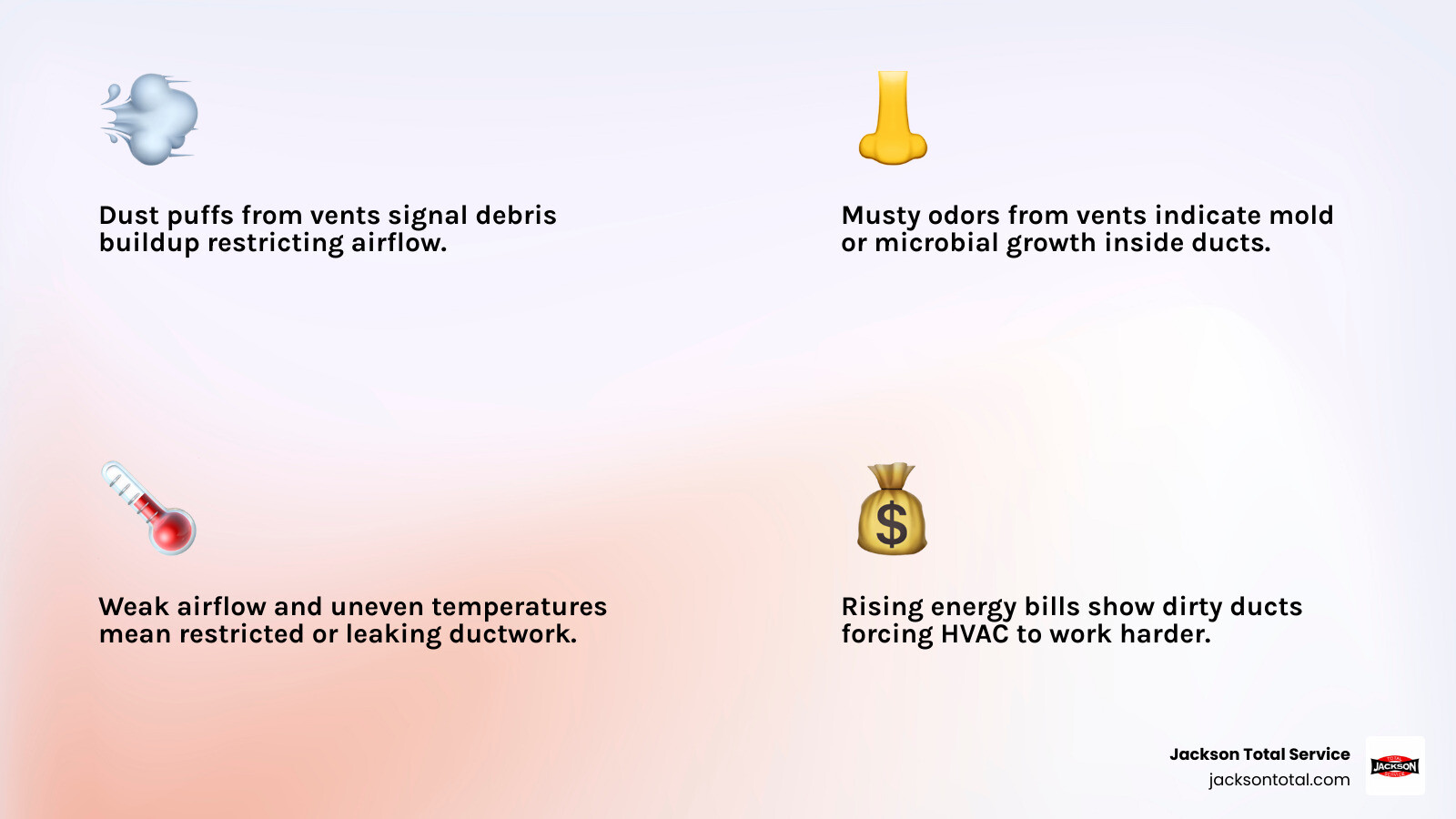
| Dust puffs from vents when AC starts | Debris buildup inside duct runs |
| Musty or stale odors from vents | Mold, mildew, or accumulated debris |
| Dust rings around registers that return quickly | Internal duct contamination |
| Worsening allergies or coughing indoors | Poor indoor air quality from circulating particles |
| Weak airflow or uneven room temperatures | Restricted or leaking ductwork |
| Rising energy bills | Dirty system forcing HVAC to work harder |
| Visible mold near vent openings | Moisture and microbial growth in ducts |
| Pest droppings or nesting debris near vents | Rodent or insect infestation inside ductwork |
| Clogged air filters faster than expected | Heavy duct debris loading the filter quickly |
| Recent home renovation or construction | Drywall dust and debris infiltrating the duct system |
Your ducts are out of sight, which makes it easy to forget about them — until something feels off. Maybe the air smells stale when the system kicks on, or one room just never cools down properly. These are not random inconveniences. They are often your home’s way of telling you the ductwork needs attention.
According to the EPA, indoor air can carry two to five times more pollution than outdoor air. In a sealed Florida home with the windows shut most of the year, what circulates through your ducts circulates through your lungs.
The good news is that most of the key warning signs are easy to spot once you know what to look for.
10 signs your ducts need professional cleaning
If you are wondering whether your system just has a little harmless dust or a bigger air-quality issue, this list will help. The key is not one tiny clue by itself. It is patterns.
Here are 10 common warning signs:
- Dust buildup around supply vents and return grilles
- Dust settling on furniture again soon after cleaning
- Visible dust puffs when the AC starts
- Musty, stale, or unpleasant smells from vents
- More sneezing, coughing, headaches, or irritation indoors
- Weak airflow from some vents
- Rooms with hot spots or cold spots
- Utility bills rising without a clear reason
- Visible mold, mildew, or moisture near duct openings
- Signs of insects, rodents, or renovation debris in the system
Signs your ducts need professional cleaning: dust buildup around vents and on furniture

One of the easiest things to notice is a dark dust ring around a vent cover or return grille. If you wipe it clean and it comes back quickly, that can point to contamination deeper in the duct system.
A few things to watch for:
- Dust on vent slats that builds back fast
- A dark ring around the register
- Dust coating nearby walls or ceiling
- Furniture getting dusty again almost immediately after cleaning
- Small clouds or puffs of dust when the blower starts
That last one matters. A quick haze at startup can happen occasionally, but if you see repeated dust puffs from multiple vents, that is a stronger sign the debris is inside the duct runs, not just on the grille.
Also, surface dust alone does not always prove your ducts need cleaning. Return grilles naturally collect some dust because they pull air in all day. But when the buildup is heavy, keeps returning, or your filter clogs unusually fast, it is worth a closer look.
Signs your ducts need professional cleaning: musty, stale, or unpleasant odors from vents
If your vents smell earthy, musty, stale, or just plain weird, your nose may be doing early detective work for you.
Odors can mean:
- Dust and debris trapped in the ductwork
- Moisture inside or near ducts
- Mildew or mold growth
- Old pest contamination
- Debris left behind after remodeling
A musty smell right when the system starts often points to buildup in branch ducts or around vent boots. A sour or “dirty sock” smell may be related to the evaporator coil or drain pan instead of the ducts themselves, which is why a professional inspection matters.
Try a simple vent sniff test:
- Turn the system off for a bit
- Stand near a vent when it starts again
- Notice whether the smell is strongest at startup or gets worse as the system runs
Startup-only odors often suggest settled debris. Odors that intensify during operation may point to coil or moisture problems. Either way, stale vent air is not something to ignore.
Worsening allergies, coughing, headaches, or respiratory irritation indoors
Dirty ducts can contribute to poor indoor air quality by circulating dust, dander, and other particles through the home. That does not mean every sneeze is your ductwork’s fault, but symptoms that flare up indoors deserve attention.
Common complaints include:
- Sneezing when the AC runs
- Scratchy throat
- More coughing at home
- Eye or nose irritation
- Headaches that improve after leaving the house
- Worse asthma or allergy symptoms indoors
That “feel better when we leave” pattern is especially telling. If symptoms ease when you are away and return at home, the indoor environment may be part of the problem.
In Southwest Florida, homes stay closed up for much of the year because of heat and humidity. That means indoor pollutants can linger and recirculate more easily. Duct cleaning may help when those particles are being spread through the HVAC system, especially if there is visible contamination, pest debris, or heavy dust release.
Weak airflow and rooms that never feel comfortable
When one bedroom feels like a sauna and another feels like a walk-in freezer, the duct system may be part of the issue.
Possible clues include:
- One or more vents blowing much weaker than others
- Certain rooms always too warm or too cool
- Little change even after adjusting the thermostat
- Airflow that seems to fade over time
- Vents that whistle, rattle, or sound different than before
Restricted ducts, internal buildup, leaks, crushed flexible duct sections, or balance problems can all cause these symptoms. Before assuming cleaning is the answer, make sure:
- Registers are fully open
- Furniture is not blocking vents
- The filter is clean and properly fitted
If all that checks out and the room still never gets comfortable, a professional should inspect for restriction, leakage, or heavy debris inside the run.
Rising energy bills and an HVAC system that seems to run longer
Dirty ductwork can be part of a bigger efficiency problem. When airflow is restricted or the HVAC system is dealing with extra contamination, it may need to run longer to keep up.
You might notice:
- Longer cooling cycles
- The AC turning on more often
- Higher bills without a thermostat change
- Reduced comfort even though the system runs constantly
It is important to be honest here: duct cleaning alone is not a magic bill-lowering button. The EPA notes that cleaning only the ducts has not been proven to consistently improve health or efficiency in every home. In many cases, the bigger gains come from cleaning and maintaining other HVAC components like coils, fans, and drain areas too.
Still, if your ducts are genuinely contaminated with heavy dust, pest debris, or renovation material, professional cleaning can remove airflow restrictions and support better system performance. Dirty systems work harder, and harder work usually means more wear over time.
Visible mold, moisture, or signs of pests in ductwork
This is the “do not wait and see” category.
Call for professional help if you notice:
- Visible mold or mildew near vent openings
- Condensation around registers
- Water stains near duct boots
- Rodent droppings
- Nesting material
- Insect remains or ongoing bug activity
The EPA recommends considering duct cleaning when there is substantial visible mold inside hard-surface ducts or on HVAC components, vermin infestation, or excessive dust and debris actually being released into the home.
A caution here: not every dark patch is mold. Sometimes it is dirt. If you suspect mold, proper confirmation matters. And if duct insulation has gotten wet and moldy, cleaning may not be enough; some materials may need replacement.
After a pest issue, cleaning is often necessary even after the pests are gone. Droppings, hair, nesting debris, and germs can remain behind long after the scratching sounds stop. Charming, we know.
What these warning signs usually mean and when cleaning alone is not enough
Duct cleaning can solve a real problem, but it is not the answer to every HVAC complaint. Sometimes the ducts are only part of the story.
| Problem you notice | Duct cleaning may help | You may also need |
|---|---|---|
| Dust blowing from vents | Yes | Filter replacement, return cleaning |
| Musty odor | Sometimes | Coil cleaning, drain pan service, moisture control |
| Weak airflow in one room | Sometimes | Leak repair, damper adjustment, crushed duct repair |
| Visible mold | Yes, if appropriate | Moisture source correction, possible duct replacement |
| Pest contamination | Yes | Pest exclusion, sanitation, insulation replacement |
| High bills | Sometimes | Full HVAC maintenance, coil and fan cleaning, duct sealing |
Odors may point to ducts, coils, or drain problems
A musty smell is not always “dirty ducts” in a neat little package. The odor may come from:
- Duct debris
- A wet evaporator coil
- A dirty drain pan
- Moisture near the air handler
- Mold growth around insulation or boots
If the smell is strongest at startup, ducts may be holding dust and debris. If it gets stronger after the system runs a while, the coil or drain area becomes more likely. In humid Southwest Florida homes, moisture management is a major part of preventing smells from returning after cleaning.
Airflow issues can signal leaks, crushed ducts, or balance problems
If one room has poor airflow, the issue may be deeper than dirt. We often see comfort problems caused by:
- Leaky ducts in attics or crawl spaces
- Crushed or kinked flex duct
- Closed dampers
- Poor room balancing
- Dirty blower components
- An undersized or overloaded system
That is why “just clean the ducts” is not always the right first move. Good service should include inspection, not guesswork.
Mold and pests require source removal, not just debris removal
If there is mold, the moisture source has to be addressed or it can come back. If there are rodents or insects, entry points must be sealed and the contamination removed. After flooding or serious water intrusion, portions of the system may need repair or replacement.
Cleaning removes contamination. It does not fix roof leaks, condensation problems, torn duct insulation, or pest access points by itself.
DIY checks homeowners can do before scheduling service
You cannot deep-clean a whole duct system with a shop vacuum and good intentions, but you can do a few safe checks before scheduling service.
A simple vent inspection for visible buildup
Try this quick inspection:
- Turn off the HVAC system.
- Remove a supply register with a screwdriver if it is easy to access.
- Shine a flashlight into the duct boot.
- Look for matted dust, dark debris, insect remains, or buildup along the boot lip.
If the buildup looks thick, clumpy, or deeper than light surface dust, that is a stronger sign of a real duct issue. Some pros use a simple rule of thumb: if debris around the opening looks thicker than a credit card edge, it is time for a closer evaluation.
How to tell normal surface dust from a deeper duct issue
Some dust is normal. Not every dusty grille means your ducts are a disaster movie.
More likely normal:
- Light dust on return grilles
- Minor dust after a long period without cleaning the vent cover
- Small amounts of lint near registers
More likely a deeper issue:
- Dust rings that return within days
- Repeated dust puffs when the blower starts
- Heavy buildup visible just inside the duct
- Furniture getting dusty unusually fast even with filter changes
- The problem stays after you clean the grille and replace the filter
A good first step is to vacuum the grille, replace the filter, and monitor what happens over the next several days.
Clues from filters, noises, and startup behavior
Your filter tells a story too.
Pay attention if:
- A 90-day filter gets loaded much faster than expected
- You hear new rattling or whistling at vents
- Dust blows out at startup for more than a quick moment
- The system smells musty when it first comes on
- Vent noise or airflow changed after remodeling or attic work
Fast filter loading can mean the system is pulling in extra debris. New noises may mean airflow restriction, damaged duct sections, or loose components. Those symptoms do not confirm dirty ducts by themselves, but they are useful clues.
When to schedule professional duct cleaning and how often it really makes sense
The best timing is based on conditions in your home, not just the calendar. For many households, duct cleaning makes sense on an as-needed basis. If you want an overview of service options, visit our duct cleaning page or learn more in How Duct Cleaning Saves Your AC From The Humid Hustle.
What the EPA says about routine duct cleaning versus as-needed cleaning
The EPA does not recommend blanket, routine duct cleaning for every home on a fixed schedule. Instead, it recommends cleaning when there is evidence of a problem, such as:
- Visible mold growth inside hard-surface ducts or on HVAC components
- Rodents or insects in the ducts
- Excessive dust or debris actually being released into the home
That is an important point. Light dust inside ducts is common, and much of it sticks to surfaces rather than blowing into living spaces. So the goal is not chasing a spotless fantasy. It is dealing with contamination that is affecting comfort, cleanliness, or air quality.
Situations that justify earlier cleaning
Some homes should be checked sooner, especially after events that dump contaminants into the system.
Examples include:
- Home renovation or construction
- Drywall sanding
- Sawdust-producing projects
- Water intrusion or storm-related moisture
- A resolved rodent or insect problem
- Purchasing a home with an unknown maintenance history
- Heavy-shedding pets
- Family members with allergies or asthma
Post-renovation duct cleaning is especially important. Fine drywall dust gets everywhere, including returns and duct runs, and it can keep circulating long after the last paint touch-up is done.
A practical cleaning timeline for Southwest Florida homes
In our Southwest Florida service area, humidity, year-round cooling, pollen, and coastal conditions can make duct issues show up sooner than homeowners expect.
A practical rule of thumb:
- Every 3 to 5 years for many homes without major air-quality issues
- Closer to every 2 to 3 years if you have pets, allergies, or heavy system use
- Sooner whenever there are clear warning signs, pest issues, water problems, or remodeling dust
The real answer is simple: signs matter more than a date on the calendar.
Choosing the right professional and the benefits of expert cleaning
Professional duct cleaning should be more than someone waving a vacuum hose at one vent and calling it a day.
What to look for in a professional duct cleaning service
Look for a provider that offers:
- Whole-system cleaning, not just a few vents
- Cleaning of both supply and return ducts
- Proper negative-pressure collection and HEPA-grade containment methods
- Inspection of contamination before work begins
- Before-and-after documentation when possible
- Attention to related issues like moisture, filters, and accessible HVAC components
- A clear post-cleaning review
You also want a team that understands when cleaning is not enough. If there is a mold source, duct leak, damaged insulation, or pest issue, that should be identified instead of ignored.
At Jackson Total Service, we provide complete home comfort support across HVAC, plumbing, and electrical needs in Southwest Florida, so homeowners are not left juggling multiple contractors when duct issues connect to bigger system problems.
Proven benefits of professional cleaning
When duct cleaning is done for the right reasons, homeowners often notice:
- Less dust blowing from vents
- Cleaner vent covers and surrounding surfaces
- Fresher-smelling indoor air
- Fewer circulating irritants
- Better airflow through affected rooms
- Support for HVAC efficiency and system longevity
Just keep expectations realistic. The biggest benefits happen when cleaning is paired with good filter changes, coil maintenance, moisture control, and duct repairs where needed. If mold is a concern, our broader indoor air quality resources may help, including The Ultimate Guide To Mold Free Air Conditioning and Dont Let The Humidity Win With This Tropical Duct Cleaning Guide.
Helpful local service pages for Southwest Florida homeowners
If you are looking for local duct cleaning information in our service area, start here:
- Duct Cleaning Naples Fl
- Duct Cleaning Estero Fl
- Duct Cleaning Fort Myers Fl
- Duct Cleaning Cape Coral Fl
- Duct Cleaning Bonita Springs Fl
We also serve surrounding Southwest Florida communities throughout Lee and Collier counties.
Frequently Asked Questions about signs your ducts need professional cleaning
Does dust on furniture always mean my ducts need cleaning?
No. Dust on furniture can come from everyday living, foot traffic, pets, outdoor air, and normal return-air movement. But if dust shows up very quickly after cleaning, appears with dust rings around vents, or comes with visible dust puffs at startup, your duct system deserves inspection.
How often should air ducts be professionally cleaned?
Usually on an as-needed basis. Many homes fall into the 3-to-5-year range, while homes with pets, allergy concerns, or heavier contamination may need attention closer to 2 to 3 years. In Southwest Florida, year-round AC use and humidity can make earlier service reasonable when warning signs appear.
Should ducts be cleaned after remodeling or construction?
Yes, often they should at least be inspected right away. Drywall dust, sawdust, and debris can enter returns and settle inside duct runs. After renovation is one of the clearest times to schedule professional duct cleaning.
Conclusion
If you have noticed dust puffs, stale vent odors, worsening indoor allergies, weak airflow, mold, or pest debris, those are not signs to shrug off. They are often your first clues that your duct system needs attention.
The smartest approach is not cleaning on autopilot. It is paying attention to the signs your ducts need professional cleaning, checking for related HVAC problems, and acting before a comfort issue turns into a bigger mess.
At Jackson Total Service, we have helped Southwest Florida homeowners since 1964 with reliable home comfort solutions across HVAC, plumbing, and electrical. If your home in Naples, Bonita Springs, Estero, Fort Myers, Cape Coral, Marco Island, or nearby areas is showing these warning signs, learn more about our duct cleaning services.