


Why Florida Homeowners Are Finally Paying Attention to Their Water Quality
Water conditioning benefits for Florida homeowners are more significant than most people realize — and if you’ve noticed white crusty buildup on your faucets, cloudy spots on your glassware, or dry skin after a shower, your water is likely the culprit.
Here’s a quick summary of the key benefits:
- Prevents scale buildup on pipes, fixtures, and appliances
- Extends appliance lifespan — water heaters, dishwashers, and washing machines last longer
- Improves skin and hair by reducing harsh mineral exposure
- Cuts detergent and soap use by up to 50%
- Protects tankless water heaters from damaging mineral deposits on heating elements
- Requires no salt, electricity, or brine discharge (salt-free systems)
- Low maintenance — conditioning media typically lasts 2 to 5 years
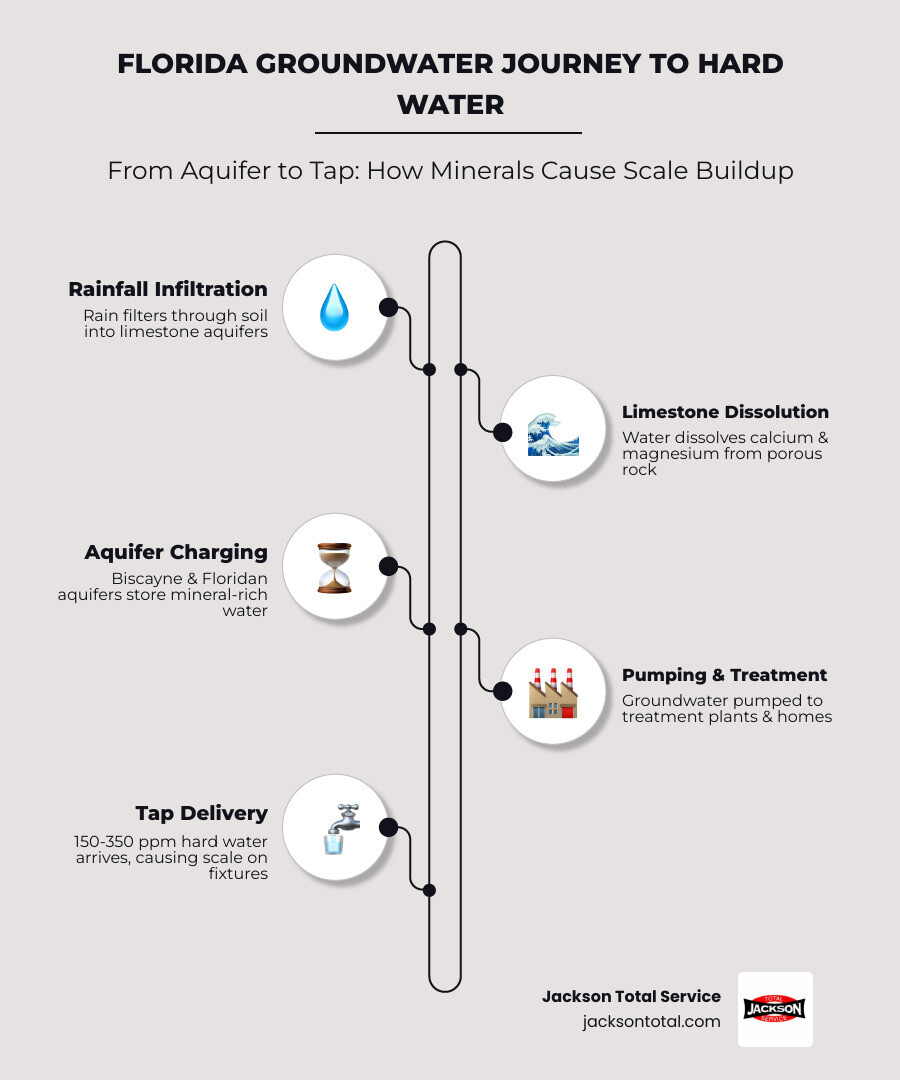
Most of Southwest Florida sits on top of a porous limestone bedrock. As rainwater filters down through that rock into the Biscayne and Floridan aquifers, it picks up calcium and magnesium along the way. By the time that water reaches your tap, it can measure anywhere from 150 to 350 parts per million (ppm) — firmly in the “hard” to “very hard” range by national standards. That’s not a minor inconvenience. Over time, those dissolved minerals quietly damage your plumbing, shorten the life of your appliances, and affect how your skin, hair, and laundry feel every single day.
The good news? Water conditioning is a practical, low-maintenance solution that addresses the root cause — and it’s especially well-suited for Florida homes.
Why Does My Southwest Florida Home Have So Much Scale Buildup?
If you live in Naples, Fort Myers, or Cape Coral, you’ve likely seen it: that stubborn, white, chalky crust that forms around the base of your kitchen faucet or clogs up your showerhead. This isn’t just a sign that you need to clean more often; it’s a direct result of Florida’s unique geology.

Most of our local water is drawn from the Biscayne and Floridan aquifers. These underground reservoirs are essentially massive limestone formations. Limestone is primarily made of calcium carbonate. As water sits in these aquifers, it acts like a solvent, slowly dissolving the rock and absorbing high concentrations of calcium and magnesium.
In Southwest Florida, water hardness often ranges from 150 to 350 ppm (or 9 to 20+ grains per gallon). To put that in perspective, anything over 180 ppm is considered “very hard.” When this mineral-heavy water enters your home and gets heated — whether in your dishwasher or your water heater — those minerals “precipitate” out of the water and bond to the nearest surface. This creates the rock-hard scale that restricts water flow and destroys internal components.
Common signs of hard water in Lee and Collier Counties include:
- White “crust” or film on faucets and showerheads.
- Cloudy spots on glassware and dishes, even after a full cycle.
- Stiff, scratchy laundry that loses its color quickly.
- Dry, itchy skin and dull, lifeless hair.
- Strange popping or rumbling noises coming from your water heater (a sign of scale buildup on the heating element).
If you’ve noticed these issues, it’s time to Stop The Scale Before Your Appliances Fail.
I’m Looking for a Salt-Free Alternative: How Does Conditioning Compare to Softening?
When we talk about fixing water issues, many people immediately think of a traditional water softener. However, “conditioning” and “softening” are two different technologies. Understanding the difference is key to choosing the right system for your lifestyle.
| Feature | Salt-Based Ion Exchange (Softener) | Salt-Free Conditioning (Conditioner) |
|---|---|---|
| Primary Method | Removes minerals using resin beads and salt. | Crystallizes minerals so they won’t stick. |
| Maintenance | Requires monthly salt refills. | Media replacement every 2–5 years. |
| Wastewater | Produces brine discharge during cleaning. | Zero wastewater; no backwash cycle. |
| Electricity | Requires power for the control valve. | No electricity required. |
| Water Feel | Can feel “slippery” or “slimy” to some. | Feels natural, like “crisp” water. |
| Mineral Content | Removes calcium and magnesium. | Retains minerals in a harmless form. |
Salt-free systems typically use Template-Assisted Crystallization (TAC) or Nucleation-Assisted Crystallization (NAC). Instead of removing the minerals, these systems change the physical structure of the calcium and magnesium ions. They turn them into microscopic crystals that remain suspended in the water. Because they are crystallized, they can’t “stick” to your pipes or heating elements.
This makes Water Conditioning an excellent choice for Florida homeowners who want to protect their plumbing without the hassle of lugging heavy salt bags or dealing with the environmental impact of brine discharge.
What Are the Actual Water Conditioning Benefits for Florida Homeowners in 2026?
As we move through 2026, more homeowners in areas like Marco Island and Bonita Springs are prioritizing sustainable, low-maintenance home upgrades. The water conditioning benefits for Florida homeowners extend far beyond just cleaner dishes; they impact your health, your wallet, and the longevity of your home’s infrastructure.
Personal Health and Comfort
Hard water minerals don’t just stick to pipes; they stick to you. If you struggle with dry skin or conditions like eczema, the mineral residue left behind by hard water can act as an irritant. Conditioned water allows soaps and shampoos to lather properly and rinse away completely. This leads to:
- Softer Skin: No more “filmy” feeling after a shower.
- Healthier Hair: Reduced mineral buildup means hair stays vibrant and manageable.
- Laundry Longevity: Without minerals trapped in the fibers, your clothes stay soft and colors remain bright.
Financial and Environmental Savings
By preventing scale, you’re also saving money. Conditioned water is much more efficient at “wetting” surfaces, which means you can use up to 50% less laundry detergent, dish soap, and shampoo to get the same results. Over a year, those savings really add up for a family in Naples or Fort Myers.
Understanding the Water Conditioning Benefits for Florida Homeowners
One of the most critical water conditioning benefits for Florida homeowners is the protection of high-efficiency appliances. Southwest Florida homes are increasingly equipped with tankless water heaters. These units use high-heat exchangers that are incredibly sensitive to scale. Just 1/8 inch of scale buildup can reduce your water heater’s efficiency by 20% or more.
By installing a conditioner, you ensure that the heating elements stay clean. This can lead to a 20-30% reduction in utility costs associated with heating water and can literally double the lifespan of your dishwasher and washing machine. It is a vital step to Stop The Scale Before Your Appliances Fail.
How Salt-Free Water Conditioning Benefits for Florida Homeowners Work
The beauty of salt-free technology lies in its simplicity. Because it relies on crystallization rather than ion exchange, the system doesn’t need a “regeneration” cycle.
- Eco-Friendly: There is no salt being dumped into our local Florida ecosystem.
- Zero Electricity: The system works purely on water pressure.
- Low Maintenance: You don’t have to check salt levels every month. The internal media typically lasts between 2 and 5 years, depending on your water usage and specific chemistry.
For many of our neighbors in Lee and Collier Counties, the “natural feel” of conditioned water is a major plus. You get the scale protection of a softener without the “slippery” sensation that some people find off-putting.
Frequently Asked Questions about Florida Water Quality
Does a water conditioner actually remove minerals from my water?
No, it does not. A conditioner changes the structure of the minerals so they cannot form scale. If you were to test the water with a TDS (Total Dissolved Solids) meter before and after the conditioner, the number would stay roughly the same. However, the behavior of the water is completely different. You get the benefits of scale prevention while keeping the natural mineral content of the water.
Is conditioned water safe for my pets and garden plants?
Absolutely. In fact, it’s often better for them than salt-softened water. Traditional softeners replace calcium with sodium. While this is fine for humans in small amounts, some pets and many sensitive garden plants (like those in our beautiful Naples landscaping) don’t thrive with increased sodium levels. Conditioned water is sodium-free, making it perfect for your furry friends and your hibiscus alike.
How do I know if my Southwest Florida water is “Very Hard”?
In Southwest Florida, “Very Hard” water is the standard, not the exception. Most municipal reports in Lee and Collier Counties show hardness levels well above the 15 GPG (grains per gallon) threshold. If you are on a private well in areas like Immokalee or Lehigh Acres, your hardness could be even higher. The best way to know for sure is to have a professional test your water at the tap.
Conclusion
At Jackson Total Service, we’ve been helping our neighbors in Naples, Bonita Springs, and Marco Island stay comfortable since 1964. We understand the unique challenges of Florida water because we live here, too. Whether you’re dealing with a failing water heater or you’re tired of scrubbing white spots off your shower doors, we have the expertise to help.
Our licensed technicians provide comprehensive plumbing support, including the installation of high-quality water treatment systems tailored to your home’s specific needs. We’re proud to offer all your comfort solutions — HVAC, plumbing, and electrical — in one place.
Ready to experience the water conditioning benefits for Florida homeowners for yourself? Give us a call today for 24/7 support and expert advice.