



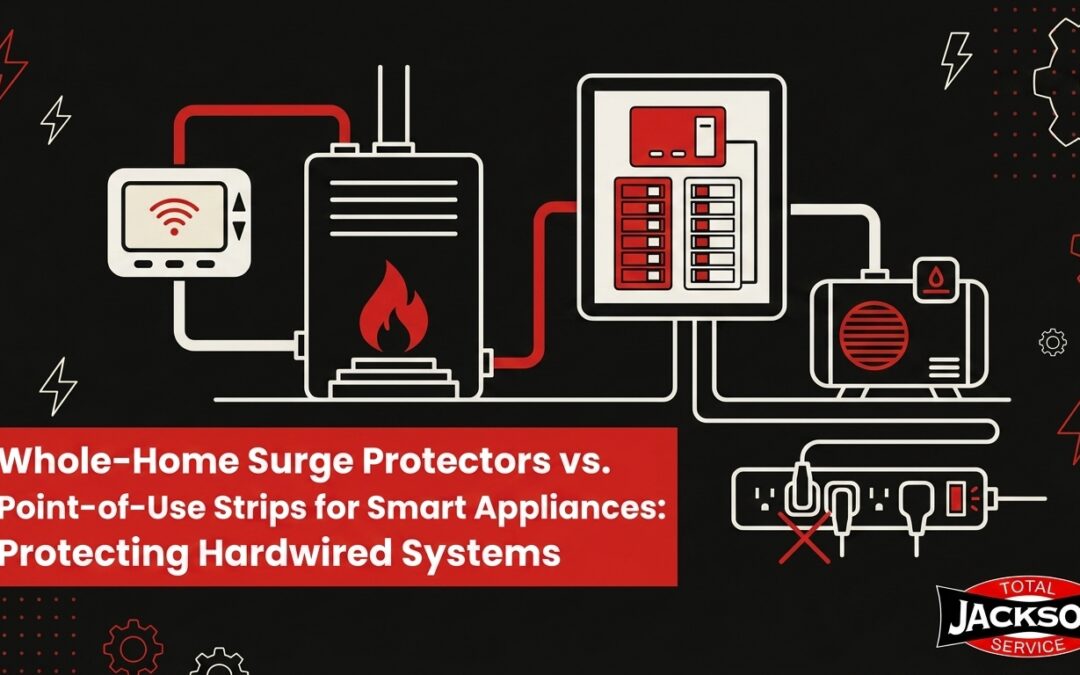
The Hidden Threat to Your Smart Home During Summer Storms
July afternoon thunderstorms in Naples FL bring much-needed rain to cool down the peak summer heat, but they also bring a severe, hidden danger to your most valuable home investments. Every time lightning strikes nearby, massive electrical spikes travel through the local power grid directly toward your house. If you are like most homeowners, you probably rely on standard plug-in power strips to keep your electronics safe. However, this common strategy leaves your most critical, expensive hardwired systems completely exposed to catastrophic damage.
The concrete problem is simple but devastating: relying solely on standard point-of-use strips means your heavy-duty equipment is unprotected. You cannot plug a central air conditioner, a generator transfer switch, or a modern water heater into a standard living room power strip. When a massive voltage spike hits your main electrical panel, it bypasses those bedroom surge protectors entirely and slams directly into your hardwired smart HVAC control boards.
You face a critical decision point before the next major storm hits. You must decide whether to continue risking total failure of your home’s climate control and major appliances, or upgrade to panel-level whole-home protection. Shielding these systems requires comprehensive electrical services that stop external surges before they ever enter your home’s internal wiring.
If you want to stop worrying every time the sky turns dark, it is time to contact our electricians to upgrade your protection. Understanding exactly how different surge protectors work is the first step in defending your modern smart home.
The Physical Limitations of Standard Point-of-Use Power Strips
To understand how to protect your home, you first need to understand the mechanical realities of standard surge strips. Many homeowners mistakenly believe that buying a heavy-duty strip from the hardware store provides a protective bubble over their entire house. In reality, a point-of-use strip is highly limited by its physical design and capacity.
A point-of-use strip is designed to protect 120-volt plugged-in devices from minor internal voltage fluctuations. When a large appliance like a vacuum cleaner or an older refrigerator motor kicks on, it draws a massive amount of power for a split second, creating a tiny surge on that specific electrical circuit. The power strip absorbs this minor spike.
Understanding the technical ratings:
- Clamping voltage: This is the exact voltage level at which the power strip “wakes up” and starts blocking excess electricity. If the spike is smaller than the clamping voltage, the strip lets it pass right through to your device.
- Joule ratings: A joule rating measures the total amount of energy the strip can absorb over its entire lifespan. Think of it like a sponge. Every time it absorbs a small surge, it loses a little bit of its capacity. Once the “sponge” is full, the strip stops protecting your devices entirely, often without giving you any warning.
Because these internal micro-surges happen dozens of times a day, the sensitive microprocessors inside modern smart appliances slowly degrade over time. However, the most critical limitation is that standard strips offer absolutely zero protection for systems that cannot physically be plugged into them. This is exactly why a standard power strip is not a true surge protector for your entire house.
What Plug-In Strips Can Protect
Point-of-use strips serve a very specific, valuable purpose when used correctly. They are designed exclusively for:
- Standard electronics: Televisions, desktop computers, gaming consoles, and small countertop kitchen appliances.
- Standard outlets: Devices requiring a normal 120-volt wall outlet interface.
- Internal defense: Defense against minor internal surges generated by other devices inside your own home.
What Plug-In Strips Cannot Protect
The blind spot of a standard power strip is massive. They are completely useless for:
- Heavy-duty appliances: 240-volt appliances like electric dryers, ovens, and well pumps.
- Hardwired infrastructure: Equipment directly wired to the electrical panel without a standard plug interface, such as hardwired smart HVAC control boards, whole-home generators, and electric water heaters.
Why Hardwired Systems Are Highly Vulnerable to External Surges
The modern home relies on highly sophisticated, incredibly efficient systems to keep you comfortable. The most critical hardwired systems in a modern home include your smart HVAC units, generator transfer switches, and advanced water heaters. These systems are no longer just simple motors and fans; they are essentially large computers that manage your home’s climate and energy use.
During the extreme urgency of severe summer weather, specifically when peak cooling loads coincide with intense lightning strikes, these systems are pushed to their absolute limits. You rely on your air conditioning the most during those sweltering July afternoon thunderstorms. Unfortunately, this is exactly when the risk of an external surge is at its highest.
How external surges invade your home:
- The main entry point: External surges from lightning or grid fluctuations enter your home directly through the main electrical service line connected to your meter.
- The unblocked path: Because your hardwired HVAC and water heater are wired directly to the main breaker panel, the massive voltage spike travels straight from the utility line, through the breakers, and directly into the equipment.
- The bypass effect: Since these major appliances are not plugged into point-of-use strips, the external surge bypasses your living room surge protectors entirely.
When millions of volts from a nearby lightning strike enter an unprotected panel, the results are devastating. A fried control board on a smart HVAC system does not just mean a costly repair; it means losing all home comfort during peak summer heat while you wait days for specialized replacement parts to arrive.
How Electrical Spikes Travel Through Interconnected Home Systems
Most people think of their home’s plumbing, electrical, and heating systems as completely separate entities. The reality is that modern homes are deeply interconnected ecosystems. An electrical surge rarely damages just one isolated component; it creates a domino effect that can ripple through your entire house.
The Domino Effect of a Voltage Spike:
- The Problem: A massive surge enters the main electrical panel from the outside grid. Because the panel lacks a whole-home blocking device, the panel acts as an open door, distributing the extreme voltage across every circuit in the house simultaneously.
- The Cause: Electricity always seeks the path of least resistance. The surge travels along the copper wiring hidden inside your walls. It hits your smart thermostat in the hallway, overloading its delicate sensors. The surge then travels down the low-voltage communication wires connecting the thermostat directly to the hardwired smart HVAC control boards located in your garage or attic.
- The Solution: Stopping the surge at the exact moment it enters the home prevents this crossover contamination between systems.
As a multi-trade provider specializing in HVAC, electrical, and plumbing, we understand exactly how a single surge event can simultaneously destroy interconnected climate control, water heating, and electrical systems. We see the severe aftermath of major weather events on electrical infrastructure constantly.
One Naples FL homeowner reached out to us during the fall, a week and a half after Hurricane Ian, when they noticed alarming sparks coming directly from their electrical panel. Paul responded immediately, and our electrician Jeff was on-site in less than an hour. Because we understand how these interconnected systems behave under extreme stress, Jeff was able to quickly diagnose the compromised wiring, secure the panel, and get the job done safely and efficiently, preventing further damage to the rest of the home’s hardwired appliances.
Panel-Level Whole-Home Surge Protection: The First Line of Defense
To truly protect your investment, you must stop the threat before it gets inside. This is where panel-level whole-home surge protection comes in. Unlike a strip you buy at the store, this is a heavy-duty commercial-grade device installed directly at your main breaker box.
How panel-level protection works mechanically:
- Constant monitoring: The device continuously monitors the incoming voltage from the utility line before it reaches your individual circuit breakers.
- The shunting mechanism: When it detects a massive external surge—like a lightning strike hitting a nearby transformer—it reacts in a fraction of a second. It acts like a high-speed pressure relief valve, taking that excess, dangerous voltage and shunting it directly into the home’s grounding wire.
- Safe diversion: The extreme electrical spike is driven safely into the earth outside your home, rather than being allowed to flow into your home’s internal wiring.
This mechanism is the only way to protect everything in the house simultaneously. Because it sits at the gateway of your electrical system, it covers all 240-volt systems, hardwired smart HVAC control boards, electric vehicle chargers, and generator transfer switches.
A critical safety warning: Installing panel-level protection requires opening the main electrical panel, working directly with live, high-voltage utility lines, and ensuring the home’s grounding system is perfectly calibrated. This requires a licensed professional electrician and is absolutely never a DIY project. Attempting to install this yourself poses a severe risk of electrocution, electrical fires, and voiding your homeowner’s insurance.
Side-by-Side Comparison: Panel-Level vs. Plug-In Protection
When deciding how to secure your property against July afternoon thunderstorms, seeing the differences clearly laid out helps make the right choice. Here is a decisive comparison contrasting the two methods of electrical defense.
| Feature | Panel-Level Whole-Home Protection | Point-of-Use Power Strips |
|---|---|---|
| Installation Process | Requires a licensed professional electrician. Installed directly at the main breaker panel. | DIY friendly. Simply plug into any standard 120V wall outlet. |
| Scope of Protection | Protects the entire electrical system, covering every circuit in the house simultaneously. | Protects only the specific single outlet and the devices plugged directly into it. |
| Threat Level Handled | Blocks massive external surges, including lightning strikes and major grid fluctuations. | Absorbs minor internal spikes caused by household appliances cycling on and off. |
| Equipment Protected | Hardwired HVACs, generators, water heaters, 240V appliances, and all internal wiring. | Standard 120V electronics like televisions, computers, and small countertop appliances. |
As the table shows, these two devices are not interchangeable; they perform entirely different jobs for entirely different types of equipment.

The NEMA Recommended Two-Tiered Layered Defense Strategy
The most effective way to secure a modern smart home is not choosing one method over the other, but using them together. The National Electrical Manufacturers Association (NEMA) recommends a comprehensive, layered protection strategy to ensure total coverage.
Because a massive surge from a lightning strike in Naples FL carries so much energy, a whole-home protector stops the vast majority of it at the panel. However, a tiny fraction of that voltage—called “let-through voltage”—might still trickle past. Furthermore, the whole-home unit does not stop the small surges created inside the house when your older refrigerator kicks on. This is why you need two tiers of defense.
- Tier 1: The First Line of Defense. A licensed electrician installs a whole-home unit at your main breaker panel. This acts as the heavy shield, stopping massive external surges from lightning and utility grid spikes before they fry your hardwired HVAC and generator systems.
- Tier 2: The Second Line of Defense. You utilize high-quality point-of-use strips at your individual wall outlets. These strips catch the tiny let-through voltages from outside, as well as the smaller, internal voltage spikes generated by major appliances cycling on and off inside the home.
Combining both tiers ensures comprehensive protection for all sensitive microprocessors in your home, from your expensive smart thermostat down to your living room television.
Frequently Asked Questions About Smart Appliance Surge Protection
Do I need power strips if I have a whole-home surge protector?
Yes, you still need power strips for layered protection against minor internal surges. While the whole-home unit at your breaker panel stops massive external threats like lightning, it allows tiny amounts of let-through voltage to pass. Point-of-use strips catch those tiny leftover spikes, as well as the internal surges created when your own large appliances turn on and off.
Can I plug my smart HVAC into a surge protector?
No, central HVAC systems are hardwired and require panel-level defense. You cannot physically plug a central air conditioner or heat pump into a standard wall strip because they run on dedicated 240-volt circuits wired directly to your breaker box. The only way to protect hardwired smart HVAC control boards is by installing a whole-home surge protector at the main electrical panel.
Is a whole house surge protector worth the investment?
Yes, it protects tens of thousands of dollars in hardwired equipment from catastrophic failure. When you consider the replacement cost of a smart HVAC system, a whole-home generator, and modern kitchen appliances, the upfront cost of panel-level protection is minimal. It acts as an essential insurance policy for your home’s most vital, expensive infrastructure.
How do I protect hardwired appliances from lightning?
By having a licensed electrician install a panel-level surge protection device at your main breaker. Because hardwired appliances like water heaters and HVAC units bypass standard wall outlets, they are completely exposed to external lightning strikes. A panel-level device monitors the incoming utility line and shunts massive lightning surges safely into the ground before they reach your appliances.
Can a whole house surge protector replace power strips completely?
No, they serve different purposes; one blocks massive external spikes, the other handles small internal fluctuations. A whole-home unit is a heavy-duty shield for your entire electrical panel, while power strips act as localized sponges for individual sensitive electronics. For the best results, safety organizations recommend using both methods together to create a complete, two-tiered defense system.
Secure Your Hardwired Investments Before the Next Storm Strikes
True peace of mind comes from knowing your most expensive hardwired systems are fully shielded from unpredictable weather. As we have seen, standard power strips simply cannot do the job for heavy-duty equipment like smart HVACs and generator transfer switches. Leaving these systems unprotected during peak storm season is a risk you do not have to take.
Do not wait until after July afternoon thunderstorms have already fried your essential control boards. Take action to secure your property today. If you are ready to implement a true, two-tiered defense strategy, contact our electricians to upgrade your protection and ensure your home stays comfortable and safe, no matter what the weather brings.