


The Mid-Fall Kitchen Crisis: When Holiday Prep Halts Your Sink
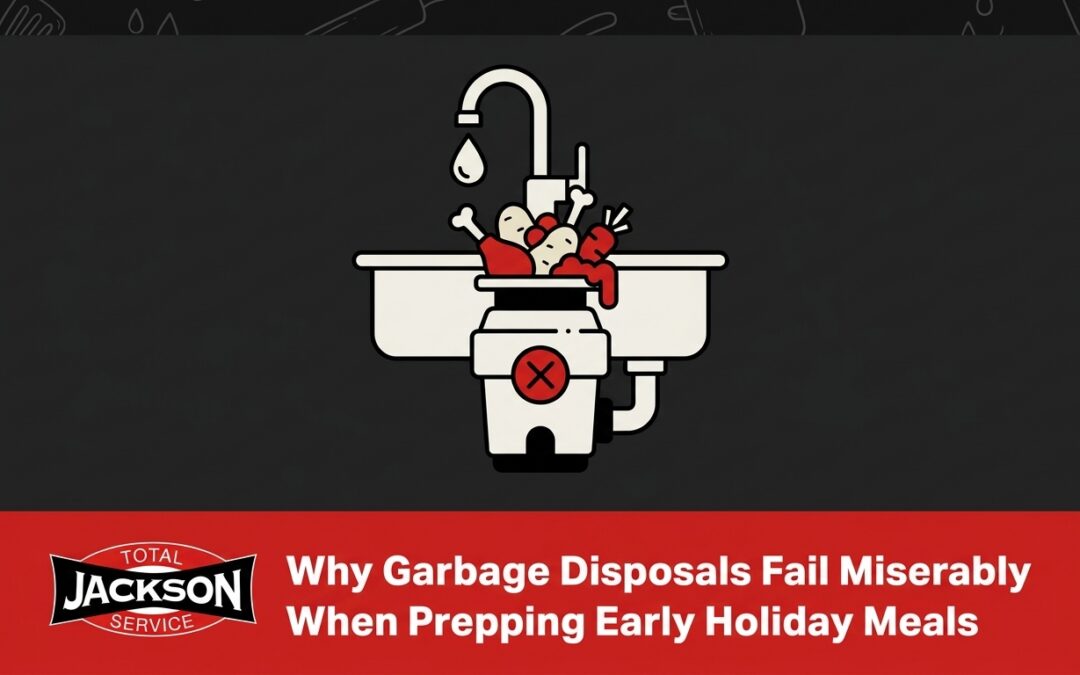
October is here, bringing the first wave of heavy seasonal cooking, which means our dispatchers at Jackson Total Service are bracing for calls from homeowners discovering why garbage disposals fail miserably when prepping early holiday meals. You scrape a cutting board full of vegetable scraps into the sink, flip the switch, and instead of the usual grinding noise, you are met with a menacing, vibrating hum. The water quickly backs up, the sink is out of commission, and your carefully planned meal prep grinds to a complete halt.
For a comprehensive look at how your home’s interconnected systems handle these seasonal spikes, explore our Southwest Florida plumbing and home systems guide. If you need immediate assistance resolving a kitchen backup, scheduling professional drain maintenance can get your kitchen running smoothly again.
The transition into mid-fall / October holiday prep introduces a sudden surge in heavy meal preparation that most residential kitchen plumbing simply isn’t ready for. The core of this concrete problem lies in the specific types of foods we see residents preparing during this season. Fibrous vegetables, starchy roots, and heavy cooking fats create the perfect storm for freezing up the disposal’s impeller and causing the motor to lock up.
When this happens, you face an immediate decision point: determining if your unit just needs a quick reset to clear a minor bind, or if the heavy fibrous overload has burnt out the internal motor, requiring a professional replacement. Understanding exactly how these units operate—and why our team sees them fail under pressure so often—is the first step in diagnosing the severity of your mid-fall kitchen crisis.
The Mechanical Reality: Why Fibrous Fall Foods Jam the Impeller
In our 60 years of serving Southwest Florida, our plumbers have found that most homeowners operate under a common misconception about how their kitchen disposal actually works. People often assume there is a spinning blade at the bottom of the sink, operating much like a standard kitchen blender. This misunderstanding is exactly why our technicians are called out to fix so many broken down units during mid-fall / October holiday prep.
Garbage disposals do not have sharp blades. They rely on blunt impellers, often called “lugs,” mounted on a spinning plate. Centrifugal force pushes food scraps outward against a stationary shredder ring lined with sharp, cheese-grater-like slots. The blunt lugs pulverize the food against this ring until the particles are small enough to wash down the drain.
Blunt Lugs vs. Sharp Blades
Because the system relies on pulverizing rather than slicing, it struggles immensely with anything stringy, elastic, or highly fibrous. When you drop celery stalks, corn husks, or onion skins into the drain, the blunt lugs cannot chop them. Instead, these long fibers survive the pulverizing process intact. As the plate spins at high speeds, the fibers wrap tightly around the base of the lugs and the central drive shaft.
This wrapping action creates a physical bind that acts like a powerful brake. Within seconds, the fibrous material forms an unbreakable knot that stops the spinning motion entirely, locking the heavy metal components in place.
The Pumpkin Gut Problem
Every October, our team clears countless drains clogged by one of the worst offenders: pumpkin guts. The inner stringy fibers of pumpkins and winter squash are incredibly tough and resilient. When pushed down the drain, they bypass the shredder ring entirely and weave themselves under the spinning plate.
Common Fall Foods and Their Mechanical Impact:
| Fall Food Scrap | What You Think Happens | The Mechanical Reality |
|---|---|---|
| Pumpkin Guts & Seeds | Pureed into a liquid paste | Fibers weave into tight knots around the central drive shaft, stopping the motor. |
| Celery & Corn Husks | Chopped into tiny, flushable bits | Strings wrap around the blunt lugs, anchoring them to the shredder ring. |
| Potato & Yam Peels | Diced and washed away | Turns into a thick, starchy paste that blinds the shredder ring slots. |
Once these early holiday harvest foods create a mechanical jam, running water will not clear it. The physical obstruction must be manually removed before the unit can function again.

The Glue Effect: How Cooking Fats Solidify in the Drain
While fibrous vegetables create the physical knot, cooking fats act as the binding agent that locks the entire mechanism in place. Fats, Oils, and Grease (commonly referred to in the plumbing industry as FOG) are a natural byproduct of holiday roasts, gravies, and heavy butter-based dishes.
At cooking temperatures, FOG is a smooth liquid that seems perfectly safe to pour down the sink. However, FOG behaves very differently as it cools. Most cooking fats begin to solidify and turn highly viscous at room temperature—around 70 degrees Fahrenheit. When you pour warm liquid grease down the sink, it eventually hits cold water or cooler sections of your plumbing pipes.
We see this frequently in Naples FL residences. You might assume our tropical weather keeps pipes warm enough to prevent grease clogs. However, our technicians consistently find that heavily air-conditioned homes keep indoor plumbing systems and under-sink environments cool enough for fats to solidify rapidly right at the impeller.
The FOG Solidification Cycle:
- The Pour: Liquid grease enters the disposal chamber alongside starchy food scraps.
- The Chill: The grease makes contact with the cold metal of the shredder ring and the chilled water sitting in the P-trap.
- The Bind: The fat rapidly drops below 70 degrees, turning into a thick, waxy paste.
- The Blockade: This waxy paste coats the fibrous strings already wrapped around the lugs, creating an impenetrable, glue-like block that freezes the motor.
Once fats solidify around a physical jam, traditional plunging or running hot water is rarely enough to break the bond. At this stage, professional methods like hydro jetting for stubborn grease clogs become necessary to scour the hardened fat off the mechanical components and the inner walls of the drain pipe.
When a Plumbing Clog Becomes an Electrical Overload
A jammed garbage disposal is unique because it is one of the few appliances where a plumbing blockage immediately creates a severe electrical hazard. Understanding the bridge between these two systems helps explain why a simple mid-fall / October holiday prep mistake can knock out power to your entire kitchen island.
What the Humming Sound Actually Means
If you flip the switch and hear a loud, vibrating hum instead of a grinding noise, you are experiencing a locked rotor. Electrically, the motor is receiving full power and trying its hardest to spin. However, because the blunt lugs are physically bound by celery strings or hardened grease, the motor cannot move.
When an electrical motor is immobilized but still receiving power, it draws an excessive amount of electrical current (known as locked rotor amps). This massive surge in current rapidly generates extreme heat inside the motor windings. If left powered on for more than a few seconds, this heat will literally melt the internal wiring, resulting in a completely burnt-out unit.
Tripped Breakers vs. Tripped Reset Buttons
To prevent this catastrophic burnout and reduce the risk of an electrical fire, manufacturers build a thermal switch into the bottom of the unit. This is the small red reset button you see underneath the sink. When the internal temperature spikes due to a jam, this switch pops out, cutting power to the motor.
However, particularly violent or sudden jams can draw so much current so quickly that they bypass the unit’s thermal switch entirely and flip the main circuit breaker in your home’s electrical panel. When this happens, you are no longer just dealing with a clogged sink—you are dealing with an electrical overload.
This is where our 60-year family legacy at Jackson Total Service and our multi-trade expertise become invaluable. Because our team holds dual plumbing and electrical capabilities, we are uniquely qualified to handle severe disposal burnouts that involve both compromised plumbing seals and tripped kitchen circuits, ensuring your entire system is restored safely.
The Sudden Strain on Local Plumbing Systems During Early Fall
The failure rate of kitchen drains doesn’t spike in October just because of pumpkin carving; it spikes because of a massive, abrupt shift in household usage volume. For months, your plumbing system operates on a predictable, relatively low-stress routine.
Our crews see this dynamic play out across Naples FL residences every single year. The early fall season brings a sudden influx of returning snowbirds and early holiday guests. Homes that have seen minimal plumbing use all summer are suddenly thrust into full operation. Dormant pipes that may have dried out slightly are now subjected to high volumes of wastewater, food scraps, and heavy usage.
Why the sudden strain causes failures:
- Dried out organic matter: Minor, unnoticeable buildup from the summer dries out and hardens inside the pipes.
- Volume shock: The sudden introduction of heavy holiday meal prep pushes large amounts of water and waste against these hardened summer deposits.
- Exposing underlying issues: What appears to be a sudden disposal failure is often just the final tipping point of a pre-existing drainage issue deeper in the line.
When the sink backs up, it can be difficult to tell if the jam is isolated to the disposal unit itself or if the main kitchen line is compromised. Professional diagnostic tools, such as camera inspections for recurring clogs, can pinpoint exactly where the seasonal strain has overwhelmed the system, ensuring the root cause is addressed before Thanksgiving arrives.
Troubleshooting vs. Professional Help: Making the Right Call
When we get emergency calls for a sink that has come to a halt during mid-fall / October holiday prep, we always recommend a few safe troubleshooting steps to assess the severity of the situation. However, it is critical to know where DIY checks end and professional intervention begins.
Safe Troubleshooting Checklist:
- Turn off the power: Ensure the wall switch is in the OFF position. For added safety, you can unplug the unit from the wall outlet under the sink if it is not hardwired.
- Check the reset button: Look under the sink at the very bottom of the disposal unit. If the small red thermal switch has popped out, press it back in. If it stays in, the motor has cooled enough to attempt a restart.
- Listen for the hum: If you turn the switch back on and hear the hum again, turn it off immediately. The physical jam is still present.
- NEVER use your hands: Never put your fingers or hands down the drain to fish out debris, even when the power is completely disconnected. The blunt lugs and shredder ring can still cause severe injury.
When to Call a Professional:
You have crossed the threshold into requiring professional help if the reset button refuses to stay pushed in, if turning on the unit repeatedly trips your home’s main circuit breaker, or if water is leaking from the bottom of the motor housing. These are clear signs that the motor has burnt out or the internal seals have ruptured.
Keep in mind that replacing a burnt-out unit is not a simple swap. It involves securing watertight plumbing seals to prevent cabinet damage and managing hardwired electrical connections safely. Because of this, resolving severe kitchen sink drain clogs and replacing damaged units requires a licensed professional.
Frequently Asked Questions About Garbage Disposal Failures
Why is my garbage disposal humming but not spinning?
Your garbage disposal is humming because the motor is receiving electricity but the impeller is physically blocked from spinning. This is usually caused by fibrous foods or foreign objects wedged between the blunt lugs and the shredder ring. When the motor is locked in this state, it draws excessive electrical current and will overheat rapidly. You should turn the power off immediately to prevent the motor from burning out entirely.
Does grease break a garbage disposal?
Yes, pouring grease down the drain can break your disposal by solidifying into a thick, glue-like block at room temperature. When Fats, Oils, and Grease (FOG) hit the cool metal of the unit, they harden and bind to the spinning components. This solidified fat traps other food particles, creating an impenetrable mass that restricts the impeller’s movement and forces the motor to overwork until it fails.
Why does my garbage disposal keep tripping the reset button?
The reset button keeps tripping because the internal thermal switch is detecting dangerous levels of heat inside the motor. This usually happens when the unit is jammed, causing the motor to draw too much electrical current as it struggles to spin. If you reset the button and it immediately pops back out, it is a strong indication that the motor is severely overheated or permanently burnt out.
Can I put pumpkin guts in the garbage disposal?
No, you should never put pumpkin guts in the garbage disposal. The stringy, elastic fibers of pumpkins and winter squash cannot be pulverized by the unit’s blunt lugs. Instead, these tough fibers weave themselves tightly around the central drive shaft and the impellers, creating an unbreakable mechanical knot that will instantly stop the motor from spinning.
What happens if grease hardens in the garbage disposal?
If grease hardens in the disposal, it forms a dense, waxy blockade that prevents water and pulverized food from passing through the drain pipe. This hardened mass acts like cement, locking the mechanical parts in place and rendering standard plunging ineffective. Removing this deeply set grease usually requires professional hydro jetting to safely scour the fat away without damaging the plumbing seals.
How do I know if my disposal motor is completely burnt out?
You can tell your disposal motor is completely burnt out if it makes no humming sound at all when turned on, even after the reset button has been pushed and the circuit breaker is confirmed on. Additionally, a burnt-out motor often emits a distinct, acrid smell of melting electrical components or burning plastic from under the sink. Once a motor burns out, the entire unit must be professionally replaced.
Get Your Kitchen Ready for the Holidays with Professional Help
Understanding exactly why your kitchen plumbing struggles during mid-fall / October holiday prep is the first step to preventing a mid-meal disaster. By keeping fibrous vegetables and heavy cooking fats out of the sink, you can protect the blunt impellers from freezing up and save the motor from an electrical overload.
However, if you are already dealing with a sink that won’t drain or a motor that won’t stop humming, reassurance is just a phone call away. Whether you are facing a burnt-out motor that requires a multi-trade replacement or a deep grease clog that needs clearing, our team is ready to help. Don’t wait for a full plumbing failure on Thanksgiving morning; schedule professional drain maintenance today to ensure your kitchen is fully prepared for the busy season ahead.