



The Temptation of a Quick Fix When Your AC Blows Warm
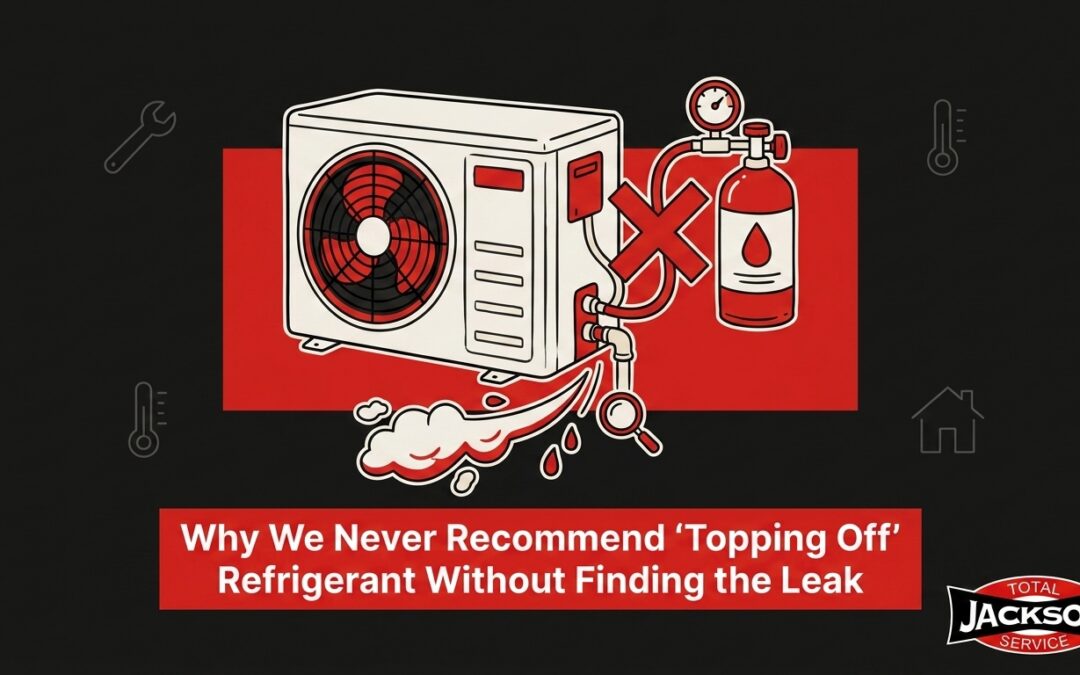
Your air conditioner has been running nonstop, but the vents are blowing lukewarm air. When you are sweating in your living room during the oppressive August late-summer heat, you might wonder why we never recommend ‘topping off’ refrigerant without finding the leak. The temptation for a quick fix is overwhelming, but asking a technician to just add a little gas fundamentally misunderstands how modern cooling systems operate. A temporary band-aid might give you a few days of cool air, but it leaves a major mechanical flaw completely unaddressed.
If you are tired of dealing with a struggling system and need comprehensive HVAC services, the smartest next step is to schedule a professional AC diagnostic to uncover the root cause.
The trap of the quick recharge: Many homeowners assume that air conditioners naturally consume their cooling gas over time. When the house gets uncomfortably warm, the immediate instinct is to call a local technician and ask them to simply refill the system. In the short term, this seems like an easy, budget-friendly out. The technician attaches their gauges, adds a few pounds of refrigerant, and the cold air temporarily returns. However, this fleeting fix sets the stage for a much larger, more frustrating breakdown just weeks—or sometimes days—later.
Choosing a temporary refrigerant recharge versus authorizing a proper leak search is a critical decision point. When you opt for a top-off, you are essentially pouring water into a bucket with a hole in the bottom. The core issue is not that the system ran out of refrigerant naturally; the issue is that the sealed system has been breached. Addressing the symptom without fixing the underlying structural failure guarantees that you will be making another desperate service call before the season is over.
Understanding the Closed-Loop System: Refrigerant is Not Fuel
To understand why a top-off is a flawed strategy, you have to look at the mechanical reality of how residential air conditioning actually works. The most common misconception in the HVAC world is that refrigerant acts like gasoline in a car. You drive your car, the engine burns the fuel, and eventually, you have to pull into a gas station to fill the tank back up. Air conditioners do not operate this way.
Your home cooling equipment utilizes a closed-loop system. This means the refrigerant is sealed inside a continuous circuit of copper tubing, coils, and a compressor. It acts as a heat-transfer medium, continuously cycling back and forth between a liquid and a gaseous state. Because it is never consumed, burned, or exhausted during this cycle, a healthy air conditioner will have the exact same amount of refrigerant on its tenth birthday as it did on the day it was installed. If you find yourself troubleshooting an AC that isn’t cooling and discover the charge is low, it is physically impossible for the system to have just “run out” normally.
How Heat Transfer Works in Your Home
The cooling process relies on a precise, sealed volume of refrigerant to function correctly. Here is exactly how that closed loop moves heat out of your living space:
- The Evaporator Coil (Indoors): Cold, liquid refrigerant enters the indoor coil. As warm air from your house blows over this coil, the refrigerant absorbs the heat and boils into a warm gas.
- The Compressor (Outdoors): This gaseous refrigerant travels outside to the compressor, which squeezes the gas, raising its pressure and temperature significantly.
- The Condenser Coil (Outdoors): The super-heated gas flows through the outdoor coil. The outdoor fan blows ambient air across the coil, allowing the heat to dissipate into the outside air. The refrigerant condenses back into a liquid and heads back indoors to start the cycle again.
The absolute rule of refrigerant: Because this cycle is entirely enclosed, low refrigerant definitively means there is a hole, crack, or leak somewhere in the system. Adding more gas without patching the hole is a futile exercise. The new refrigerant will follow the exact same escape route as the old refrigerant, leaving you right back where you started.

High Humidity and Low Refrigerant: A Recipe for Frozen Coils
Operating a leaking system is not just inefficient; it triggers a chain reaction of mechanical failures. When you combine a low refrigerant charge with the extreme humidity of the Naples FL coastal climate, the results can be catastrophic for your equipment. Homeowners are often shocked to find out that a lack of refrigerant actually causes their indoor unit to freeze solid, rather than just blow warm air.
When refrigerant leaks out of the closed loop, the pressure inside the evaporator coil drops significantly. In the world of thermodynamics, a drop in pressure equals a drop in temperature. The remaining refrigerant inside the indoor coil becomes excessively cold—often dropping well below the freezing point of water. Under normal conditions, the coil should be cold enough to absorb heat, but not so cold that it turns into an icebox.
This is where the oppressive coastal humidity becomes a major factor. The evaporator coil naturally pulls moisture out of your indoor air as it cools. When the coil is super-cooled due to a leak, that airborne moisture quickly condenses and freezes directly onto the metal fins. Within a matter of hours, a thin layer of frost turns into a thick, solid block of ice, completely choking off the airflow.
The secondary damage of a frozen coil:
- Blocked airflow: Ice physically blocks the air from passing through the coil, causing your vents to stop blowing air entirely.
- Overworked blower motor: The indoor fan strains against the blockage, often leading to premature motor failure.
- Severe water damage: When the system is finally turned off, that massive block of ice melts rapidly. The sheer volume of water easily overwhelms the condensate drain pan, overflowing into your ceilings, walls, or floors.
This escalating damage is exactly why local technicians providing AC repair in North Naples prioritize finding the root cause of the leak. Simply adding gas to a system that is prone to freezing is a gamble that risks severe water damage to your home.
Coastal Air, Corrosion, and the Reality of Micro-Leaks
If an air conditioner is a sealed system, you might wonder how leaks happen in the first place. While physical damage from a lawnmower or a weed whacker can certainly puncture a refrigerant line, the vast majority of leaks occur naturally due to environmental wear and tear. The salt-heavy air in coastal environments is particularly aggressive, accelerating the degradation of outdoor condenser units and indoor coils alike.
The most common culprit behind mysterious refrigerant loss is a phenomenon known as formicary corrosion. This type of corrosion creates microscopic, pinhole leaks that develop in copper coils over time. It is often driven by a combination of airborne pollutants, household chemicals (like cleaning sprays and air fresheners), and the corrosive nature of salt air. As these compounds settle on the copper tubing, they slowly eat away at the metal, creating a network of tiny tunnels that eventually breach the sealed loop.
These micro-leaks are incredibly difficult to find. Because they are often invisible to the naked eye, a visual inspection is rarely enough to locate the source of the problem. If a technician simply adds more refrigerant to a system suffering from widespread formicary corrosion, they are guaranteeing that the new, expensive refrigerant will slowly seep out through those same microscopic holes.
Why Leaks Are Rarely Obvious
Unlike a burst water pipe that leaves a visible puddle on your floor, refrigerant leaks are often silent and gaseous. Because refrigerant turns into a gas at room temperature, it does not leave a dripping mess when it escapes the copper lines.
| Type of Leak | Common Symptoms | Detection Method |
|---|---|---|
| Micro-Leak (Formicary Corrosion) | Slow loss of cooling over weeks or months, frequent freezing coils. | Electronic sniffer tools or UV dye injection. |
| Valve or Fitting Leak | Oil residue around service valves, moderate cooling loss. | Soap bubble testing or electronic detection. |
| Major Puncture or Rupture | Audible hissing or bubbling sounds, immediate and total loss of cool air. | Visual inspection and nitrogen pressure testing. |
Because the escaping gas is invisible, DIY leak detection is entirely ineffective. Finding these breaches requires highly trained professionals equipped with specialized electronic leak detectors, ultrasonic tools, or UV fluorescent dyes. Attempting to guess where the leak is located usually results in wasted effort and ongoing system issues.
Environmental Regulations and Equipment Protection
Beyond the mechanical frustration of a freezing coil, there are strict legal and environmental reasons why continuously topping off a leaking system is a bad idea. The Environmental Protection Agency (EPA) heavily regulates the handling, recovery, and venting of refrigerants under Section 608 of the Clean Air Act. Modern refrigerants, while safer for the ozone layer than older variants, are still potent greenhouse gases. Allowing these chemicals to continuously leak into the atmosphere is an environmental hazard that professional HVAC companies take very seriously.
When a system has a known, significant leak, a reputable technician is ethically and legally bound to recommend a permanent repair rather than enabling a continuous cycle of leaking and refilling. But the environmental impact is only half the story; the danger to your equipment is equally severe.
The mechanical danger to your compressor:
- Loss of cooling for the motor: The compressor is the heart of your air conditioner, pumping the refrigerant through the lines. Interestingly, the compressor relies on the cool, returning refrigerant gas to keep its own internal motor from overheating.
- Increased workload: When the system is low on refrigerant, the compressor has to work twice as hard to try and achieve the temperature set on your thermostat.
- Overheating and failure: Running an overworked, under-cooled compressor during the August late-summer heat drastically increases the risk of a total mechanical breakdown. The internal windings melt, the motor shorts out, and the compressor dies.
Replacing a burned-out compressor is one of the most extensive repairs in the HVAC industry. Addressing the leak properly from day one is the true key to finding affordable AC fixes in Estero. Paying for repeated top-offs might seem cheap today, but it directly leads to compressor replacement tomorrow.
How Honest Diagnostics Protect Your Home and Comfort
When a technician tells you that they cannot simply “add a little Freon” to your system, it is easy to feel frustrated. However, it is vital to reframe this refusal not as an upsell, but as an act of consumer protection. Companies that take the easy, temporary route by topping off a leaking system are ultimately doing a disservice to the homeowner. They are walking away from a failing machine, leaving you vulnerable to sudden breakdowns and recurring service fees.
At the core of a reliable service experience is a commitment to honest diagnostics. We prioritize long-term customer solutions over quick, temporary fixes that ultimately waste your resources. A proper diagnostic process takes time, patience, and technical expertise, but it is the only way to ensure your system will actually survive the remainder of the cooling season without suddenly failing.
Real-world reliability requires a thorough approach. During the intense mid-summer heat, one local homeowner reached out when their air conditioning completely failed overnight. Because the technician arrived promptly and performed a comprehensive repair rather than a temporary patch, the system was fully restored and prepared to handle the rest of the season’s heavy workload. That level of dependability only comes from fixing the actual problem.
The Path to a Permanent Solution
If your system is low on refrigerant, a professional diagnostic will follow a strict, step-by-step procedure to secure the equipment:
- Refrigerant Recovery: Any remaining refrigerant is safely pumped out of the system and stored in recovery cylinders to prevent environmental venting.
- Nitrogen Pressure Testing: The closed loop is pressurized with dry nitrogen. Because nitrogen operates at a much higher pressure than standard refrigerant, it amplifies the leak, allowing the technician to isolate the exact location of the breach.
- Component Repair or Replacement: Depending on the size and location of the leak, the technician will either braze (weld) the copper tubing to seal the hole or recommend replacing the corroded coil entirely.
- Deep Vacuum Evacuation: Once sealed, a vacuum pump removes all air and non-condensable moisture from the lines, ensuring the loop is perfectly clean.
- Factory-Spec Recharging: Finally, the system is weighed in with the exact, manufacturer-specified amount of new refrigerant.
This thorough approach guarantees that the system is tight, efficient, and ready to cool your home reliably. Investing in a real repair prevents the headache of recurring service calls and protects the lifespan of your equipment.
Securing Long-Term Comfort Over Temporary Patches
A residential air conditioner is a carefully balanced, closed-loop system that should never need a top-off unless a physical breach has occurred. While the Naples FL coastal climate certainly accelerates wear and tear on metal components, treating refrigerant loss as a consumable resource is a dangerous myth. Finding the leak is the only way to ensure reliable cooling, prevent severe water damage from frozen coils, and protect your compressor from a catastrophic burnout.
If you are dealing with vents blowing warm air, do not settle for a temporary band-aid that will inevitably fail when you need it most. Encourage a definitive diagnostic that uncovers the real issue. By choosing to fix the root cause, you secure your indoor comfort for the long haul. Take the time to schedule a professional AC diagnostic and get your system running exactly the way the manufacturer intended.
Frequently Asked Questions
Is it normal to have to add Freon to a house AC?
No, it is never normal to add refrigerant to a healthy air conditioner. Residential cooling systems are closed loops, meaning the refrigerant continuously cycles without ever being consumed. If your system requires more gas, it absolutely means there is an active leak that needs to be located and repaired.
Can you just add refrigerant without fixing the leak?
While it is physically possible to add refrigerant without fixing the leak, it is highly discouraged and often a waste of resources. The new refrigerant will immediately begin escaping through the same hole, leaving you with the exact same problem in the near future. Furthermore, ignoring the leak forces the compressor to overwork, which can lead to total system failure.
How long does AC last after adding freon?
The lifespan of a top-off depends entirely on the size of the leak in your system. A microscopic pinhole leak might hold a charge for a few months, while a larger rupture could vent all the new refrigerant in a matter of days or even hours. Because the timeline is unpredictable, a top-off is never a reliable long-term solution.
What happens if you just add freon to a leaking AC?
If you just add refrigerant to a leaking system, you temporarily mask the core mechanical failure while allowing the root problem to worsen. The system will continue to leak greenhouse gases into the environment, your energy bills will remain high due to system inefficiency, and the compressor will suffer ongoing heat stress that drastically shortens its lifespan.
Why do coastal Florida AC units develop refrigerant leaks so often?
Coastal environments feature high humidity and airborne salt, which are highly corrosive to the copper and aluminum components of an air conditioner. This salt-heavy air accelerates a process called formicary corrosion, creating microscopic pinhole leaks throughout the coils much faster than in dry, inland climates.
Does adding refrigerant fix a frozen evaporator coil?
Adding refrigerant will temporarily stop a coil from freezing if low pressure was the direct cause, but it does not fix the underlying reason the pressure dropped in the first place. Until the physical leak is patched, the system will eventually lose pressure again, causing the coil to freeze over and potentially cause water damage to your home.