


Is Hard Water Silently Damaging Your Southwest Florida Home?
How hard water affects your plumbing and appliances is something every Southwest Florida homeowner should understand — because the damage is real, it’s gradual, and it’s happening right now in most homes across the region.
Here’s a quick look at the main ways hard water causes damage:
- Pipes and fixtures: Mineral scale builds up inside pipes, narrowing the flow path and reducing water pressure over time
- Water heaters: Sediment coats heating elements and tank bottoms, forcing the system to work harder and use more energy
- Dishwashers and washing machines: Mineral deposits clog spray jets, damage seals, and shorten appliance lifespan
- Energy bills: Appliances fighting scale buildup can consume up to 30% more energy than those running on soft water
- Skin, hair, and cleaning: Hard water prevents soap from lathering properly, leaves residue on skin, and makes laundry stiff and dull
More than 85% of U.S. homes deal with some level of hard water — and Southwest Florida is one of the hardest-hit regions in the country, thanks to the limestone-rich aquifer that feeds local water supplies. What looks like a harmless white crust around your faucet is actually a warning sign of much larger problems building silently inside your pipes, water heater, and appliances.
The good news? Once you understand what’s happening and why, you can take steps to stop the damage before it becomes a costly repair bill.
Understanding Hard Water and Its Mineral Composition
To understand why hard water is so hard on your home, we have to look underground. Water is an incredible natural solvent. Before it ever reaches your municipal water treatment plant or your private well, it travels through thick layers of soil, sand, and rock.
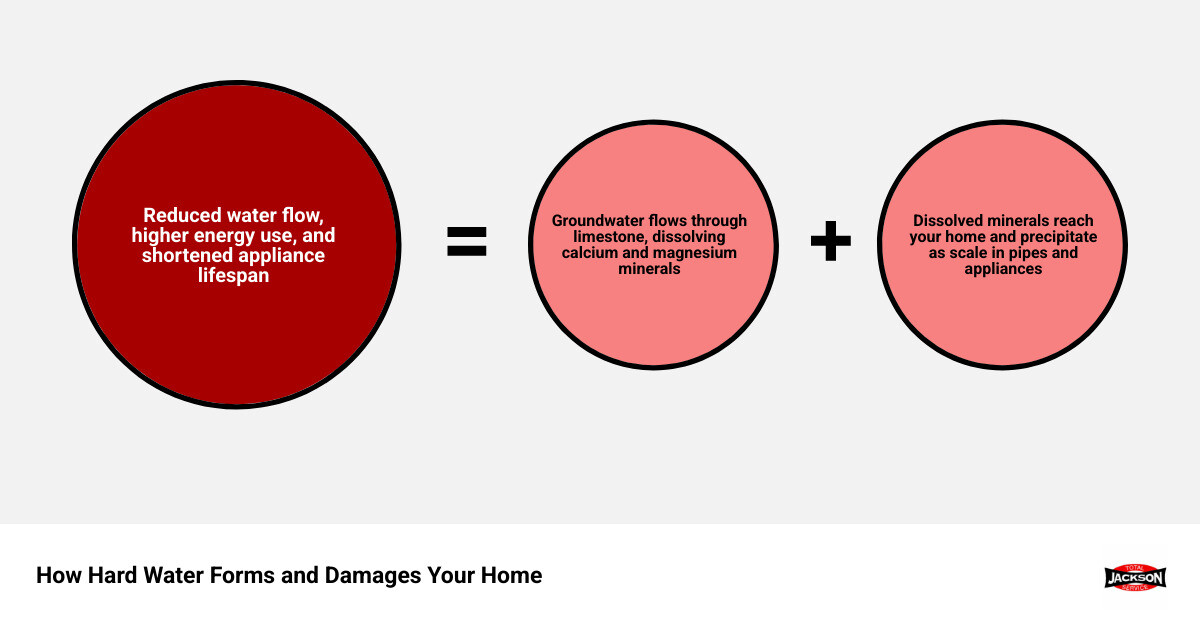
In Southwest Florida—from the coastal communities of Naples and Marco Island to the inland neighborhoods of Ave Maria and Golden Gate—our groundwater sits in shallow aquifers made almost entirely of limestone. As water passes through this mineral-rich rock, it acts like a sponge, dissolving and absorbing calcium and magnesium along the way.
By the time this water enters your home, it is heavily saturated with these minerals. Water hardness is typically measured in two ways: parts per million (ppm) or grains per gallon (gpg). One grain per gallon is equivalent to about 17.1 ppm.
According to water quality standards, water is classified on a scale of hardness:
- Soft Water: 0 to 3 gpg
- Moderately Hard Water: 3 to 7 gpg
- Hard Water: 7 to 11 gpg
- Very Hard Water: 11 to 15 gpg
- Extremely Hard Water: Over 15 gpg
In many parts of Lee and Collier counties, municipal and well water testing regularly reveals hardness levels ranging from 12 to over 18 gpg. This places Southwest Florida water firmly in the “very hard” to “extremely hard” categories. To protect your plumbing infrastructure from these heavy mineral loads, professional Water Conditioning is often the most effective line of defense.
What is Hard Water and What Minerals Cause It?
At its core, hard water is simply water with a high concentration of dissolved minerals—specifically calcium carbonate and magnesium ions. While these minerals are completely safe to drink and do not pose health risks, they are highly unstable when dissolved in water.
When hard water is heated, left to evaporate, or subjected to changes in pressure, the dissolved calcium and magnesium ions chemically precipitate out of the liquid. They revert back into their solid mineral form, binding together to create a rock-hard, chalky white substance known as calcium carbonate scale (or limescale). This scale is chemically identical to the limestone rock the water originally traveled through. Hard water is constantly attempting to rebuild limestone rock formations inside your home’s water lines.
How Hard Water Affects Your Plumbing and Appliances in Southwest Florida
Because Southwest Florida relies heavily on the calcium-rich Floridan and Biscayne aquifers, our local water supply is naturally saturated with minerals. This saturation means that every time you turn on a faucet, wash a load of laundry, or run a hot bath, dissolved minerals are moving through your plumbing system, ready to cling to any surface they touch.
Over time, this constant mineral exposure leads to a slow, cumulative degradation of your home’s infrastructure. It starts as a cosmetic nuisance—cloudy spots on your drinking glasses or a white crust on your showerhead—but quickly escalates into mechanical issues.
Without intervention, the high mineral saturation of our local water supply can lead to restricted water flow, premature appliance failure, and frequent plumbing emergencies. If you are experiencing these issues in your home, seeking professional Plumbing Services is the first step toward diagnosing the extent of the mineral damage and restoring your system’s health.
How Hard Water Affects Your Plumbing and Appliances: The Damage to Pipes and Fixtures

The pipes inside your walls are the unsung heroes of your home, carrying water quietly from room to room. However, hard water behaves like cholesterol in human arteries, slowly and silently building up along the interior walls of your piping.
As calcium and magnesium precipitate out of the water, they form a rough, porous layer of limescale. Each new gallon of hard water that flows through the pipe deposits another microscopic layer of minerals on top of the last. Over several years, this accumulation significantly reduces the interior pipe diameter, restricting water flow and forcing your entire plumbing system to operate under increased stress.
If you suspect your pipes are already suffering from severe scale buildup, you may need targeted Plumbing Repair to clear the blockages or replace compromised sections of your line.
Scale Buildup, Reduced Water Pressure, and Clogs
As limescale narrows the pathway for water, the first symptom most homeowners notice is a gradual decline in water pressure. You might notice that your shower feels less like a refreshing waterfall and more like a sad, localized trickle.
This reduction in pressure happens for two reasons:
- Restricted Flow: The physical narrowing of the pipe walls limits the volume of water that can pass through at any given time.
- Clogged Aerators and Fixtures: Mineral precipitation is especially aggressive at the exit points of your plumbing. Small metal screens (aerators) inside your kitchen and bathroom faucets, as well as the tiny spray nozzles on your showerheads, quickly fill with crusty white deposits. These deposits block the individual spray holes, causing uneven water flow, spraying at odd angles, and severely dropping your water pressure.
Because scale creates a rough, uneven texture inside your pipes, it also acts as a trap for other debris. Hair, soap scum, and food waste that would normally slide easily through smooth pipes get caught on the jagged mineral deposits, leading to frequent, stubborn clogs that standard plungers can’t resolve.
Accelerated Corrosion and Shortened Lifespan of Pipes
A common misconception is that modern pipe materials are immune to hard water damage. While it’s true that older galvanized steel pipes are the most vulnerable—as their rough interior surfaces are highly prone to catching minerals and rusting—hard water also severely impacts copper and PEX piping.
Scale buildup can actually trap corrosive agents, such as chlorine or oxygen, directly against the pipe’s metallic surface. This localized concentration of corrosive elements triggers chemical reactions that eat away at the pipe wall from the inside out, leading to pinhole leaks.
Furthermore, the rough surface of the scale creates turbulent water flow. Instead of sliding smoothly through the pipe, the water swirls and crashes against the scale-covered walls like liquid sandpaper. This constant physical friction wears down the pipe material, weakening joints and fittings, and drastically shortening the overall lifespan of your plumbing system.
The Impact of Hard Water on Water Heaters and Household Appliances
While hard water damages cold water lines over time, it is absolutely brutal on hot water systems. Heat accelerates the chemical process of mineral precipitation. When water is heated, the calcium and magnesium ions break down and settle out of the water almost instantly.
This makes your water heater—whether it is a traditional tank-style or a modern tankless unit—ground zero for hard water damage. As scale forms on heating elements and tank walls, it creates a highly effective thermal barrier. Because calcium carbonate is an excellent insulator, it blocks heat from transferring from the element to the water, causing your system to run longer, consume more energy, and burn out prematurely.
To protect your investments, it is critical to learn how to Stop the Scale Before Your Appliances Fail.
Water Heaters: Sediment Buildup and Efficiency Loss
In traditional tank-style water heaters, precipitated minerals settle to the bottom of the tank, forming a thick, muddy layer of sandy sediment. This sediment layer acts as a blanket over the bottom burner or heating element.
To heat the water to your desired temperature, the heater must first heat the thick layer of stone-like sediment. This causes several severe problems:
- Efficiency Loss: Every 1/4 inch of scale or sediment buildup on a heating element reduces water heater efficiency significantly, forcing it to burn more fuel or draw more electricity to do the same job.
- Overheating and Metal Fatigue: Because the heat cannot escape easily into the water, the bottom of the tank or the electric heating elements get incredibly hot. This extreme thermal stress causes the metal to expand and contract aggressively, leading to metal fatigue, cracking, and eventual tank failure.
- The “Rumbling” Noise: If you hear a popping, rattling, or rumbling noise coming from your utility closet, that is the sound of water trapped beneath the heavy sediment layer boiling and bursting through the mineral crust.
Tankless water heaters are even more sensitive to hard water. Because they rely on incredibly narrow water passageways and intense heat to warm water instantly, even a tiny amount of scale can completely block the flow, trip safety sensors, and cause the system to shut down.
If your hot water supply is dwindling or making strange noises, scheduling professional Water Heater Repair to flush the system and inspect the elements can save you from a premature system replacement.
Understanding How Hard Water Affects Your Plumbing and Appliances Over Time
Your water heater isn’t the only appliance under constant attack. Any household appliance that uses water is susceptible to the slow, destructive effects of hard water.
- Dishwashers: Mineral deposits coat the internal heating element, reducing water temperature and cleaning power. Scale also clogs the tiny spray jets on the rotating arms, leaving dishes cloudy and covered in spots. Over time, the abrasive minerals wear down rubber seals and pump mechanisms, leading to leaks.
- Washing Machines: Hard water minerals bind with laundry detergents, forming a sticky curd that gets trapped in the wash tub and pump. This residue can cause foul odors and wear out the motor. The minerals also degrade the internal heating elements and cause rubber hoses and seals to become brittle and crack.
- Coffee Makers and Kettles: These small appliances heat water to high temperatures, making them prime targets for rapid scale buildup. Scale clogs the delicate internal tubing, slows down the brewing process, and can ruin the flavor of your morning brew.
To see just how much hard water cuts into your household budget, consider the average lifespan of major appliances operating with hard water versus soft water:
| Appliance | Average Lifespan (Hard Water) | Average Lifespan (Soft Water) |
|---|---|---|
| Water Heater (Tank) | 6–8 Years | 12–15 Years |
| Tankless Water Heater | 5–10 Years (without flushing) | 15–20 Years |
| Dishwasher | 5–7 Years | 10 Years |
| Washing Machine | 5–8 Years | 11 Years |
Everyday Effects: Energy Bills, Cleaning Performance, Skin, and Hair
Beyond the hidden damage inside your walls and utility closets, hard water makes its presence known in your daily routine. It affects your monthly budget, the appearance of your dishes, the feel of your clothing, and even your personal grooming.
Increased Energy Consumption and Higher Utility Bills
Because scale acts as a thermal insulator, appliances exposed to hard water must consume up to 30% more energy than those using soft water. When your water heater, dishwasher, and washing machine have to run longer and work harder to overcome the insulating barrier of mineral scale, your monthly electric or gas utility bills climb steadily.
The appliances most heavily impacted by this increased energy draw include:
- Electric and Gas Water Heaters: The constant struggle to heat water through a layer of stone drastically increases energy consumption.
- Dishwashers: Extended cycle times and increased power draw to heat water to sanitizing temperatures.
- Washing Machines: Extra energy required to heat wash cycles, combined with the motor working harder against mineral friction.
Skin, Hair, Soap Lathering, and Cleaning Performance
If you have ever tried to wash your hands or shampoo your hair in hard water, you have likely noticed that soap simply does not want to lather. Instead of forming rich, bubbly suds, the dissolved calcium and magnesium ions chemically react with the soap molecules to create an insoluble, sticky residue known as soap scum.
This chemical reaction has several frustrating everyday consequences:
- Skin Irritation: Soap scum does not wash away easily. It leaves a microscopic, invisible film on your skin that clogs pores, strips away natural oils, and leads to persistent dryness, itching, and irritation. This can be especially problematic for family members with eczema or sensitive skin.
- Dry, Dull Hair: Just like on your skin, hard water leaves a mineral coating on your hair. This prevents moisture from penetrating the hair shaft, leaving your locks feeling dry, brittle, straw-like, and difficult to style.
- Stiff, Faded Laundry: When soap scum gets trapped in the fibers of your clothing, it prevents dirt from washing away. Your white clothes will quickly turn a dingy gray, colors will fade, and fabrics will feel stiff, scratchy, and rough to the touch.
- Detergent Waste: Because hard water neutralizes the cleaning agents in soaps and detergents, you have to use much more product to get things clean. In fact, installing a water softener can save homeowners as much as 50% on detergent and soap usage, as soft water allows soap to lather and clean at maximum efficiency.
Effective Solutions to Mitigate Hard Water Damage
While the effects of hard water are extensive, you do not have to accept them as a permanent part of living in Southwest Florida. There are highly effective, long-term plumbing solutions designed to remove or neutralize these minerals before they ever reach your pipes or appliances.
Water Softeners and Water Conditioning Systems
The most reliable and comprehensive solution to hard water is a whole-house water softener. These systems utilize a process called ion exchange to physically remove calcium and magnesium from your water supply.
Inside a water softener, water passes through a tank filled with millions of microscopic, negatively charged resin beads. These beads are pre-charged with positively charged sodium or potassium ions. Because calcium and magnesium have a stronger positive charge than sodium, they stick to the resin beads as the water flows past, displacing the sodium ions. The water that leaves the tank is completely soft, with virtually all hardness minerals removed.
To keep your water softener running at peak performance, a simple maintenance routine is required:
- Check Salt Levels Monthly: Peer into the brine tank once a month to ensure there is enough salt. If the tank is less than half full, add high-purity specialized salt pellets.
- Watch for Salt Bridges: Occasionally, a hard crust or “bridge” of salt can form across the brine tank, preventing the salt from dissolving into the water. If you notice a hollow space beneath the top layer of salt, gently break it up with a broom handle.
- Schedule Annual Professional Service: Just like your air conditioner, a water softener benefits from an annual professional tune-up. A licensed technician can test your water chemistry, sanitize the system, clean the internal valves, and ensure the regeneration cycles are running efficiently.
For homeowners who prefer a salt-free option, a water conditioner is an alternative. Rather than removing the minerals, a conditioner uses catalytic media to alter the physical structure of the calcium and magnesium ions, preventing them from binding to surfaces as hard scale.
Frequently Asked Questions About Hard Water
How do I know if my Naples home has hard water?
If you live in Naples, Fort Myers, or the surrounding Southwest Florida areas, the chances are incredibly high that you have hard water. You can spot the warning signs yourself: look for a white, crusty buildup on your faucets and showerheads, cloudy spots on your glassware after a dishwasher cycle, dry skin and frizzy hair after showering, and difficulty getting soap to lather.
For a precise measurement of your water’s mineral content, you can use a home water testing kit or schedule a professional water analysis to determine your exact grains per gallon (gpg) rating.
Can hard water cause permanent damage to my plumbing?
Yes. Over time, the narrowing of your pipes due to heavy scale buildup can become irreversible. If the scale is left to accumulate for decades, the interior diameter of the pipes can become so restricted that water can barely trickle through, requiring a complete and costly home repipe.
Additionally, the accelerated corrosion caused by trapped minerals can lead to multiple pinhole leaks inside your walls, resulting in mold, drywall damage, and structural issues.
What is the difference between a water softener and a water conditioner?
The primary difference lies in how they handle the minerals:
- Water Softeners use ion exchange with salt to physically remove calcium and magnesium from the water, giving you truly “soft” water that lathers beautifully, protects pipes, and prevents soap scum.
- Water Conditioners are salt-free systems that do not remove the minerals. Instead, they chemically alter the minerals so they cannot stick to your pipes and heating elements. While conditioners protect your plumbing from scale, they do not provide the same soap-lathering and skin-softening benefits as a traditional softener.
Conclusion
Understanding how hard water affects your plumbing and appliances is the first step toward protecting your Southwest Florida home. From the slow, silent accumulation of limescale inside your copper pipes to the energy-draining sediment building up in your water heater, hard water is an expensive hidden nuisance that impacts your comfort, your appliances, and your monthly utility bills.
At Jackson Total Service, we have been providing complete, trusted home comfort solutions across Southwest Florida since 1964. Our licensed, professional plumbers serve Collier and Lee counties—including Naples, Bonita Springs, Estero, Cape Coral, and Fort Myers—delivering the high-quality care and expertise you need to keep your home running smoothly. Because we specialize in HVAC, plumbing, and electrical services all under one roof, you never have to worry about managing multiple contractors to keep your home comfortable and safe.
Don’t let hard water quietly wear down your plumbing and drive up your utility bills. Contact our friendly team of local experts today to learn more about our professional Water Conditioning solutions and take control of your home’s water quality!