



Why Electrical Safety Tips for Homeowners Can Save Lives — and Your Home
Electrical safety tips for homeowners are something every household needs, but most people don’t think about them until something goes wrong.
Here’s a quick overview of the most important steps you can take right now:
- Avoid overloading outlets — plug only one heat-producing appliance per outlet
- Inspect cords regularly — replace any that are frayed, cracked, or damaged
- Install GFCI outlets in bathrooms, kitchens, garages, and outdoor areas
- Install AFCI breakers to detect dangerous arc faults before they cause fires
- Test GFCIs and AFCIs monthly to confirm they’re working properly
- Use tamper-resistant outlets to protect children from shocks
- Never run cords under rugs or through doorways where they can overheat
- Unplug appliances when not in use to reduce fire risk and phantom drain
- Know your warning signs — flickering lights, burning smells, and warm outlets all mean call a pro
- Schedule a professional electrical inspection every 3 to 5 years
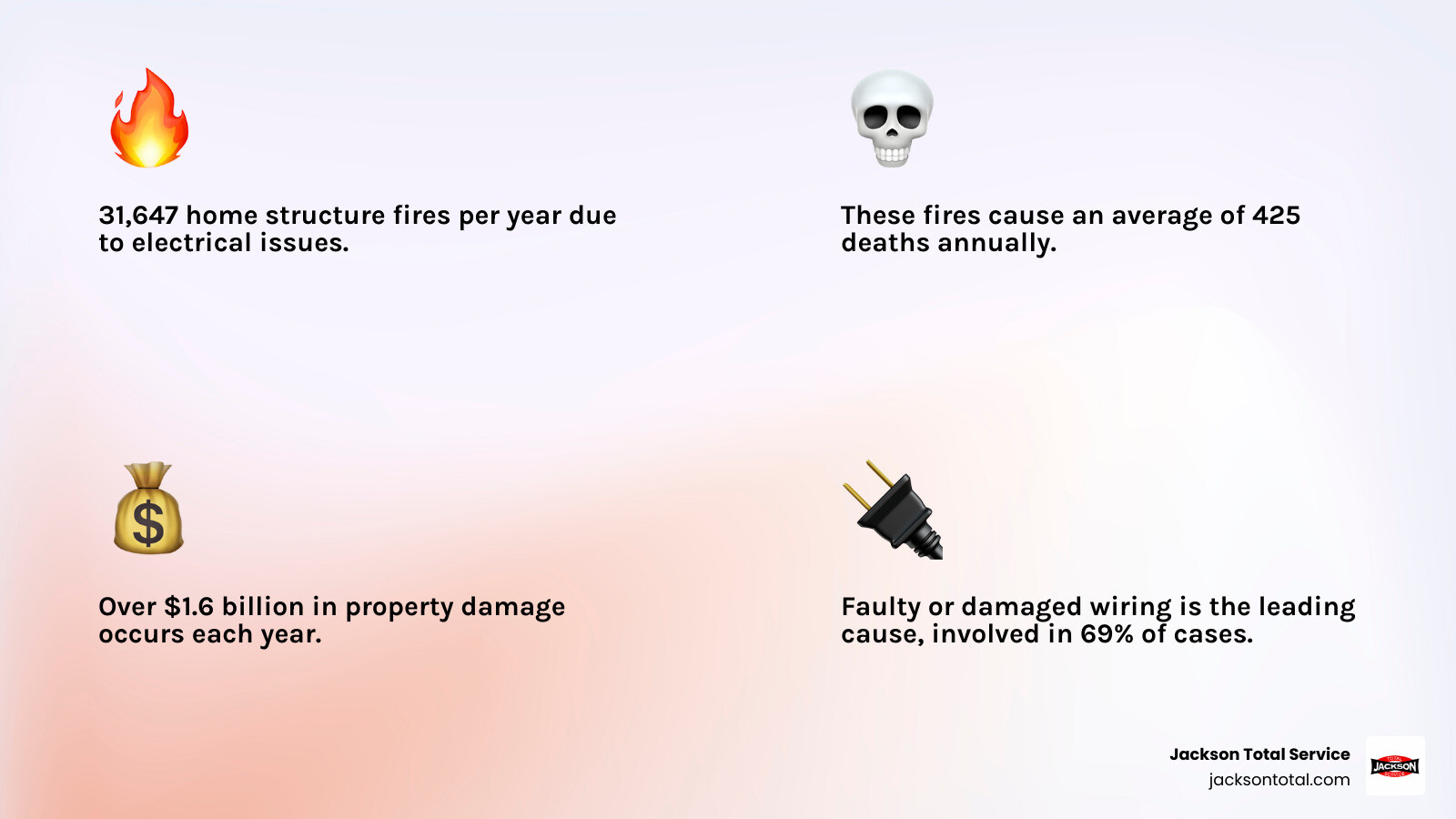
The numbers are hard to ignore. According to the NFPA, electrical distribution and lighting equipment were involved in an average of 31,647 home structure fires per year between 2019 and 2023 — causing 425 deaths, over 1,200 injuries, and $1.6 billion in property damage annually. Faulty or damaged wiring alone accounts for 69% of those fires. And roughly 3,300 fires start in extension cords each year, killing around 50 people.
The good news? Most of these incidents are preventable. Whether you’re a longtime homeowner or new to managing a property in Southwest Florida, understanding the basics of home electrical safety can make the difference between a close call and a catastrophe.
Understanding the Risks: Why Home Electrical Safety is Critical in 2026
As we move through 2026, our homes are more reliant on electricity than ever before. From smart appliances and home offices to electric vehicle chargers and sophisticated security systems, the demand on our electrical panels has skyrocketed. While this technology makes life easier, it also increases the potential for hazards if our systems aren’t maintained.
The NFPA statistics mentioned above highlight a sobering reality: electrical distribution or lighting equipment ranks first in direct property damage from home fires. When we look at why these fires start, faulty or damaged wiring is the leading culprit, involved in 69 percent of cases. This is especially concerning for our neighbors in older communities across Naples and Fort Myers, where wiring may not have been designed to handle modern electrical loads.
In Southwest Florida, we face unique environmental challenges. Our high humidity and salt air can accelerate the corrosion of electrical components, making Why Florida Homeowners Shouldn’t Play Electrical Roulette a vital philosophy for every resident. Ignoring a flickering light or a buzzing outlet isn’t just an inconvenience; it’s a gamble with your family’s safety.
10 Essential Electrical Safety Tips for Homeowners
Maintaining a safe home doesn’t always require a major renovation. Often, it’s the small, daily habits that prevent a disaster. Here are ten fundamental electrical safety tips for homeowners to keep your household running safely:
- Look for NRTL Listings: Always ensure your appliances and electronics are listed by a Nationally Recognized Testing Laboratory (NRTL), such as UL (Underwriters Laboratories), ETL, or CSA. These marks mean the product has been tested to meet strict safety standards.
- Follow Appliance Instructions: It sounds simple, but reading the manual can prevent misuse that leads to overheating.
- Give Appliances Breathing Room: Ensure there is proper air circulation around your refrigerator, dryer, and entertainment center. Heat buildup is a major fire risk.
- Clean Exhaust Fans: Dust and lint in bathroom or kitchen exhaust fans can cause the motor to overheat and ignite.
- Check Bulb Wattage: Never use a light bulb with a higher wattage than the fixture recommends. If a lamp is unmarked, we recommend using a 60-watt bulb or less (or better yet, switch to cool-running LEDs).
- Space Heater Safety: Keep combustible materials—like curtains, rugs, and furniture—at least three feet away from portable heaters.
- Unplug Unused Electronics: This eliminates “phantom drain” (saving you money!) and reduces the risk of a fire if a device malfunctions while you’re away.
- Keep Water Away: Never use electrical devices near a sink, tub, or pool unless they are plugged into a GFCI-protected outlet.
- Stop Using Damaged Items: If an appliance gives you even a tiny “tingle” or shock, stop using it immediately and have it checked by a professional.
- Professional Inspections: Have a licensed electrician inspect your home every few years, especially if your property is over 30 years old.
Stop Overloading Your Outlets: Essential Electrical Safety Tips for Homeowners
One of the most common mistakes we see in Lee and Collier County homes is the “daisy-chaining” of power strips. Overloading an outlet can cause the internal wiring to heat up to dangerous levels before the circuit breaker even trips.
To stay safe, heat-producing appliances—like coffee makers, toasters, air fryers, and space heaters—should always be plugged directly into a wall outlet. These devices pull a lot of “amps,” and using them on a power strip can easily lead to a fire. If you find yourself constantly needing more outlets, it’s a sign that you need to have additional circuits installed rather than relying on temporary solutions.
Smart plugs can be a great ally here. Many modern smart plugs allow you to monitor the load on an outlet and can automatically shut off if they detect overheating or excessive power draw.
Best Practices for Electrical Cord Management and Storage
Extension cords are meant for temporary use only (think 90 days or less). If you’re using one to power a lamp or a TV permanently, it’s time to call us for a new outlet.
When using cords, pay attention to the AWG (American Wire Gauge) rating. The lower the number, the thicker the wire and the more power it can safely handle. Never run cords under rugs or across doorways; the weight of people walking over them can damage the internal insulation, leading to “arc faults” that start fires behind your furniture.
For those of us who love decorating for the holidays, following the Top 6 Holiday Safety Tips is essential. Always use outdoor-rated cords for your exterior displays and check for frayed wires before hanging your lights.
Advanced Protection: How GFCIs and AFCIs Prevent Hazards
In 2026, a safe home relies on more than just a standard circuit breaker. Two specific technologies are designed to save lives and property: GFCIs and AFCIs.
| Device Type | What it Protects | Where it’s Needed | How it Works |
|---|---|---|---|
| GFCI (Ground Fault Circuit Interrupter) | People (Prevents Shocks) | Kitchens, Bathrooms, Outdoors, Garages | Shuts off power if it detects electricity “leaking” (e.g., through water or a person). |
| AFCI (Arc Fault Circuit Interrupter) | Property (Prevents Fires) | Bedrooms, Living Rooms, Dining Areas | Detects dangerous “arcing” (sparks) caused by damaged wires or loose connections. |
While a standard breaker protects your home from a massive surge or short circuit, these devices are much more sensitive. If you find your breakers are constantly popping, check out our guide on Circuit Breaker Troubleshooting to understand why.
Maintaining Your Home’s Safety Devices
Installing these devices is only half the battle; you must also ensure they are working. We recommend testing your GFCIs and AFCIs once a month. Simply press the “Test” button—the “Reset” button should pop out, and the power should cut off. If it doesn’t, the device is defective and needs immediate replacement.
In addition to electrical breakers, your smoke detectors are your last line of defense. Proper Smoke Detector Service & Installation ensures that if a fire does start, you have the precious seconds needed to get your family out safely. Most home electrical fires occur between midnight and 6:00 a.m., when you are likely asleep.
Florida-Specific Electrical Safety Tips for Homeowners
Living in Southwest Florida means we have to prepare for more than just the occasional thunderstorm. Our weather can be brutal on electrical systems.
High humidity can cause “tracking,” where electricity jumps across damp surfaces, leading to fires. Furthermore, Florida experiences at least one devastating hurricane every three years on average. Preparing your home involves more than just shutters; it involves securing your power.
One of the best investments you can make is a whole-home surge protector. Unlike a power strip, this is installed at your main electrical panel and protects everything—including your expensive HVAC system and refrigerator—from lightning strikes and grid fluctuations. Discover The Shocking Truth About Why Your Home Needs Surge Protection to see how it guards your appliances.
Safe Power Management During Severe Weather
When the power goes out in Cape Coral or Bonita Springs, many homeowners turn to generators. While helpful, they can be deadly if misused.
- Portable Generators: Never run a generator inside a home, garage, or near an open window. Carbon monoxide poisoning happens fast.
- Manual Transfer Switches: To safely power your home with a portable generator, you should have a professional install a manual transfer switch. This prevents “backfeeding,” which can electrocute utility workers.
- Standby Generators: For the ultimate peace of mind, permanent Generators that run on natural gas or liquid propane can power your entire home automatically when the grid fails.
Protecting the Most Vulnerable: Childproofing Your Electrical System
If you have little ones (or even if you have grandkids visiting), childproofing is a top priority. In the past, we relied on those plastic “plug caps,” but children can often pull those out and put them in their mouths—creating a choking hazard.
The modern standard is the Tamper-Resistant (TR) Receptacle. These look like standard outlets but have internal shutters that only open when two prongs are inserted simultaneously. If a child tries to stick a paperclip or a toy into one slot, the shutter stays closed, preventing a shock.
Beyond outlets, keep appliance cords out of reach so they can’t be pulled down from a counter. This is especially important near water sources, such as Pool & Spa Wiring areas, where wet hands and electricity are a dangerous mix.
Recognizing Warning Signs and When to Call a Professional
Your home’s electrical system will often try to tell you something is wrong before a fire starts. Learning to “listen” to these signs is one of the most important electrical safety tips for homeowners.
If you notice any of the following, it’s time to call for an Electrical Repair:
- Flickering or Dimming Lights: This often indicates a loose connection or an overloaded circuit.
- Buzzing or Sizzling Sounds: This is the sound of electricity “arcing” and is a major fire hazard.
- Burning Smells: A plastic or “fishy” smell near an outlet or the breaker panel is a sign that wire insulation is melting.
- Tingling Sensations: If you feel a mild shock when touching an appliance, there is a serious grounding issue.
- Discolored Outlets: Charring or soot on a faceplate means heat is building up inside the wall.
Identifying Warning Signs: Critical Electrical Safety Tips for Homeowners
Don’t ignore frequent breaker trips. While it’s easy to just flip the switch back on, the breaker is tripping for a reason—it’s protecting your home from an overcurrent. If a specific circuit trips repeatedly, you likely have a faulty appliance or an aging panel that can no longer handle the load.
For residents in older parts of Cape Coral or Naples, your home might still have aluminum wiring or an outdated brand of electrical panel that is known to fail. Finding out if you need a Don’t Get Zapped: Finding the Best Panel Upgrade Service in Cape Coral could save your home from a catastrophic failure.
Frequently Asked Questions about Home Electrical Safety
What is the difference between a GFCI and an AFCI?
A GFCI (Ground Fault Circuit Interrupter) is designed to protect people from electric shock by detecting when current is leaking to the ground. An AFCI (Arc Fault Circuit Interrupter) is designed to protect property by detecting dangerous sparking (arcing) that can start fires. You need both for a truly safe home.
How often should I have my home’s wiring inspected?
We recommend a professional inspection every 3 to 5 years. However, if your home is over 30 years old, or if you have just moved into a new property in Southwest Florida, you should have an inspection immediately to ensure the system meets 2026 safety standards.
Why is my smoke detector chirping even after I changed the battery?
Chirping can indicate several things. If the battery is new, the unit might be expired (they usually last 8–10 years), it might be clogged with dust, or there could be a wiring issue in your home’s hardwired system. If cleaning it doesn’t work, it’s time for a replacement.
Conclusion
At Jackson Total Service, we’ve been serving the Southwest Florida community since 1964. We know the unique challenges our climate poses to your home’s infrastructure. From the salt air of Sanibel Island to the inland heat of Ave Maria and Lehigh Acres, we provide the expertise needed to keep your family safe.
Don’t wait for a spark to start thinking about electrical safety. Whether you need a simple outlet upgrade or a comprehensive Electrical Installation Naples FL Complete Guide, we are here to help. Our team offers all your comfort solutions—HVAC, plumbing, and electrical—under one roof, so you never have to juggle multiple contractors.
Keep your home protected and your mind at ease. Contact us today for professional Electrical Services and let’s ensure your home is a safe haven for years to come.