



When Every Second Counts: What to Do During a Plumbing or Electrical Emergency
Knowing what to do during a plumbing or electrical emergency can be the difference between a minor repair and thousands of dollars in damage. Whether it’s a burst pipe flooding your kitchen at midnight or a sparking outlet after a storm, the first few minutes matter most.
Here’s what to do right now if you have a plumbing or electrical emergency:
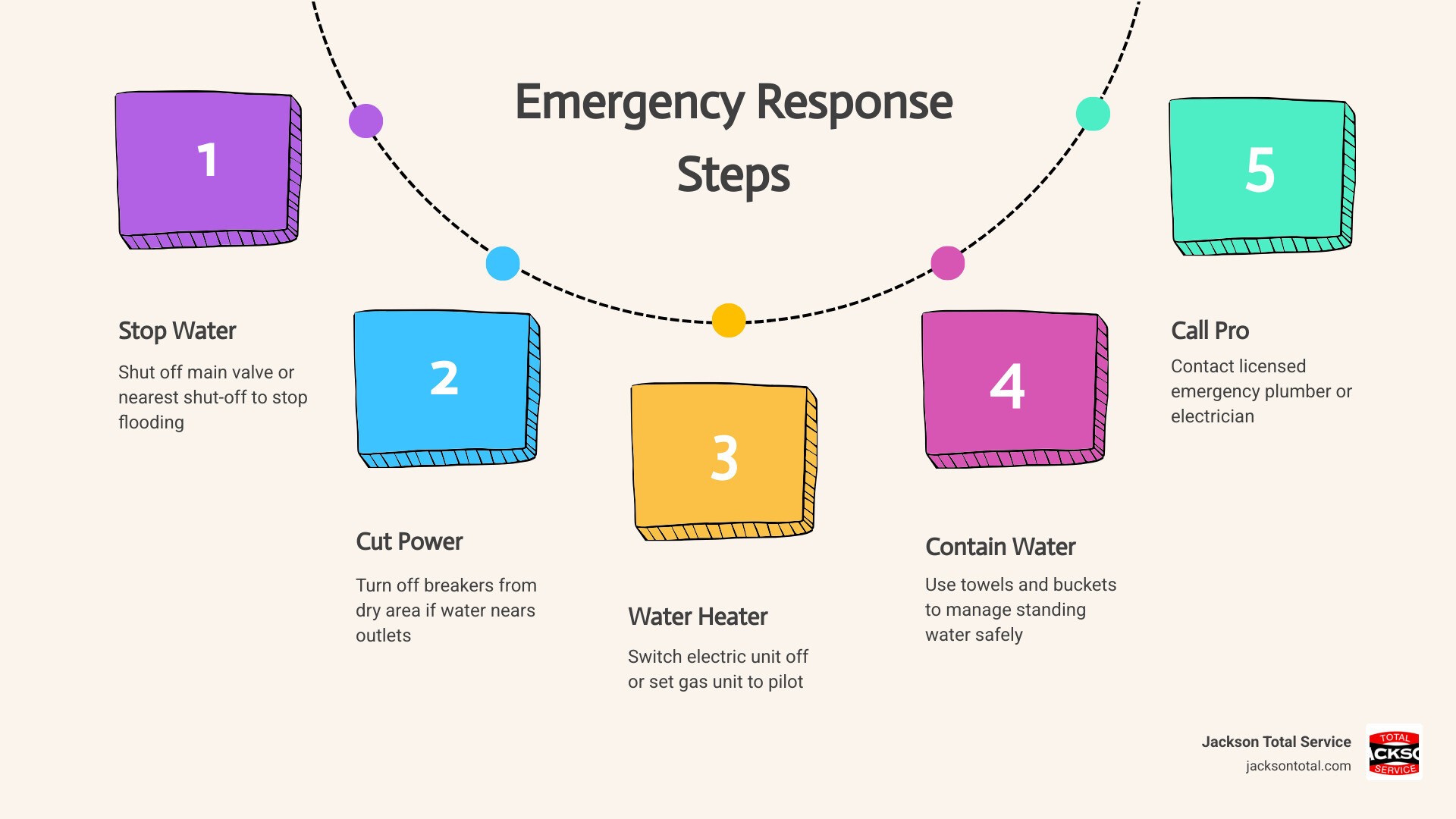
- Stop the water – Turn off the nearest shut-off valve, or the main water supply if needed
- Cut the power – If water is near any outlets, appliances, or wiring, go to your breaker panel and shut off power to the affected area from a dry location
- Turn off the water heater – For electric units, flip the breaker; for gas units, turn the dial to “pilot”
- Contain the damage – Use towels, buckets, or a wet/dry vacuum to manage standing water
- Stay out of standing water – Never enter a flooded room if electricity may still be active
- Document everything – Take photos and video before moving anything
- Call a licensed emergency professional – Do not attempt major repairs yourself
Water damage from plumbing failures accounts for 24% of all property insurance claims, with an average claim cost exceeding $10,000. And mold or structural damage can set in within just 24 to 48 hours of exposure. Acting fast — and acting smart — is everything.
For Southwest Florida homeowners in Naples, Bonita Springs, Marco Island, and surrounding Lee and Collier County communities, emergencies rarely wait for business hours. A pipe doesn’t care that it’s Sunday night. That’s why understanding the right steps in advance can protect your home, your family, and your wallet before help arrives.
What to Do During a Plumbing or Electrical Emergency: Immediate Action Steps

When a home system fails, your adrenaline levels spike. It is completely natural to feel a brief wave of panic when you hear the sound of rushing water behind a wall or see sparks flying from an outlet. However, the first ten minutes of an emergency are the most critical. Having a clear, step-by-step plan helps you keep your cool and protect your property.
If you find yourself in the middle of a crisis, your immediate goals are simple: stop the destructive force (whether that is flowing water or live electrical current), secure the area to keep your family safe, and call in a trusted professional. If you are dealing with a severe system breakdown in Southwest Florida, reaching out to an experienced Emergency Plumber or scheduling an urgent Electrical Repair is the safest way to restore order to your household.
Step 1: Shut Off the Main Water Supply
If you are dealing with a burst pipe, a severely leaking appliance, or an overflowing fixture, your absolute first priority is to stop the flow of water at its source. Letting water pour into your home for even an extra five minutes can release dozens of gallons, saturating your drywall, warping your hardwood floors, and ruining carpets.
To halt the destruction, you need to locate and close your main water shut-off valve. According to industry data, homeowners who know the location of their main water shut-off valve can reduce total water damage by up to 93%.
- Where to look: In our Southwest Florida service area—from the coastal homes of Marco Island to the newer developments in Ave Maria—main valves are typically located along the exterior perimeter wall of the home (often on the side facing the street), inside a garage, or near your outdoor water meter box.
- How to operate it:
- Gate Valves: These look like traditional round wheel handles. Turn the wheel clockwise (to the right, or “closed”) until it stops. Be gentle; older gate valves can become stiff and may snap if forced too hard.
- Ball Valves: These feature a straight lever handle. If the handle is parallel to the pipe, the water is on. Push the lever 90 degrees so that it sits perpendicular to the pipe to shut the water off completely.
Once the main valve is shut, you can minimize remaining pressure in your pipes by opening your outdoor spigots and lowest-level faucets. This drains the residual water safely outside rather than letting it leak into your home. If you suspect a localized leak under a sink or behind a toilet, you can turn the individual fixture valve (angle stop) clockwise instead of shutting off water to the entire house, making it easier to manage while waiting for a professional Plumbing Repair.
Step 2: Safely Power Down Connected Utilities
Water and electricity are a highly dangerous combination. If water from a burst pipe or ceiling leak is spreading anywhere near electrical outlets, light switches, baseboard heaters, or major appliances, you must cut the power immediately to prevent electrocution or electrical fires.
Head directly to your main electrical service panel (breaker box), which is typically found in the garage, a utility closet, or on an exterior wall of your home.
- Locate the correct breaker: If the water leak is isolated to a specific room, find the corresponding breaker on your panel index and flip it to the “Off” position.
- Shut off the Main Breaker: If water is spreading rapidly across multiple rooms or dripping through a ceiling containing light fixtures, do not guess. Locate the large main circuit breaker at the top or bottom of the panel and flip it off to cut power to the entire house.
- Safety Warning: Never touch your electrical panel, individual breakers, or any electrical appliance if you are standing in water or if your hands are wet. If the area directly in front of your breaker box is already flooded, do not attempt to reach it. Instead, step away from the water and contact your local utility provider immediately to cut power to your home from the outside grid. For more guidance on electrical safety, check out these Stay Grounded with These Essential Electrical Safety Tips.
Step 3: Turn Off the Water Heater
A detail that many homeowners overlook during a plumbing emergency is the water heater. If you have turned off your main water supply to stop a leak, your water heater tank can run dry or experience a dangerous buildup of internal pressure if it continues to heat empty space. Additionally, running a heating element without water can permanently burn out your unit.
To protect your system, turn off the water heater as soon as the main water is shut down:
- Electric Water Heaters: Locate the dedicated double-pole breaker in your electrical panel labeled “Water Heater” and flip it to the “Off” position.
- Gas Water Heaters: Locate the gas control valve near the bottom of the tank and turn the dial to the “Pilot” or “Off” position. You should also close the cold-water shut-off valve located on the pipe directly above the water heater.
Taking these steps ensures your water heating system remains safe and intact while our team performs necessary Plumbing Services to resolve the primary issue.
How to Safely Manage Plumbing Emergencies
Plumbing failures can range from minor annoyances to catastrophic events. Understanding what qualifies as a true emergency—and knowing how to manage the situation while help is on the way—can save you from massive headaches and expensive structural remediation. If you are dealing with a severe leak or backup in Lee County, consulting our Emergency Plumbing Fort Myers FL Guide can give you localized advice to keep your home safe.
Identifying True Plumbing Emergencies
Not every dripping faucet requires an emergency dispatch at 2:00 AM. However, certain scenarios pose immediate threats to your property’s structure or your family’s health, requiring the immediate attention of a licensed Residential Plumber.
The following situations are considered true plumbing emergencies:
- Burst Pipes or Active Flooding: A ruptured pipe can release hundreds of gallons of water in minutes, quickly destroying drywall, flooring, and electrical systems.
- Sewer Line Backups: If raw sewage is backing up into your tubs, showers, or floor drains, this is a severe biological hazard. Sewer gas contains harmful methane and hydrogen sulfide, and the water contains dangerous bacteria and viruses.
- Total Loss of Water Service: Being completely without running water prevents basic sanitation, cooking, and hygiene.
- Leaking Water Heater: A ruptured water heater tank can flood an entire garage or utility room rapidly and requires immediate isolation.
- Sump Pump Failure During Heavy Rain: In Southwest Florida, summer downpours are common. If your sump pump fails, your home is at immediate risk of rising groundwater flooding.
What to Do During a Plumbing or Electrical Emergency Involving Water Leaks
If you are currently experiencing an active leak, there are several steps you can take to contain the water and protect your belongings while waiting for our service vehicles to arrive. If you are located in Collier County, our specialized guide on Emergency Plumbing Services in Ave Maria FL provides excellent pointers for managing water crises in our master-planned communities.
- Contain the Flow: Use buckets, plastic storage bins, or even baking sheets under active drips to protect your flooring. If you have a pinhole leak in an exposed pipe, you can temporarily wrap it tightly with rubber tape or apply epoxy putty to slow the flow after the water has been turned off.
- Protect Your Belongings: Move electronics, documents, rugs, and valuable furniture out of the wet zone immediately. If you cannot move heavy wooden furniture, place plastic wrap, aluminum foil, or plastic container lids under the wooden legs to prevent them from absorbing moisture and staining your floors.
- Drain the System: After turning off the main water valve, open the highest and lowest faucets in your home to allow gravity to drain the remaining water out of the pipes and away from the leak site.
- Avoid Chemical Drain Cleaners: If you have a major blockage or sewer backup, never pour chemical drain cleaners down the pipes. These chemicals generate intense heat that can melt PVC pipes, and they create a highly toxic, pressurized pool of water that can splash and burn our technicians when they clear the line.
How to Safely Manage Electrical Emergencies
Electrical emergencies are uniquely dangerous because they carry the dual risk of sudden fire and lethal electrical shock. Unlike plumbing issues, which are highly visible, electrical hazards can lurk silently behind walls before presenting themselves. If you suspect an electrical crisis in Lee County, getting professional Electrical Repair Fort Myers FL is the most reliable way to secure your home.
Recognizing Critical Electrical Hazards
To keep your household safe, you must be able to recognize the warning signs of a failing electrical system. Many electrical fires are preceded by subtle “red flags” that homeowners mistakenly ignore. To learn more about protecting your home, read through our guide on how to Don’t Get Zapped with These Home Safety Tips.
Watch out for these critical hazards:
- Sparking Outlets or Switches: If you see sparks or hear a popping sound when plugging in an appliance, there is a dangerous short circuit or loose wiring.
- Burning Plastic Smell: An unexplained smell of burning plastic, fish, or ozone near outlets or your breaker panel indicates that wire insulation is melting due to overloading or arcing.
- Hot Outlet Faceplates: If an outlet or switch plate feels warm to the touch, electricity is escaping the wiring path and generating dangerous heat.
- Buzzing or Hum behind Walls: A persistent buzzing or clicking sound inside your walls points to loose connections that could spark a fire at any moment.
- Flickering Lights paired with Power Drops: Frequent flickering, especially when large appliances kick on, indicates overloaded circuits or a failing main electrical service connection.
What to Do During a Plumbing or Electrical Emergency with Standing Water
The danger of an electrical emergency increases exponentially when standing water is present. Water is an excellent conductor of electricity, and stepping into a flooded room with an active electrical current can result in immediate, fatal electrocution. If you are dealing with this hazardous scenario, our team of experts can provide professional Electrical Services to safely isolate and repair the damage.
- Do Not Step into Wet Zones: If your floor is covered in water and there are plugged-in appliances, power strips, or outlets submerged in that water, do not walk into the room.
- Cut Power from a Dry Area: Only attempt to turn off breakers if your electrical panel is located in a completely dry area and you can stand on a dry surface to reach it.
- Call Your Utility Provider: If you cannot safely access your breaker panel without walking through water, stay back. Call your electric utility company immediately to request an emergency disconnect from the outside grid.
- Look for Hidden Conduits: In Southwest Florida, outdoor flooding or slab leaks can sometimes make contact with underground electrical conduits. If you notice standing water in your yard or garage bubbling or giving off a strange hum, stay far away and call for emergency help.
Preparing Your Home for Future System Failures
The absolute best time to manage a home emergency is before it ever occurs. By taking a few proactive steps today, you can dramatically reduce the impact of a future plumbing or electrical breakdown. Part of this preparation involves assembling a dedicated emergency kit and performing routine preventative maintenance. To build a robust plan for your home, review our Emergency Plumbing Guide Ave Maria.
To help you get organized, we have compiled a comparison of the essential items you should keep in your home’s emergency kits:
| Plumbing Emergency Kit | Electrical Emergency Kit |
|---|---|
| 5-Gallon Bucket (to catch leaks and carry tools) | Flashlight & Headlamp (with fresh batteries) |
| High-Quality Plunger (flanged for toilets, cup for sinks) | Non-Contact Voltage Tester (to safely check for live wires) |
| Adjustable Wrench & Slip-Joint Pliers | Insulated Hand Tools (screwdrivers and wire cutters) |
| Thread Seal Tape (Teflon) & Epoxy Putty | Electrical Tape (for temporary insulation fixes) |
| Heavy-Duty Rags or Microfiber Towels | Spare Fuses (if your home uses an older fuse box) |
| Pipe Repair Clamps or Silicone Tape | Emergency Lantern (for hands-free lighting during outages) |
In addition to keeping these kits accessible, make sure to schedule annual inspections of your home’s key systems. Testing your water pressure regularly (it should ideally hover between 50 and 70 psi) prevents excess strain on your pipes. Additionally, replacing your rubber washing machine hoses with braided stainless steel lines every 5 to 7 years is one of the easiest ways to prevent a catastrophic indoor flood.
Frequently Asked Questions about Home Emergencies
When is it unsafe to handle a plumbing or electrical issue yourself?
You should never attempt to handle an emergency yourself if it poses an immediate threat to your life, health, or safety.
- Gas Leaks: If you smell natural gas or propane (a sulfur-like “rotten egg” smell), do not turn on any lights, use your phone, or start your car. Evacuate everyone from the home immediately and call 911 and your gas provider from a safe distance outside.
- Sewer Backups: Raw sewage contains hazardous biological contaminants. If you do not have proper personal protective equipment (heavy rubber gloves, boots, and eye protection), do not attempt to clean it up or clear the line yourself.
- Electrical Panel Arcing: If your breaker box is actively sparking, smoking, or buzzing loudly, do not touch it. Evacuate the house and call 911 immediately, as this is an active fire hazard.
How do I document damage for homeowners insurance?
Most homeowners insurance policies cover sudden and accidental water or electrical damage, but they typically exclude gradual damage caused by deferred maintenance. To ensure your claim is processed smoothly:
- Take Photos and Videos: Before you or our technicians clean up any water or repair any wires, take clear, well-lit photos and videos of the damage, the source of the leak or failure, and any ruined belongings.
- Keep Damaged Parts: If we replace a burst pipe, a ruptured valve, or a failed electrical component, save the damaged part. The insurance adjuster may want to inspect it to verify the cause of the failure.
- Keep All Receipts: Save every receipt for emergency plumbing services, electrical repairs, water extraction, and temporary lodging if your home is uninhabitable.
Where are main utility shut-off valves typically located?
Every adult in your household should know the exact location of your utility shut-offs.
- Main Water Shut-Off: Usually located on the exterior wall closest to the street, in the garage, or near your outdoor water meter.
- Main Electrical Panel: Typically found in the garage, a laundry room, an outdoor utility closet, or on an exterior wall of the home.
- Gas Shut-Off: Located on the outdoor gas meter or on the supply line leading directly to individual appliances like your stove or water heater.
Conclusion
When a plumbing or electrical crisis strikes, time is your enemy. Knowing what to do during a plumbing or electrical emergency—from shutting off the main water valve to cutting power at the breaker panel—gives you the power to protect your home and keep your family safe before help arrives.
At Jackson Total Service, we have been helping Southwest Florida homeowners navigate these stressful moments since 1964. Serving Naples, Fort Myers, Bonita Springs, Estero, Marco Island, and surrounding communities, we offer a complete, single-source solution for all your heating, cooling, plumbing, and electrical needs. Our licensed, highly trained technicians are available with 24-hour emergency support to get your home back in working order quickly and safely.
Don’t wait for a small leak or a flickering light to turn into a costly disaster. If you need dependable, professional help right now, contact us today to schedule our expert Electrical Services or professional plumbing repairs. We are ready to restore your home’s comfort and your peace of mind!