



Electrical Emergencies Don’t Wait — Neither Should You
Electrical emergency safety steps for homeowners can be the difference between a close call and a catastrophe. Every year, nearly 32,000 home fires are linked to electrical distribution and lighting equipment — killing hundreds of people and causing over $1.6 billion in property damage annually. And because roughly 24% of electrical fires break out between midnight and 8 a.m., many families are asleep when danger strikes.
Here in Southwest Florida, the risk doesn’t stop at faulty wiring. Frequent storms, lightning strikes, and aging electrical systems all raise the stakes for local homeowners. Knowing what to do — before, during, and after an electrical emergency — is one of the most important things you can do to protect your family and your home.
If you’re facing an electrical emergency right now, here’s what to do:
- Don’t touch any sparking outlet, appliance, or exposed wire
- Turn off power at your main circuit breaker if it’s safe to reach
- Get everyone out of the home if you smell burning or see smoke
- Call 911 immediately if there is a fire or someone has been shocked
- Do not use water on an electrical fire — use a Class C fire extinguisher only
- Stay away from downed power lines — keep at least 30 feet of distance and call your utility provider
- Call a licensed electrician before restoring power or re-entering the home
The sections below walk through each of these steps in detail, plus the everyday habits that prevent emergencies from happening in the first place.
Why are electrical fires so common in Southwest Florida homes?
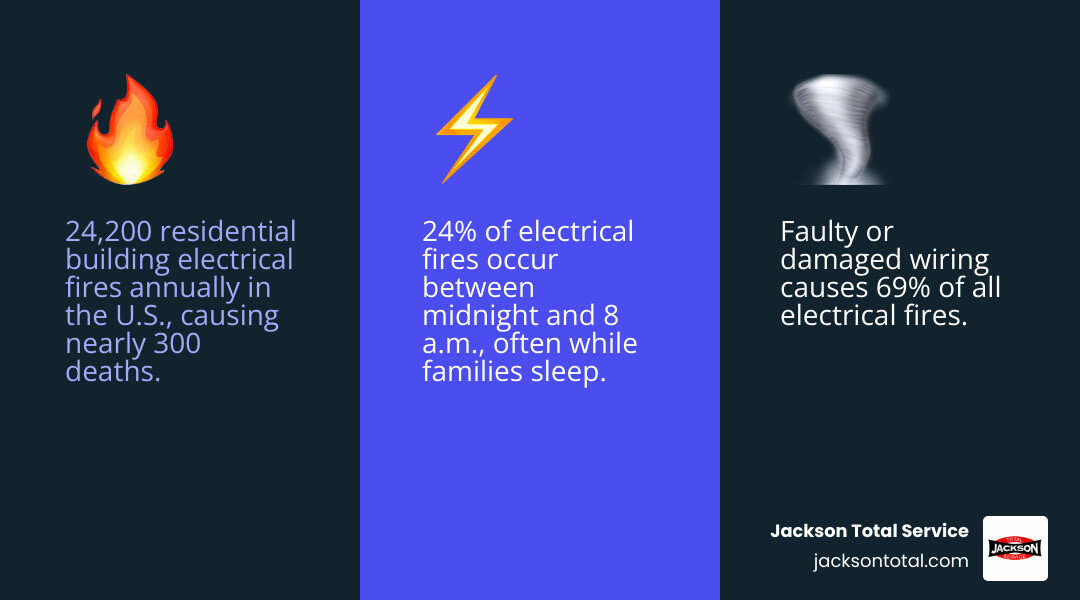
It is easy to take the electricity flowing through our walls for granted until something goes wrong. In 2021 alone, U.S. fire departments responded to an estimated 24,200 residential building electrical fires. These incidents resulted in nearly 300 deaths and over $1.2 billion in property loss. When we look closer at the data for April 2026, the trend remains clear: faulty or damaged wiring and related equipment cause 69% of all electrical fires.
In Southwest Florida—from the bustling streets of Naples to the quiet reaches of Ave Maria—our climate plays a unique role in these statistics. The intense humidity and salt air in coastal areas like Sanibel Island and Fort Myers Beach can accelerate the corrosion of electrical components. Furthermore, the high demand on our electrical systems due to near-constant air conditioning puts a heavy load on older wiring.
Perhaps the most chilling statistic is the timing of these events. While only about a quarter of electrical fires occur between midnight and 8 a.m., these late-night fires account for a staggering 60% of fire-related deaths. This is why we often tell our neighbors that Why Florida Homeowners Shouldn’t Play Electrical Roulette is more than just a catchy phrase—it’s a plea for proactive maintenance.
How can I prevent outlet overloads and appliance fires?
Prevention starts at the outlet. Many homeowners inadvertently create fire hazards by asking too much of their electrical system. A common mistake is “daisy-chaining” power strips or using multiple adapters in a single outlet.
To keep your home safe, follow these core rules for appliances:
- Major Appliances: Refrigerators, stoves, washers, and dryers must be plugged directly into a wall outlet. Never use an extension cord or power strip for these high-draw machines.
- Small Appliances: Unplug toasters, coffee makers, and hair dryers when they aren’t in use. Even when “off,” they can still be a source of electrical heat or a point of failure.
- Dryer Maintenance: Did you know that failure to clean was the leading factor in 31% of clothes dryer fires between 2018 and 2020? Lint is highly flammable and can ignite if the heating element gets too hot.
- Wattage Matching: Always use lightbulbs that match the recommended wattage for your fixtures. Using a 100-watt bulb in a 60-watt fixture can scorch the socket and lead to a fire.
For families with young children in Lee or Collier County, we highly recommend installing tamper-resistant outlets. These have built-in shutters that prevent kids from sticking foreign objects like paperclips into the slots. It’s a simple upgrade that provides immense peace of mind. For more seasonal advice, you can also check out our Top 6 Holiday Safety Tips.
Essential electrical emergency safety steps for homeowners: Managing Extension Cords
Extension cords are a leading cause of home fires, responsible for roughly 3,300 blazes and 50 deaths annually. The most important thing to remember is that extension cords are a temporary solution only. They are not designed to be permanent wiring.
When using them, keep this checklist in mind:
- Check the Label: Ensure the cord has a UL (Underwriters Laboratories) label, meaning it meets safety standards.
- Inspect for Damage: Discard any cord that is frayed, cracked, or feels hot to the touch.
- Don’t Hide Them: Never run cords under rugs or carpets. Walking on them damages the insulation, and the rug traps heat, which can lead to a fire.
- Avoid Overloading: Do not plug multiple high-wattage items into a single cord.
- Outdoor Use: Only use cords specifically rated for “Outdoor Use” when working in your yard in Cape Coral or Estero.
What are the warning signs that I need an electrician in Naples?
Your home usually tries to tell you when something is wrong. Ignoring these whispers can lead to a loud—and dangerous—emergency. If you notice any of the following, it is time to call for Electrical Repair:
- Flickering or Dimming Lights: This often indicates a loose connection or a circuit that is being overloaded by a large appliance (like your AC kicking on).
- Buzzing Sounds: Electricity should be silent. A buzzing or humming sound from a switch or outlet suggests a loose wire or a failing component.
- Burning Odors: A faint smell of ozone or burning plastic is a major red flag. This indicates that wires are already melting.
- Hot Outlets or Switches: If an outlet cover feels warm to the touch, it means there is excessive resistance or arcing happening behind the wall.
- Frequent Breaker Trips: If you are constantly heading to the garage to flip a switch back on, your system is telling you it can’t handle the load.
In Southwest Florida, we recommend a professional electrical inspection every 3 to 5 years. However, if your home is more than 25 years old, you should consider an inspection every 1 to 2 years to ensure the aging insulation isn’t becoming brittle.
Electrical emergency safety steps for homeowners: Identifying Faulty Wiring
Older homes in places like Fort Myers or older sections of Bonita Springs may still have outdated wiring types that aren’t compatible with modern power needs.
| Safe Wiring Signs | Hazardous Wiring Signs |
|---|---|
| Modern grounded outlets (3-prong) | Non-grounded outlets (2-prong) |
| Plastic-sheathed Romex wiring | Knob and tube or aluminum wiring |
| Circuit breakers | Old-fashioned screw-in fuses |
| GFCI outlets in kitchens/baths | Standard outlets near water sources |
| Tightly secured outlets | Loose outlets that “jiggle” when plugged in |
Aluminum wiring, common in homes built in the 1960s and 70s, is particularly prone to expanding and contracting, which leads to loose connections and fires. If you suspect your home has these older systems, a professional evaluation is the safest next step.
Essential Electrical Emergency Safety Steps for Homeowners
When an emergency happens, your brain can go into “freeze” mode. Having a plan allows you to act instinctively.
Step 1: Know Your Main Disconnect
Every adult in your home should know exactly where the main electrical panel is located and how to shut off the main breaker. This one switch kills all power to the house. If you see sparks or smell smoke, and you can safely reach the panel, flip that switch.
Step 2: Use the Right Fire Extinguisher
Never, ever use water on an electrical fire. Water conducts electricity and can lead to a fatal shock. You must use a Class C fire extinguisher, which uses non-conductive chemicals to smother the flames. If the fire is larger than a small toaster, don’t try to fight it—evacuate immediately.
Step 3: Evacuation and 911
If you see smoke coming from walls or a fire you can’t immediately extinguish, get everyone out of the house. Once you are a safe distance away, call 911. Do not go back inside for any reason until the fire department says it is safe.
Step 4: First Aid for Shocks
If someone has been shocked, do not touch them if they are still in contact with the electrical source. You will become part of the “path of least resistance” and get shocked too. Use a non-conductive object like a wooden broom handle to push the person away from the source or turn off the power at the breaker first. Call 911 immediately, as electrical shocks can cause internal damage or heart rhythm issues that aren’t visible.
For more detailed technical steps on managing your panel, see our guide on Circuit Breaker Troubleshooting.
Portable Generator Safety Rules for Outages
During hurricane season in Southwest Florida, generators are lifesavers, but they can be deadly if used incorrectly.
- The 20-Foot Rule: Always operate your generator at least 20 feet away from windows, doors, and vents. Carbon monoxide is odorless and colorless—it can kill your family before you even know it’s in the house.
- Cool Before Refueling: Never add gasoline to a hot generator. Let it cool for at least 15–20 minutes to prevent the fuel from igniting on contact with the engine.
- No Backfeeding: Never plug a generator into a wall outlet to try and power your whole house. This “backfeeds” electricity into the grid and can kill utility workers trying to restore power.
How do I stay safe during power outages and storms in Fort Myers?
Southwest Florida is the lightning capital of the country. A single strike near a power line can send a massive voltage spike through your home’s wiring, frying your AC unit, refrigerator, and electronics.
To protect your investment, we recommend a two-tiered approach to surge protection. First, install a whole-home surge protector at your main panel to catch large spikes. Second, use high-quality point-of-use surge strips for sensitive electronics like computers and TVs. You can learn more about this in our article, The Shocking Truth About Why Your Home Needs Surge Protection.
Outdoor Safety and Yard Work
Before you start any major landscaping project in Cape Coral or Lehigh Acres, remember these outdoor rules:
- Call 811: Always “Call Before You Dig.” Underground power lines are often closer to the surface than you think.
- The 10-Foot Rule: Keep yourself, your tools, and your ladders at least 10 feet away from overhead power lines. This includes the “service drop” line that runs from the pole to your house.
- Downed Lines: After a storm, treat every downed wire as if it is live. Stay at least 30 feet away and call 911 or your utility company.
Food Safety During Outages
If the power goes out, keep the fridge and freezer doors closed. A refrigerator will keep food safe for about 4 hours, while a full freezer can maintain its temperature for 48 hours. If food has been above 40°F for more than two hours, it is safer to throw it out than risk illness.
Frequently Asked Questions about Electrical Safety
What is the leading cause of electrical fires in 2026?
In 2026, the leading cause remains faulty or damaged wiring and related electrical equipment, contributing to nearly 70% of residential electrical fires. This includes aging insulation, loose connections, and outdated systems like aluminum wiring that cannot handle modern electrical loads.
How often should I have my home’s electrical system inspected?
We recommend a professional safety inspection every 3 to 5 years for most homes. If you live in an older home (25+ years) or have recently completed a major renovation, an annual or biennial checkup is a much safer bet to catch issues like corroded terminals or overloaded circuits.
Can I use a power strip for my refrigerator or washing machine?
No. Major appliances draw a significant amount of current, especially when the compressor or motor starts up. Power strips and extension cords are not rated for this “inrush” current and can quickly overheat, melting the plastic housing and starting a fire. Always plug these directly into a dedicated wall outlet.
Conclusion
At Jackson Total Service, we’ve been helping our neighbors in Naples, Fort Myers, and across Southwest Florida stay comfortable and safe since 1964. We understand that your home’s electrical system is its central nervous system—it powers your comfort, your food storage, and your family’s safety.
Whether you need a routine safety inspection, a whole-home surge protector installation, or urgent Electrical Services, our team is here to provide the expert care you deserve. Don’t wait for a spark to become a fire. By following these electrical emergency safety steps for homeowners, you can keep your household grounded and secure for years to come. Give us a call today to ensure your home is up to the 2026 safety standards.