




Is Your Vintage Home a Hidden Electrical Hazard? Here’s What to Check
An electrical safety checklist for older homes is a structured inspection covering your wiring type, electrical panel capacity, outlet grounding, GFCI and AFCI protection, cord condition, and room-by-room hazards — performed every six months to catch problems before they cause fires or shocks.
Quick Electrical Safety Checklist for Older Homes:
- Wiring type — Identify knob-and-tube, aluminum, or cloth-insulated wiring
- Panel capacity — Confirm you have at least 100-amp (ideally 200-amp) service
- Outlets — Check for two-prong (ungrounded) outlets; look for discoloration or loose plugs
- GFCIs — Test monthly in kitchens, bathrooms, garages, and outdoor areas
- AFCIs — Verify arc-fault breakers are installed and tested in bedrooms and living areas
- Cords and appliances — Inspect for fraying, heat damage, or overloaded extension cords
- Smoke alarms — Test monthly; replace units every 10 years
- Panel condition — Look for rust, scorch marks, or breakers that trip repeatedly
- Outdoor outlets — Confirm weatherproof covers and GFCI protection
- Professional inspection — Schedule every 3 to 5 years, or immediately if your home is over 30 years old
Older homes in Southwest Florida carry a lot of charm. But behind those vintage walls, the electrical systems that once powered a handful of lamps and a refrigerator are now being asked to run air conditioners, EV chargers, smart home devices, and a full suite of modern appliances. That’s a serious mismatch.
According to the National Fire Protection Association, electrical issues were the second leading cause of home fires between 2012 and 2016 — and homes built before modern electrical codes were written are especially vulnerable. Many were originally wired for no more than 60 amps, while today’s standard is 200 amps. The gap between what your home was designed to handle and what you’re actually plugging in is where danger lives.
The warning signs are often subtle — a flicker here, a warm outlet there, a breaker that trips more than it should. Most homeowners don’t think twice about these things until something goes seriously wrong.
This guide walks you through a complete electrical safety checklist for older homes, room by room, so you can spot the risks early and know exactly when to call a licensed electrician.
Identifying Outdated Wiring and Common Hazards
When we step into a historic home in Naples or Fort Myers, we aren’t just looking at the architecture; we’re looking at what’s happening behind the plaster. In many pre-1940s homes, the original wiring remains, and it simply wasn’t built for the digital age. The most common hazards involve wiring that has outlived its safe lifespan or was designed for a much lower power load.
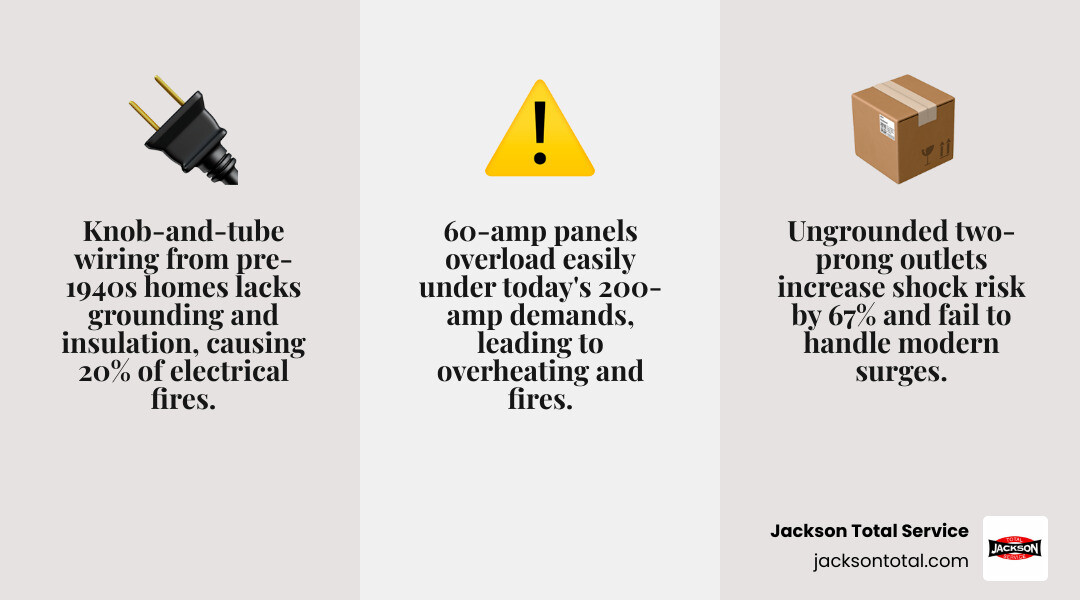
Common culprits include knob-and-tube wiring, aluminum wiring, and degraded cloth insulation. These systems are often ungrounded, meaning they lack that third wire that safely redirects excess electricity. If your home still relies on 60-amp service, you are essentially trying to push a river through a straw every time you turn on your microwave and air conditioner at the same time.

If you suspect your home has these issues, Expert Electrical Repair is the only way to ensure your family’s safety. Ignoring these hidden dangers can lead to arcing, which occurs when electricity jumps between connections, creating temperatures hot enough to start a fire inside your walls.
Recognizing Knob-and-Tube and Aluminum Risks
Knob-and-tube wiring is the “grandfather” of electrical systems, found in homes built before 1940. You can identify it by looking in your attic or crawlspace for white porcelain insulators (the knobs) that hold wires in place and ceramic tubes that protect wires passing through wood studs. This system is dangerous because it is ungrounded and relies on air circulation for cooling. If a previous owner added modern insulation over knob-and-tube wires, it creates a massive fire hazard.
Aluminum wiring was common in homes built between the mid-1960s and early 1970s. Unlike copper, aluminum expands and contracts significantly when it carries a load. This movement causes connections to loosen over time, leading to oxidation and high-resistance heat. If you see “AL” or “CO/ALR” stamped on your wire jackets, you have aluminum wiring that requires specialized maintenance or replacement.
Signs Your Electrical Panel is Overwhelmed
Your electrical panel is the brain of your home. In an older house, that brain might be “tired.” If you notice flickering lights when the refrigerator kicks on, or if you hear buzzing or humming sounds coming from your walls, your panel is struggling.
A warm or hot faceplate on your breaker box is a red flag that requires immediate attention. If you are constantly heading to the garage to flip a switch back on, you need to look into Circuit Breaker Troubleshooting to determine if the circuit is overloaded or if the breaker itself is failing.
The Essential Electrical Safety Checklist for Older Homes
The best way to stay safe in a vintage home is to perform a DIY audit every six months. We recommend doing this when you change your clocks for daylight savings. This electrical safety checklist for older homes focuses on the most visible parts of your system.
One of the most glaring issues in older homes is the presence of two-prong outlets. These are ungrounded and cannot safely handle modern electronics like laptops or high-end kitchen appliances. Upgrading to three-prong outlets isn’t just about convenience; it’s about providing a path for surge energy to escape.
| Feature | 60-Amp Service (Vintage) | 200-Amp Service (Modern Standard) |
|---|---|---|
| Capacity | Minimal; supports lights & basic appliances | High; supports HVAC, EVs, & modern tech |
| Safety | High risk of overheating/overloading | Designed for high-demand safety |
| Insurance | Often uninsurable or very high premiums | Standard for all insurance carriers |
| Future-Proof | None | Easily supports smart home upgrades |
If your system is falling short, Electrical Panel Upgrades can bring your home up to code and give you the capacity you need for modern life in Southwest Florida.
Testing Outlets, Switches, and GFCIs
Walk through your home and check every outlet. Do the plugs fit snugly? If a plug feels loose or falls out easily, that outlet is worn out. Loose connections create heat, which leads to fires. Look for any discoloration, scorch marks, or smoke residue around the slots.
You must also test your Ground Fault Circuit Interrupters (GFCIs) monthly. These are the outlets with “Test” and “Reset” buttons. Plug in a lamp, hit “Test” (the light should go out), and then hit “Reset.” If the light stays on after hitting test, the GFCI has failed and no longer protects you from electrocution. For more detailed advice, check our Electrical Safety Tips.
Inspecting Cords and Appliance Safety
In older homes with few outlets, we often see “octopus” wiring—too many extension cords plugged into a single spot. Extension cords are for temporary use only. If you’re using them permanently, it’s time to have new outlets installed.
Inspect all appliance cords for frayed jackets or exposed wires. Ensure that cords aren’t pinched under furniture or running under rugs, where heat can build up and start a fire. Also, check the wattage on your light fixtures; using a 100-watt bulb in a fixture rated for 60 watts can melt the socket and wiring.
Room-by-Room Electrical Safety Checklist for Older Homes
Every room in a vintage home has its own set of risks. Because we’ve been serving Southwest Florida since 1964, we know exactly how our local humidity and salt air can accelerate the degradation of electrical components.
If you’re unsure about the state of your home, our team provides expert Electrical Repair in Fort Myers, FL to address these room-specific hazards.
Kitchen and Bathroom Protection
Water and electricity are a deadly combination. Modern building codes require GFCIs in all “wet” areas, including kitchens, bathrooms, laundry rooms, and wet bars.
- Kitchen: Ensure all countertop appliances are unplugged when not in use. Check that cords aren’t draped over hot surfaces like the stove or toaster.
- Bathroom: Never use portable space heaters in the bathroom. If you must use a hair dryer or straightener, ensure it is plugged into a GFCI and kept far away from the sink or tub.
Bedrooms and Living Areas
In bedrooms, the primary concern is preventing fires while you sleep. Arc-Fault Circuit Interrupters (AFCIs) are specialized breakers that detect dangerous “sparking” (arcing) and shut off the power before a fire starts.
- Electric Blankets: Inspect for charred spots or frayed wires. Never fold an electric blanket while it’s on, as this can damage the internal heating elements.
- Space Heaters: Keep these at least three feet away from curtains, bedding, and furniture. Always plug them directly into a wall outlet, never an extension cord.
- Safety Devices: Ensure you have working smoke detectors in every bedroom. If you need help with placement, we offer Smoke Detector Service & Installation.
Basement, Garage, and Outdoor Equipment
These areas are prone to moisture and heavy power usage from tools.
- Garage: All garage outlets should be GFCI protected. If you use power tools, ensure they are three-pronged or double-insulated.
- Outdoors: Florida’s humidity is tough on exterior outlets. They must have “weatherproof while in use” covers that keep rain out even when something is plugged in.
- Naples Specifics: For those in historic districts, our Complete Guide to Electrical Installation in Naples, FL provides deeper insights into local code requirements.
Modernizing Your Vintage System for 2026 Demands
Living in 2026 means we have more gadgets than ever. From smart refrigerators to high-powered gaming PCs, our homes are under constant electrical stress. Modernizing your system isn’t just about safety; it’s about protecting your investments.
One of the most important upgrades for Florida homeowners is whole-house surge protection. Our region is the lightning capital of the country, and a single strike can fry every appliance in an older, unprotected home. Learn more in The Shocking Truth About Why Your Home Needs Surge Protection.
Insurance and Resale Implications
If you plan on selling your home or even just renewing your insurance policy, your electrical system will be scrutinized. Most insurance companies in Southwest Florida will not insure a home with less than 100-amp service, and many are now requiring the removal of all knob-and-tube or aluminum wiring before issuing a policy. Upgrading your system can lead to lower premiums and significantly higher resale value.
The Role of AFCIs and GFCIs in Fire Prevention
While GFCIs protect you from shocks by monitoring current flow, AFCIs protect your home from fire by sensing dangerous arcing. In an older home with aging wire insulation, AFCIs are your best line of defense against hidden electrical fires. Following the National Electrical Code isn’t just about passing an inspection; it’s about peace of mind. Why Florida Homeowners Shouldn’t Play Electrical Roulette—the stakes are simply too high.
Frequently Asked Questions about Electrical Safety
How often should I use an electrical safety checklist for older homes?
We recommend a DIY walk-through every six months. However, the U.S. Consumer Product Safety Commission (CPSC) suggests a professional inspection every 3 to 5 years for homes over 30 years old. If you’ve recently moved into a vintage property or are planning a renovation, an immediate inspection is a must.
Why are two-prong outlets considered dangerous in modern homes?
Two-prong outlets lack a grounding wire. In a modern three-prong system, the third prong provides a safe path for “stray” electricity to return to the ground. Without it, that electricity could pass through you (causing a shock) or your sensitive electronics (causing a surge and permanent damage). Using “cheater plugs” or adapters to force a three-prong plug into a two-prong outlet bypasses this safety feature entirely.
What are the red flags that require an immediate electrician?
Call us immediately if you experience:
- A persistent burning smell (like ozone or melting plastic).
- Sparking when you plug in or unplug an appliance.
- Circuit breakers that trip immediately after being reset.
- Discolored or charred outlet covers.
- A “tingle” or slight shock when touching an appliance.
- Greenish corrosion on wires or in the panel (a common sign of salt air damage in coastal Florida).
Conclusion
Your vintage home is a piece of Florida history, but its electrical system shouldn’t be. At Jackson Total Service, we’ve been providing comprehensive comfort solutions to Southwest Florida since 1964. We understand the unique challenges of maintaining older homes in Cape Coral, Fort Myers, and Naples.
Whether you need a simple safety audit or a full-scale panel upgrade, our team is here to ensure your home remains a safe haven for your family. Don’t wait for a flicker to become a fire. Contact us today for Comprehensive Electrical Services and let us bring your vintage home into the modern age safely.