




Why the Benefits of Regular AC Maintenance in Humid Environments Are a Big Deal in Southwest Florida
The benefits of regular ac maintenance in humid environments are hard to overstate — especially here in Southwest Florida, where the air feels thick enough to swim through for most of the year. In Naples, Bonita Springs, Estero, and the surrounding communities of Lee and Collier counties, your air conditioner isn’t just keeping you cool. It’s pulling gallons of moisture out of your indoor air every single day — sometimes as much as 5 to 20 gallons — just to keep your home from feeling like a sauna.
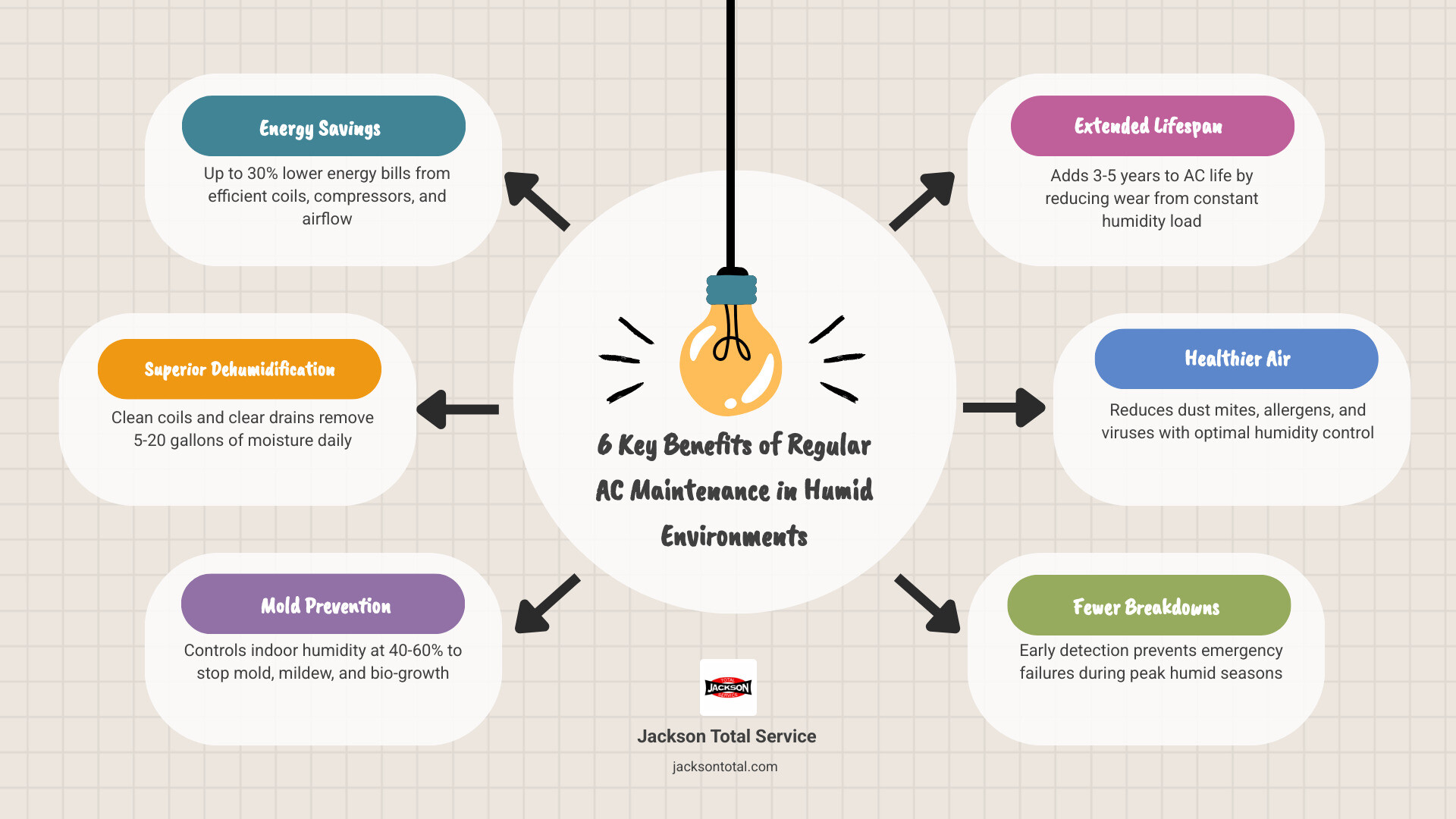
Here’s a quick look at what regular AC maintenance actually delivers in a humid climate:
- Lower energy bills — Neglected systems can use up to 30% more energy than well-maintained ones
- Better dehumidification — Clean coils and clear drain lines remove moisture more effectively
- Mold and mildew prevention — Proper maintenance keeps moisture from building up inside your system and your home
- Longer equipment life — Routine care can extend your AC’s lifespan by 3 to 5 years
- Healthier indoor air — Controlled humidity (ideally 40–60%) reduces dust mites, airborne viruses, and allergens
- Fewer emergency breakdowns — Catching small problems early prevents costly failures at the worst possible time
- Warranty protection — Most manufacturers require regular professional servicing to keep warranties valid
The challenge in Florida is that your AC faces a double burden. It has to cool the air and strip out enormous amounts of moisture — and it has to do that almost year-round. That constant workload accelerates wear on coils, compressors, and drain lines in ways that simply don’t happen in drier climates. When maintenance gets skipped, the system struggles, comfort drops, and repair bills climb fast.
In short, what’s optional maintenance advice in a dry desert climate becomes genuinely essential preventive care here on the Gulf Coast.
Why the benefits of regular ac maintenance in humid environments matter more in Florida
Southwest Florida homes deal with a combination of heat, moisture, salt air, and long cooling seasons that puts AC systems under steady pressure. In places like Naples, Marco Island, Fort Myers, Cape Coral, and Bonita Springs, your system may run for much of the year. That means more operating hours, more condensation, and more opportunities for dirt, bio-growth, and corrosion to interfere with performance.
Humidity is the real troublemaker. Temperature makes you hot, but humidity makes your home feel sticky, heavy, and uncomfortable even when the thermostat says everything should be fine. If your AC is not maintained properly, it may lower the temperature but still leave the air damp. That comfort gap is one of the biggest complaints we hear in humid climates.
How humidity makes your AC work harder than temperature alone
Your air conditioner does two jobs at once:
- It removes heat from indoor air
- It removes moisture from indoor air
That second job matters a lot in humid environments. As warm, moist air passes over the cold evaporator coil, water vapor condenses on the coil and drains away. It works a bit like water forming on a cold glass outside on a summer day. If the coil is dirty, airflow is restricted, or refrigerant is off, that moisture removal process gets weaker.
In humid weather, the system often has to run longer to handle this latent heat load. Longer run times can mean:
- More strain on the compressor
- More wear on blower motors
- More moisture moving through the drain system
- More buildup on damp internal components
That is why homes can feel muggy even when the AC seems to be running constantly. The unit may be cooling, but not dehumidifying well.
The biggest benefits of regular ac maintenance in humid environments for homeowners
When we maintain an AC system with humidity in mind, the benefits go beyond simple cooling:
- Better airflow through clean filters, coils, and blower components
- Improved moisture removal and more stable indoor humidity
- Lower risk of mold and mildew growth inside the system
- Fewer clogged drain lines and less chance of water leaks
- Reduced energy waste from dirty or struggling equipment
- Longer system life, often by 3 to 5 years in humid climates
- Healthier indoor air with fewer allergens and musty odors
In short, maintenance helps your AC do the job you actually need in Southwest Florida: cool the air and dry it out.
How humidity damages AC parts and causes poor performance

Moisture by itself is not unusual for an AC system. The problem starts when that moisture combines with dirt, dust, biological growth, and long operating hours. Then parts begin to wear faster, airflow drops, and performance slides.
Why coils, compressors, and drain lines fail faster in humid conditions
The evaporator coil is where dehumidification happens. Because it stays cold and wet during operation, it can collect grime more easily in humid climates. A dirty evaporator coil cannot transfer heat or remove moisture as efficiently, so the system runs longer and works harder.
Condenser coils outside have their own problems. In coastal parts of Lee and Collier counties, salt-laden air can speed up corrosion. When outdoor coils get dirty or corroded, heat release suffers, which can increase system pressure and stress the compressor.
The compressor is especially vulnerable because it carries the burden when airflow is poor, coils are fouled, or refrigerant levels are not right. Over time, that extra strain can lead to overheating and early failure. Since the compressor is one of the most important parts of the system, keeping conditions favorable for it matters.
Drain lines are another humidity hotspot. In humid weather, condensate drains may carry a lot of water every day. That constant moisture can allow sludge, algae, and microbial buildup to form. Once the line slows or clogs, water can back up into the air handler, trigger float switches, or leak into surrounding materials.
Warning signs high humidity is already causing AC problems
If humidity is starting to win, your house usually gives clues. Watch for:
- Musty odors near vents or the air handler
- Rooms that feel clammy even at a normal temperature
- Condensation on windows or around supply grilles
- Weak airflow from vents
- AC running for long periods without feeling comfortable
- Short cycling or inconsistent cooling
- Ice forming on the evaporator coil or refrigerant lines
- Water dripping near the indoor unit or drain pan
None of these signs should be ignored. In humid climates, small moisture-related issues can snowball fast.
Hidden home issues that make humidity worse
Sometimes the AC is only part of the story. House-related issues can make humidity harder to control, including:
- Leaky ductwork pulling humid attic or crawlspace air into the system
- Supply duct leaks wasting conditioned air
- Blocked return vents reducing airflow
- Furniture or rugs covering supply vents
- Thermostat fan set to “on” instead of “auto”
- Oversized AC systems that cool too quickly and shut off before removing enough moisture
Duct leakage is especially important. Leaky ducts can waste up to 30% of conditioned air, which makes comfort worse and can intensify indoor humidity problems. If you suspect your duct system is contributing to the issue, our guide on how duct cleaning saves your AC from the humid hustle is a helpful next read.
What maintenance tasks homeowners should prioritize in humid climates
Humidity-focused AC maintenance is not complicated, but it does need to be consistent. The priorities are simple: protect airflow, keep moisture moving out of the system, and catch wear before it turns into a breakdown.
Here are the maintenance tasks that matter most:
- Change air filters regularly
- Clean evaporator and condenser coils
- Flush and inspect condensate drain lines
- Check refrigerant charge and system pressures
- Test thermostat accuracy and settings
- Inspect blower components and airflow
- Tighten electrical connections and inspect controls
- Examine ductwork for leaks or restrictions
- Clear debris around the outdoor unit
Benefits of regular ac maintenance in humid environments start with airflow and clean filters
Airflow is everything when it comes to dehumidification. If not enough air moves across the coil, the system cannot remove heat and moisture properly. One of the easiest ways to protect airflow is to stay on top of filter changes.
In Southwest Florida, filters often clog faster because of frequent AC use, pollen, dust, and moisture. A good rule in humid environments is to check filters monthly and, in many homes, replace them every 30 days. That schedule is especially important during peak cooling months.
Clean filters help by:
- Protecting blower performance
- Keeping airflow steady
- Reducing dirt buildup on the evaporator coil
- Supporting better moisture removal
- Lowering system strain
Also check that supply and return vents are open and unobstructed. It sounds small, but blocked vents can sabotage humidity control. For more guidance, see Don’t Sweat It: A Guide to Florida AC Maintenance Frequency.
Professional tune-ups that improve moisture removal
Some maintenance tasks need professional tools and training. In humid climates, tune-ups should focus not just on cooling performance but also on dehumidification performance.
A professional AC service visit should include:
- Cleaning the evaporator coil if needed
- Inspecting and cleaning the condenser coil
- Checking refrigerant levels and operating pressures
- Clearing the condensate drain line
- Inspecting the drain pan and float switch
- Evaluating blower speed and airflow
- Testing thermostat calibration
- Inspecting electrical connections and components
- Looking for corrosion, wear, and early signs of failure
These steps help restore the cold-coil conditions needed for effective moisture removal. They also reduce the chance that hidden issues like low refrigerant, dirty coils, or poor airflow will keep your house feeling damp. For a related read, visit Why Regular AC Maintenance is a Breeze in Bonita Springs FL.
DIY habits that support better humidity control between visits
Homeowners can do a lot between professional tune-ups. Good daily habits help your system dehumidify better without making it work harder than necessary.
We recommend:
- Set the thermostat fan to “auto,” not “on”
- Use bathroom exhaust fans during showers and for a bit after
- Run kitchen exhaust when cooking with steam
- Dry standing water on floors or counters promptly
- Check filters monthly
- Keep vents open and unblocked
- Keep plants, leaves, and debris away from the outdoor unit
- Watch for slow drain issues or water near the air handler
That fan setting deserves extra attention. When the fan runs continuously, moisture sitting on the evaporator coil can re-evaporate and get blown back into the house. “Auto” gives condensation time to drain away instead.
How regular maintenance improves comfort, air quality, and whole-home humidity control
A well-maintained AC does more than hit a temperature setting. It helps create a home that feels cooler, smells fresher, and supports healthier indoor air.
Why a maintained AC dehumidifies better and feels cooler
People often assume comfort is all about temperature, but relative humidity plays a huge role. Air at 75 degrees with high humidity feels much warmer and stickier than air at 75 degrees with balanced humidity.
A maintained system dehumidifies better because:
- The evaporator coil stays clean enough to condense moisture effectively
- Airflow remains in the right range
- Refrigerant levels support proper coil temperature
- Condensed water drains away instead of backing up
- Controls and blower settings stay optimized
When humidity drops, your home feels cooler even without lowering the thermostat further. That can make the indoor environment more comfortable while helping avoid unnecessary energy use.
Health and air quality benefits of controlling indoor humidity
Keeping indoor humidity in a healthy range helps more than comfort. Research shows that indoor humidity around 40% to 60% can reduce the viability of airborne viruses. It can also lower the odds of mold growth and discourage dust mites, which generally thrive in more humid conditions.
Regular AC maintenance supports healthier air by helping prevent:
- Mold and mildew growth in damp system components
- Musty odors circulating through the house
- Dust mite-friendly humidity levels
- Irritated respiratory passages from unstable indoor conditions
- Allergen buildup tied to poor airflow and moisture
Humidity above 60% tends to encourage mold and bacteria growth. That is one reason routine maintenance is so valuable in Southwest Florida homes. If mold prevention is top of mind, take a look at The Ultimate Guide to Mold-Free Air Conditioning.
When a whole-house dehumidifier makes sense with AC maintenance
Sometimes AC maintenance alone is not enough. In very humid homes, during shoulder seasons, or in houses with persistent moisture loads, a whole-house dehumidifier can be an excellent partner to your AC.
This can make sense when:
- Your home feels damp even when the AC is working properly
- Humidity stays high during milder weather when the AC does not run long enough
- You want better moisture control without overcooling the house
- Certain rooms or areas stay musty
- Indoor humidity routinely rises above the ideal range
Whole-house dehumidifiers remove moisture independently of cooling, which gives you better control and can reduce the urge to crank the thermostat lower just to feel comfortable. If you are dealing with ongoing moisture challenges, our article Don’t Let the Humidity Win with This Tropical Duct Cleaning Guide may also help identify contributing factors.
How often to service your AC in humid environments and what neglect can lead to
In humid climates, maintenance should be more frequent and more intentional than in drier regions. The combination of year-round operation and heavy moisture removal means waiting until something breaks is a terrible strategy. Technically a strategy, yes. A good one, no.
| Task | Recommended Frequency in Humid Climates | Why It Matters |
|---|---|---|
| Check air filter | Monthly | Humidity, pollen, and long runtimes clog filters faster |
| Replace air filter | About every 30 days in many homes | Protects airflow and coil performance |
| Professional AC tune-up | Twice per year | Prepares for heavy cooling demand and catches moisture-related issues |
| Drain line inspection/flush | During professional service, and sooner if needed | Prevents clogs, backups, and water damage |
| Thermostat and fan setting review | Seasonally | Supports better dehumidification |
| Duct inspection | Periodically, especially if rooms feel muggy | Helps reduce air leakage and humidity intrusion |
Recommended maintenance schedule for Florida and other humid climates
For Southwest Florida homes, we generally recommend:
- A spring AC tune-up before peak summer heat
- A fall inspection to address wear from the long cooling season
- Monthly filter checks
- Filter replacement about every 30 days in many homes
- Regular observation of drain performance and humidity symptoms
- Periodic duct evaluation if comfort is uneven or humidity lingers
This twice-yearly professional service approach lines up well with the demands of humid coastal living and gives you the best chance of avoiding mid-season problems.
What happens when you skip AC maintenance in humid weather
Neglect has consequences, and in humid areas they show up faster.
Common risks include:
- Up to 30% higher energy use compared with well-maintained systems
- Poor moisture removal and damp indoor air
- Mold or mildew growth in the system or ductwork
- Clogged drain lines and water damage
- Compressor strain and early part failure
- More frequent breakdowns during hot weather
- Reduced equipment lifespan
- Loss of comfort even when the thermostat reads correctly
Routine maintenance can extend the life of equipment by 3 to 5 years in Florida-like humidity. Skip it, and the system may age a lot faster than it should.
Simple thermostat settings and home tips that complement maintenance
Professional service works best when paired with smart day-to-day settings.
A few practical tips:
- Keep the fan set to “auto”
- Avoid dramatic thermostat swings
- Do not overcool the house just to fight humidity
- Seal obvious air leaks around doors and windows
- Use bath and kitchen exhaust fans
- Keep blinds or shades closed during the hottest parts of the day
- Consider using a humidity monitor to track indoor RH
If your home is still uncomfortable even with these habits in place, that is usually a sign the system needs service, duct attention, or additional humidity control.
Frequently Asked Questions about the benefits of regular ac maintenance in humid environments
How often should AC filters be changed in humid environments?
In humid climates like Southwest Florida, homeowners should check filters every month. In many homes, replacement every 30 days is the safest schedule because moisture, pollen, and long run times can clog filters quickly. A dirty filter restricts airflow, hurts dehumidification, and makes the system work harder.
Can my AC lower humidity without a dehumidifier?
Yes. Air conditioners naturally remove humidity as part of the cooling process by condensing moisture on the evaporator coil and draining it away. But there are limits. If humidity is extreme, the system is oversized, or weather is mild enough that the AC does not run long, a dedicated whole-house dehumidifier may be the better solution for steady moisture control.
What indoor humidity level should homeowners aim for?
A good target is 40% to 60% relative humidity. That range supports comfort and can help reduce mold risk, dust mite activity, and airborne virus viability. If your indoor humidity regularly stays above 60%, your home is more likely to feel muggy and develop moisture-related problems.
Conclusion
In Southwest Florida, AC maintenance is really humidity management in disguise. The system is not just cooling your home in Naples, Estero, Bonita Springs, Fort Myers, and throughout Lee and Collier counties – it is constantly removing moisture, protecting indoor air quality, and helping prevent mold, clogs, corrosion, and premature wear.
Since 1964, we have helped homeowners keep their comfort systems working reliably in this demanding climate. If your home feels sticky, your AC runs too long, or you want to stay ahead of moisture-related problems, preventive service is one of the smartest steps you can take.
For more help with whole-home comfort and humidity control, visit More info about air conditioning services.