


Why Humidity in Southwest Florida Changes Your AC Maintenance Needs Completely
Understanding how humidity changes your AC maintenance needs is one of the most important things a Southwest Florida homeowner can do to protect their system and their comfort. Here’s a quick summary:
- Filters clog faster – humid air makes dust sticky, so filters need checking every 30 days instead of every 90
- Drain lines need more attention – your AC removes 5 to 20 gallons of water per day in peak season, feeding algae growth in drain lines
- Coils corrode sooner – moisture accelerates a process called formicary corrosion, causing refrigerant leaks
- Electrical parts wear out earlier – capacitors and motors degrade faster under constant moisture stress
- Professional tune-ups should happen twice a year – not once, as standard advice suggests
- Your system may need a whole-home dehumidifier – if indoor humidity stays above 60% even when the AC runs
Southwest Florida sits in one of the most humidity-punishing climates in the country. Naples, Bonita Springs, Estero, and Marco Island homeowners deal with outdoor relative humidity that routinely climbs above 70 to 80 percent for months at a time. Your AC was built to cool air — but here, it also has to act as a full-time dehumidifier. That dual workload changes everything about how fast parts wear out, how often you need service, and what warning signs to watch for.
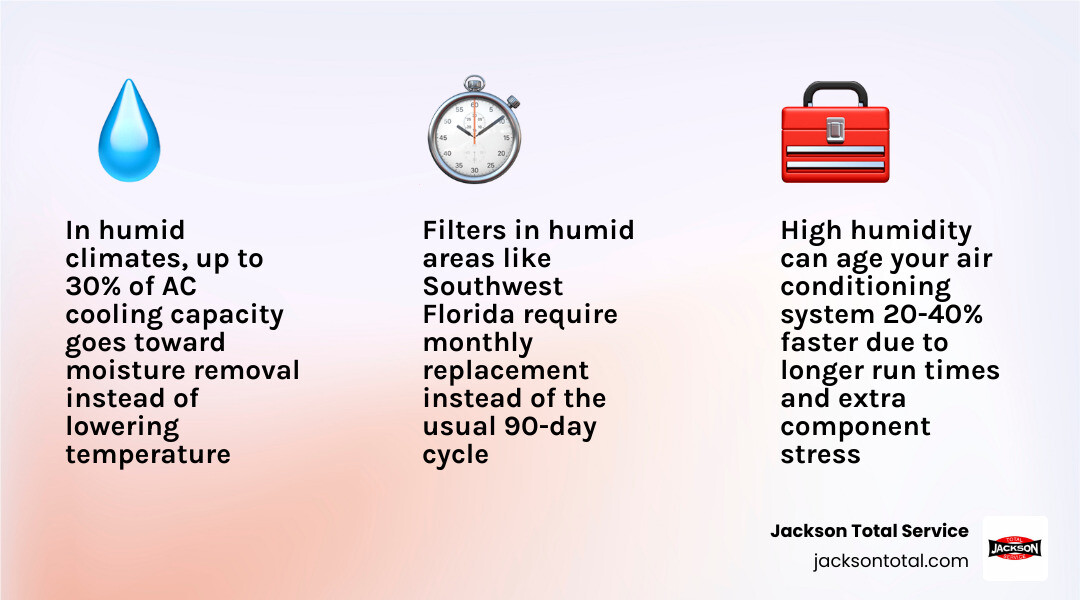
In fact, a residential AC system in a humid climate can dedicate up to 30% of its total cooling capacity just to removing moisture from the air — leaving less energy for actually lowering the temperature. The result? Longer run times, more component stress, and a system that can age 20 to 40% faster than it would in a dry climate.
If your home ever feels sticky even when the thermostat reads 74°F, humidity is likely the reason — and your maintenance routine may need to catch up.
The Science of Sweat: How Humidity Changes Your AC Maintenance Needs
To understand why Southwest Florida weather is so tough on your cooling system, we have to look at how an air conditioner actually operates. Most people think an AC simply creates cold air and blows it into the room. In reality, it is a heat-removal machine. In places like Cape Coral or Fort Myers, that heat comes in two distinct forms: sensible heat and latent heat.
Latent Heat vs. Sensible Heat: How Humidity Changes Your AC Maintenance Needs
Sensible heat is the temperature you can actually read on a thermometer. When it’s 90°F in Naples, that is the sensible heat load. Latent heat, on the other hand, is the thermal energy stored in water vapor.
When your air conditioner runs, it has to tackle both:
- Sensible Cooling: Lowering the actual air temperature.
- Latent Cooling (Dehumidification): Condensing water vapor out of the air.
Because air conditioners in high-humidity climates can use up to 30% of their total BTU capacity for dehumidification alone, they have significantly less energy left over for sensible cooling. Your evaporator coil must drop below the dew point of the indoor air for moisture to condense on it. If your indoor relative humidity is high, the air conditioner has to work incredibly hard just to squeeze the water out of the air before it can even begin to lower the room’s actual temperature.
This thermodynamic reality is why The Heat Is On: Why Tropical Cooling Is a Full-Time Job for Your HVAC. The persistent moisture represents a continuous, heavy physical load on your equipment.
System Sizing, Short-Cycling, and Efficiency Losses
How your system is sized plays a massive role in how it handles Southwest Florida’s heavy latent loads. Many homes suffer from oversized AC systems. While a larger system might sound like a great way to cool a house quickly, it actually ruins your indoor humidity control.
An oversized system will cool the air down to the thermostat’s set point so fast (often in under 10 minutes) that it shuts off before the evaporator coil has time to reach its peak dehumidification state, which typically takes 8 to 12 minutes of continuous operation. This rapid on-off cycle is called short-cycling. When a system short-cycles, it leaves your home feeling cold but incredibly clammy.
To combat this, modern variable-speed blowers and multi-stage compressors are highly recommended for our region. Instead of blasting on at 100% capacity and shutting off, a variable-speed system runs longer, gentler cycles at a lower speed. This keeps the air moving slowly across the cold evaporator coil, extracting maximum moisture while consuming significantly less energy.
| AC Performance Metric | Single-Stage AC System | Variable-Speed AC System |
|---|---|---|
| Cycle Length | Short, frequent cycles (10 mins or less) | Long, continuous cycles (15-30+ mins) |
| Dehumidification Ability | Poor (shuts off before removing latent heat) | Excellent (squeezes out maximum moisture) |
| Energy Consumption | High (frequent starting draws peak electrical current) | Low (runs consistently at lower, highly efficient speeds) |
| Component Wear & Tear | High (constant starting/stopping stresses compressor) | Low (smooth, ramped operation extends component lifespan) |
By keeping indoor relative humidity between 30% and 50% with an appropriately sized or variable-speed system, you can reduce HVAC energy use by up to 16% compared to letting humidity climb unchecked.
Vulnerable Components: What Wears Out Faster in Humid Climates?
When you live in high-moisture zones like Estero, Sanibel Island, or Bonita Springs, the mechanical toll of constant dehumidification is concentrated on a few highly vulnerable parts.

Evaporator Coils and Formicary Corrosion
Your indoor evaporator coil is the ground zero of the humidity battle. As warm, humid air is pulled across the cold metal fins, water condenses on the surface. Because this coil is constantly wet during our long cooling seasons, it is highly susceptible to formicary corrosion.
Formicary corrosion is a specific type of metal pitting that occurs when copper tubing reacts with moisture and microscopic organic acids found in household air (from cleaning products, building materials, and cosmetics). This chemical reaction creates microscopic pinhole leaks in your evaporator coil. Over time, these tiny holes allow refrigerant to escape, dropping your system’s efficiency and eventually leading to a complete cooling failure.
If you’re noticing your system struggling to keep up, it might be time to look into professional diagnostics. If you find yourself in this situation, don’t panic—check out Don’t Sweat It: Your Ultimate Guide to AC Repair in Estero for a clear breakdown of how we pinpoint and repair these delicate coil issues.
Condensate Drain Lines and Algae Clogs
Where does all the water condensed by your evaporator coil go? It drips into a drain pan and flows out of your home through a narrow PVC condensate drain line. During peak summer in Southwest Florida, your AC can easily pull 5 to 20 gallons of water out of your indoor air every single day.
With that much warm, dark, standing water flowing through a plastic tube, your condensate line becomes a perfect breeding ground for algae, mold, and bacterial slime. Over time, this biological growth builds up and creates a thick clog. When the line clogs, the water backs up.
If your system has a safety float switch, it will shut down the AC to prevent a flood. If it doesn’t have a switch, that water will overflow, causing major damage to your ceilings, walls, and floors. Keeping this system clean is paramount to avoiding mold outbreaks inside your ductwork and home, which is why we created The Ultimate Guide to Mold-Free Air Conditioning to help you keep things dry and sanitary.
Electrical Components and Fan Motors
High humidity doesn’t just affect the wet parts of your system; it also attacks your electrical components. Run capacitors—which act like temporary batteries to help your compressor and fan motors start up—are highly sensitive to heat and moisture. In humid climates, capacitors routinely fail within 3 to 5 years, compared to 5 to 10 years in drier states.
Furthermore, when the air is dense with moisture, your outdoor condenser fan motor and indoor blower motor have to push heavier air. This extra physical resistance, combined with the longer run times required to manage latent heat, puts immense thermal stress on the motor windings, leading to premature motor burnout.
A Maintenance Schedule Built for High-Humidity Regions
Because of these regional challenges, standard “once-a-year” national maintenance advice simply doesn’t cut it in Southwest Florida. Our systems accumulate more “stress hours” in a single summer than a system in a northern state does in three years.
Monthly and Seasonal DIY Tasks
As a homeowner in Fort Myers Beach, Lehigh Acres, or Golden Gate, there are several straightforward maintenance steps you should handle yourself to protect your system:
- Check Air Filters Every 30 Days: In dry climates, you can get away with changing filters every 90 days. But in humid regions, moisture-laden dust becomes sticky. It binds to the filter fibers much faster, restricting airflow. A clogged filter starves your system of air, causing the evaporator coil to freeze up.
- Flush Your Condensate Drain: Every 1 to 2 months, pour a cup of distilled white vinegar down your condensate drain line access port. The natural acidity of the vinegar kills off early algae and slime before it can form a solid clog.
- Clear Outdoor Debris: Keep a 2-foot perimeter clear of plants, weeds, and shrubs around your outdoor condenser unit. High humidity combined with restricted airflow around the outdoor unit causes the metal cabinet and aluminum fins to rust and degrade prematurely.
For a complete breakdown of how to structure your home maintenance calendar, take a look at our comprehensive resource, Don’t Sweat It: A Guide to Florida AC Maintenance Frequency.
Professional Tune-Up Frequency: How Humidity Changes Your AC Maintenance Needs
While DIY steps are vital, they cannot replace the trained eye of a professional technician. In Southwest Florida, we highly recommend scheduling professional maintenance twice a year—once in the spring before the brutal summer humidity hits, and once in the autumn to clean and inspect the system after months of heavy lifting.
During a professional tune-up, our technicians will:
- Measure refrigerant levels to ensure there are no slow leaks from formicary corrosion.
- Chemically clean the evaporator and condenser coils to remove insulating layers of grime and oxidation.
- Test electrical draw, capacitors, and contactors to catch weak parts before they leave you stranded in the heat.
- Flush and sanitize the entire condensate drain line with specialized commercial-grade anti-algae tablets.
Regular professional cleanings ensure your system operates at peak efficiency, which is why Why Regular AC Maintenance Is a Breeze in Bonita Springs FL is such a popular guide for local residents looking to lower their power bills.
Signs Your AC is Struggling with Extreme Moisture
How do you know if Southwest Florida’s relentless humidity is winning the battle against your air conditioner? Your system will usually send out several clear distress signals.
Clammy Air, Musty Smells, and Frozen Coils
If you notice any of these warning signs, your system is likely struggling to manage the indoor moisture load:
- The “Clammy” Feeling: If your thermostat says 72°F but you feel sticky, damp, and uncomfortable, your AC is failing to remove latent heat. High relative humidity (above 60%) prevents your sweat from evaporating, making the room feel 3 to 5 degrees warmer than it actually is.
- Musty Odors: When moisture sits on a dirty evaporator coil or backs up in a drain pan, mold and biological growth quickly take over. This creates a distinct “dirty sock” smell whenever the AC kicks on. If this smell persists, it’s a sign that your ductwork might be circulating mold spores. Learn how to address this by reading How Duct Cleaning Saves Your AC from the Humid Hustle and checking out our Don’t Let the Humidity Win with This Tropical Duct Cleaning Guide.
- Frozen Evaporator Coils: If you see ice forming on the brass refrigerant lines near your outdoor unit or on the indoor coil itself, your system’s airflow is restricted. This is often caused by a combination of a dirty filter and a dirty, wet evaporator coil.
When to Consider a Whole-Home Dehumidifier
In some cases, even a perfectly maintained, correctly sized air conditioner cannot keep up with Southwest Florida’s extreme outdoor humidity. This is especially true during the “shoulder seasons” (spring and fall) when outdoor temperatures are mild but the humidity is high. Because the temperature inside is already cool, the AC doesn’t need to run long cycles to lower the temperature, leaving the indoor air incredibly muggy.
This is where a whole-home dehumidifier comes in. These systems integrate directly with your existing HVAC ductwork. They pull moisture out of the air before it circulates through your home, using a specialized reheat process that dries the air without overcooling your living spaces.
By adding a whole-home dehumidifier, you can set your thermostat a few degrees higher while enjoying the same (or better) level of comfort, saving you money on your monthly electric bills and significantly extending the lifespan of your main AC unit.
Frequently Asked Questions about AC and Humidity
Why does my house feel sticky even when the AC is running?
This usually happens because your AC is short-cycling (often due to being oversized) or your system has restricted airflow from a dirty filter or dirty coils. When the system runs short cycles, it cools the temperature quickly but shuts off before it can pull the moisture out of the air, leaving your home feeling cold and sticky.
Should I run my AC fan on AUTO or ON in humid weather?
Always set your fan to AUTO. If you set the fan to ON, the blower motor runs continuously, even when the compressor isn’t cooling. This blows air over the wet evaporator coil immediately after a cooling cycle ends, re-evaporating all the moisture that was just squeezed out and pushing it right back into your home.
How often should I flush my AC drain line in Florida?
We recommend flushing your condensate drain line with a cup of distilled white vinegar once every 30 to 60 days. This simple DIY habit prevents algae, mold, and slime from building up and causing a catastrophic clog that could shut down your system or flood your home.
Conclusion
Living in Southwest Florida means accepting that humidity is a constant part of our lives—but it doesn’t have to ruin your home comfort or destroy your air conditioner. By understanding how humidity changes your AC maintenance needs, keeping up with monthly filter changes, flushing your drains, and scheduling professional maintenance twice a year, you can keep your home cool, dry, and healthy.
Since 1964, Jackson Total Service has been providing trusted, comprehensive home comfort solutions across Southwest Florida, from Naples and Marco Island up to Bonita Springs, Estero, and Fort Myers. As a family-owned company with deep local roots, we offer HVAC, plumbing, and electrical services all under one roof, making home maintenance simple and stress-free.
If your home is feeling a little too sticky or your AC is due for its seasonal checkup, don’t sweat it. Contact our friendly, licensed team today to schedule your comprehensive Southwest Florida Air Conditioning Services and keep your system running beautifully all year long!