


Why Every Florida Homeowner Needs a Pre Storm Season Home Systems Checklist
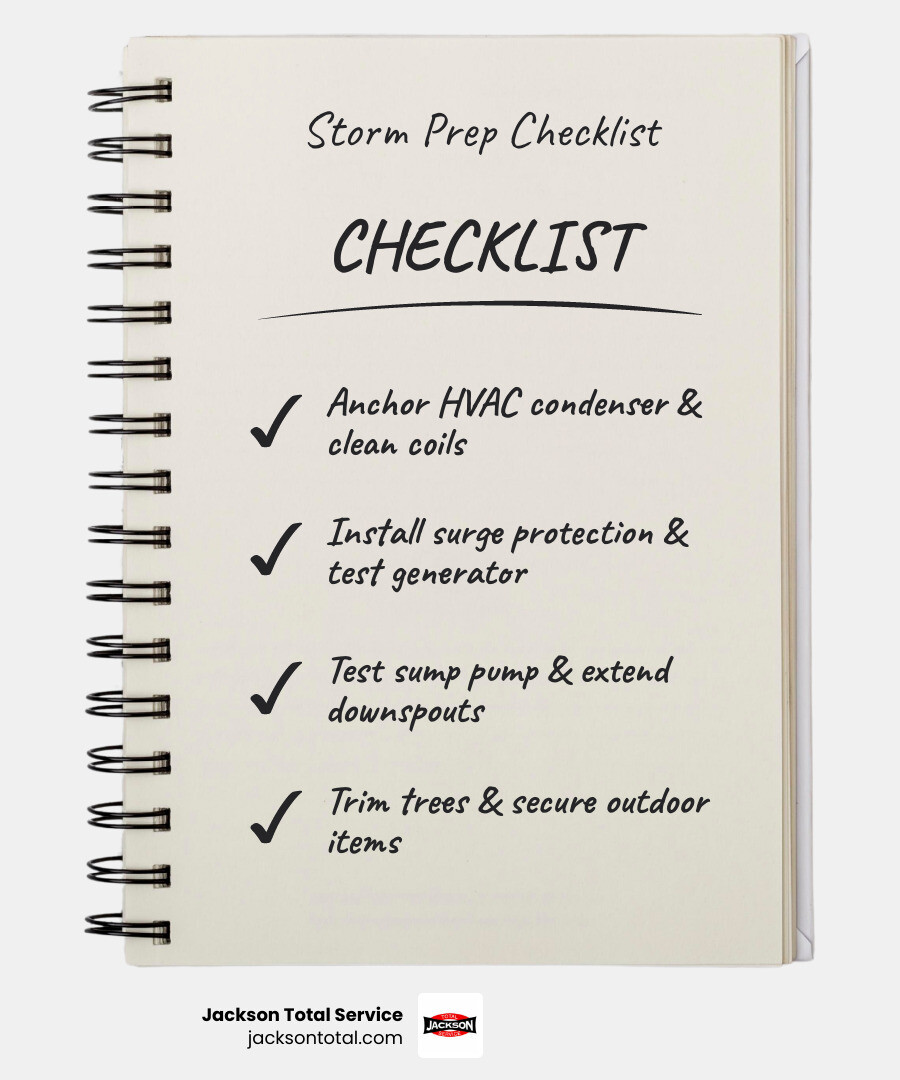
A pre storm season home systems checklist is the single most effective tool you have to protect your home’s HVAC, plumbing, and electrical systems before hurricane season arrives in Southwest Florida. If you want the short version, here’s what the checklist covers:
Quick-Reference: Pre Storm Season Home Systems Checklist
- HVAC – Anchor the outdoor condenser, clean coils, clear drain lines, and replace air filters
- Electrical – Install whole-house surge protection, test your generator, and inspect the transfer switch
- Plumbing – Test your sump pump, install backflow prevention valves, and label your main water shut-off
- Roof and gutters – Inspect shingles, clean gutters, and extend downspouts at least 6 feet from the foundation
- Building envelope – Test hurricane shutters or impact windows, reinforce the garage door
- Yard and exterior – Trim trees, secure outdoor furniture, and balance pool chemistry
- Emergency supplies – Stock a 7-day kit, protect documents, and review your insurance coverage
Hurricane season officially begins June 1, but in Naples and across Southwest Florida, the homeowners who come through with the least damage are the ones who started preparing weeks — sometimes months — before that date. Once a storm is on the radar, contractors are booked, supply stores are empty, and outdoor work becomes dangerous. The window to act is right now.
The financial stakes are real. Research from the National Institute of Building Sciences found that every dollar spent on hazard mitigation saves roughly six dollars in avoided losses — and some analyses put that figure as high as thirteen to one. With Florida’s average homeowners insurance premiums already among the highest in the country, pre-season prep isn’t just about safety. It’s one of the smartest financial moves a homeowner can make.
At Jackson Total Service, we’ve been helping Naples and Southwest Florida homeowners protect their HVAC, plumbing, and electrical systems since 1964. Here’s exactly what your pre-storm systems checklist should include.
The Ultimate Pre Storm Season Home Systems Checklist for Florida Homeowners

In May 2026, as we look toward the heat of summer and the potential for tropical activity, it is vital to remember that your home is an investment. Standard industry wisdom suggests budgeting between 1% and 4% of your home’s total value annually for maintenance. On a $500,000 home in Fort Myers or Naples, that equates to $5,000 to $20,000 a year to keep things running smoothly. While that might seem like a lot, it is far less than the cost of a major structural repair after a hurricane.
June 1st is the hard deadline for having your home hardened. Beyond physical safety, completing your pre storm season home systems checklist early can lead to significant financial rewards. Many Florida insurance providers offer premium discounts of 30% to 45% for “opening protection” (like impact windows or shutters), but you must have a wind mitigation inspection to prove your home is up to code.
To ensure you don’t miss a single step, many homeowners in Lee and Collier counties rely on Maintenance Agreements that cover the technical aspects of their HVAC, plumbing, and electrical systems year-round.
Essential HVAC Tasks for Your Pre Storm Season Home Systems Checklist
Your air conditioner is your lifeline during a Florida summer, especially if the power goes out and you’re relying on a generator.
- Anchor the Condenser: High winds can easily flip an unanchored outdoor unit. Ensure your condenser is bolted to a concrete pad.
- Hurricane Straps: Check that the metal straps securing the unit are not rusted or loose.
- Coil Cleaning: Salt air in coastal areas like Sanibel or Marco Island causes rapid corrosion. Cleaning the coils improves efficiency and helps the unit withstand the strain of high humidity.
- Clear Drain Lines: Algae and debris can clog your AC’s condensate drain line. Pouring a cup of vinegar down the line can prevent backups that lead to indoor flooding.
- Professional Tune-Up: If your system is showing signs of age, schedule an Air Conditioning Repair or inspection now to avoid being at the bottom of a long waiting list after a storm.
Electrical and Power Tasks for Your Pre Storm Season Home Systems Checklist
Electrical failures are among the most common causes of post-storm house fires.
- Whole-House Surge Protection: Power surges can happen even if a storm doesn’t make a direct hit. Lightning strikes miles away can travel through power lines and fry your appliances.
- Generator Load Testing: Don’t wait until the lights go out to see if your generator works. Run it under a “load” (meaning, actually plugging something in) to ensure it can handle the demand.
- Transfer Switch Inspection: If you have a standby generator, the transfer switch is the “brain” that tells the power to swap over. We recommend professional Electrical Services to verify this critical component is safe and functional.
Hardening Your HVAC and Electrical Systems Against High Winds and Surges
In Florida, we aren’t just worried about wind; we’re worried about the “invisible” threat of electrical surges. The Shocking Truth About Why Your Home Needs Surge Protection is that standard power strips are simply not enough to protect your HVAC system, refrigerator, or home entertainment center.
The Inner Workings Of Whole House Surge Protection Explained show that these devices act as a pressure valve for your home’s electricity, shunting excess voltage safely into the ground before it reaches your delicate electronics. What Really Happens To Your Electronics During A Power Surge is often permanent damage to the circuit boards. Why A Power Strip Is Not A Surge Protector comes down to the amount of energy they can handle; a power strip is for minor fluctuations, while a whole-home system is built for the “big hits.”
Backup Power Readiness
Whether you have a portable unit or a permanent standby system, generators require specific maintenance before the season starts.
- 3-Foot Clearance: Ensure there is at least a 3-foot radius of clear space around your generator. This allows for proper airflow to prevent overheating and keeps pests from nesting in the unit.
- Fresh Oil and Filters: Just like a car, a generator needs clean oil. Change the oil and filters at the start of every season.
- Fuel Stabilization: If you use a portable gas generator, use a fuel stabilizer to prevent the gasoline from “gumming up” the carburetor. If the fuel is more than six months old, safely drain and replace it.
- Safety First: Never run a generator inside a garage or near an open window. Carbon monoxide is odorless and deadly.
Indoor Air Quality and Comfort
When windows are shuttered and the power is out, your home can quickly become a “hot box” for mold and allergens.
- Filter Replacements: Change your HVAC filters every 30 to 60 days. If you have pets or allergies, every 30 days is better.
- Duct Cleaning: Over time, dust and moisture accumulate in your vents. Duct Cleaning ensures that when your AC is running, it isn’t circulating mold spores or debris stirred up by storm-related pressure changes.
- Dehumidification: If you have a smart thermostat, set it to “dehumidify” mode if available. This helps protect your wood floors and furniture from the extreme Florida humidity.
- Safety Awareness: Review our guide to Stay Grounded With These Essential Electrical Safety Tips and check out our Tag/Electrical Safety Tips for more ways to keep your family safe during an outage.
Protecting Your Plumbing and Foundation from Tropical Rainfall
Southwest Florida is notoriously flat, and our soil is often porous limestone. During a tropical storm, the ground becomes saturated almost instantly. This puts immense pressure on your plumbing.
- Sump Pump Bucket Test: If you have a sump pump, test it by pouring a 5-gallon bucket of water into the pit. The float switch should rise, and the pump should activate immediately.
- Battery Backup Systems: A sump pump is useless during a power outage unless it has a battery backup. These systems can provide up to 24 hours of protection when the grid goes down.
- Backflow Prevention: Install backflow prevention valves to ensure that rising floodwaters or sewer surges don’t push waste back into your home’s pipes. This is a common and costly issue during storm surges in areas like Cape Coral or Fort Myers Beach.
- Professional Help: For complex drainage issues, our Plumbing Services can help you design a system that keeps your foundation dry.
Water Heater and Main Line Security
Your water heater is a heavy tank filled with 40 to 80 gallons of water. If it tips over during a storm, it can rupture gas or water lines.
- Tank Bracing: Ensure your water heater is secured with heavy-duty straps to the wall studs.
- Label the Main Shut-Off: In an emergency, every second counts. Use a bright, weather-resistant tag to label your main water shut-off valve so anyone in the family can find it.
- Water Heater Maintenance: Sediment buildup can make your heater less efficient and more prone to leaking. Schedule a Water Heater Repair or flush to ensure it’s in top shape.
- General Safety: For more tips on avoiding home hazards, read Dont Get Zapped With These Home Safety Tips.
Drainage and Gutter Maintenance
A standard roof can shed thousands of gallons of water during a single heavy downpour. If that water isn’t moved away from your foundation, it can cause the soil to shift and crack your slab.
- 6-Foot Rule: Downspout extensions should direct water at least 6 feet away from your foundation.
- Gutter Debris: Clear out leaves and “granule sludge” from your gutters. Clogged gutters lead to water backing up under your shingles, causing roof rot.
- PEX Piping: If you are upgrading your plumbing, consider PEX piping. Its flexibility allows it to handle the minor ground movement that occurs when Florida’s limestone foundation becomes saturated.
Securing the Building Envelope: Windows, Doors, and Roofs
The “building envelope” is the physical barrier between your family and the storm. If that envelope is breached—by a single broken window—the internal pressure of the home can skyrocket. This “uplift” is often what causes roofs to be blown off from the inside out.
- Opening Protection Credits: Protecting every opening (windows, doors, and skylights) can qualify you for a 30% to 45% discount on the windstorm portion of your insurance premium.
- Impact-Rated Glass: These windows provide 24/7 protection without the need for deployment.
- Garage Door Reinforcement: The garage door is often the largest and weakest point in the home. Ensure yours is hurricane-rated or reinforced with vertical bracing.
- Roof Inspection: Use binoculars to check for curled, cracked, or missing shingles. A minor roof flaw can become a massive opening in 100 mph winds.
- Safety First: Even during the “off-season,” safety should be a priority. Review our Top 6 Holiday Safety Tips to keep your home secure year-round.
Yard and Exterior Preparation
Anything not bolted down becomes a projectile in a tropical storm. Even 30-mph gusts can turn a patio chair into a window-shattering missile.
- Tree Trimming: Trim branches so they are at least 10 feet away from your roofline and power lines. Focus on “zombie trees”—trees that look alive but are brittle and prone to shattering.
- Secure Patio Furniture: Move grills, chairs, and potted plants into a garage or shed.
- Pool Water Balancing: Do not drain your pool. A full pool provides the weight necessary to resist the “hydrostatic pressure” of the rising water table, which could otherwise pop the pool right out of the ground. Balance the chemistry and turn off the power to the pump before the storm hits.
- RV and Boat Anchoring: If you have large outdoor items, ensure they are anchored to the ground or moved to a secure storage facility.
- More Tips: Check out our Tag/Holiday Electrical Safety Tips and Tag/6 Holiday Safety Tips for seasonal advice.
Frequently Asked Questions about Storm Prep
When should I start my pre storm season home systems checklist?
You should start your checklist no later than May. Hurricane season begins June 1st, and by that time, supply kits should be fully stocked and all professional inspections (HVAC, roof, electrical) should be completed. Scheduling a contractor in June or July can be nearly impossible due to the high demand.
Does standard homeowners insurance cover flood damage in Florida?
No. Standard homeowners insurance typically covers wind damage but does not cover “rising water” or storm surges. You need a separate flood insurance policy through the NFIP or a private carrier. There is usually a 30-day waiting period for a new flood policy to take effect.
How do I safely test my backup generator before a storm?
First, check the oil and fuel levels. Ensure the unit is outdoors in a well-ventilated area at least 20 feet away from the house. Start the generator and let it run for 15-20 minutes. Plug in a small appliance to ensure it is actually producing electricity. If you have a whole-home standby generator, verify that the weekly “exercise cycle” is running correctly and that the status light is green.
Conclusion
Preparing for storm season in Southwest Florida isn’t just about buying bottled water and batteries; it’s about ensuring the complex systems that keep your home safe and comfortable are ready for the challenge. From your AC condenser to your main water shut-off, every item on your pre storm season home systems checklist plays a role in protecting your investment.
Jackson Total Service has been a part of the Naples community since 1964. We understand the unique challenges of our climate, from salt air corrosion in Marco Island to the high water tables in Lehigh Acres. We offer a “total service” approach, meaning you only need to make one call for your HVAC, plumbing, and electrical needs.
Don’t wait for a storm warning to find out your home has a vulnerability. Schedule your professional pre-storm inspection with Jackson Total Service today and enjoy the peace of mind that comes with being truly prepared.