



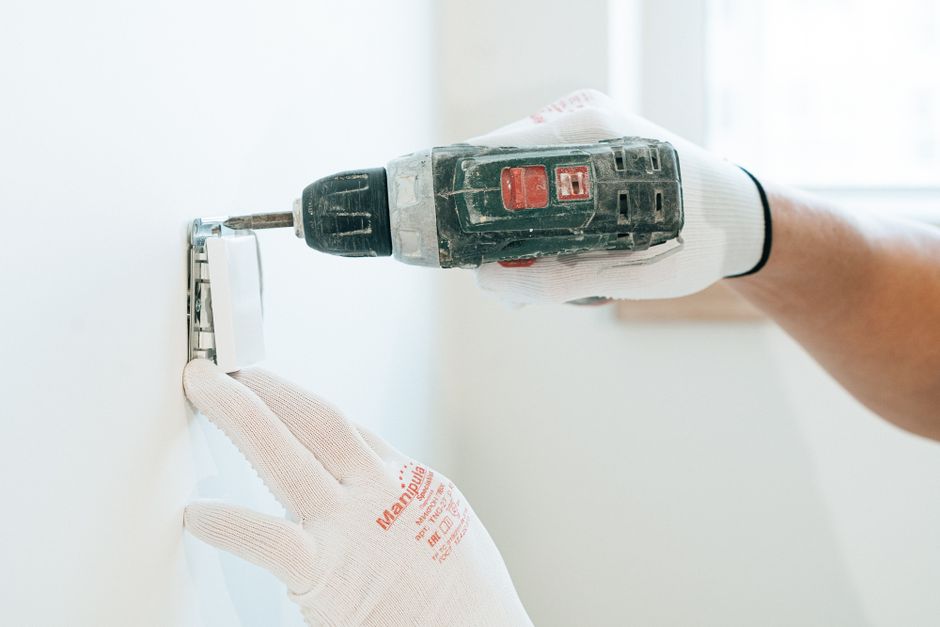
When to Call an Electrician vs DIY: What Every Southwest Florida Homeowner Should Know
Knowing when to call an electrician vs DIY can be the difference between a safe home repair and a serious hazard. Here’s a quick-reference guide before we dive deeper:
| Task | DIY or Pro? |
|---|---|
| Replacing a light bulb | DIY |
| Swapping an outlet cover plate | DIY |
| Resetting a tripped breaker (once) | DIY |
| Testing a GFCI outlet | DIY |
| Replacing a light fixture (same wiring) | DIY with caution |
| Replacing a switch or outlet (same type) | DIY with caution |
| Adding a new circuit | Licensed electrician required |
| Electrical panel work | Licensed electrician required |
| EV charger or generator installation | Licensed electrician required |
| Whole-home rewiring | Licensed electrician required |
| Burning smell, sparks, or buzzing outlets | Call immediately |
Electrical work is unlike any other home repair. A painting mistake costs you time. An electrical mistake can cost you your home — or your life. According to the Electrical Safety Foundation International, electrical failures cause over 50,000 home fires every year in the U.S., resulting in roughly 500 deaths and $1.3 billion in property damage. On top of that, more than 30,000 people are injured annually from DIY electrical work gone wrong.
For homeowners in Naples, Bonita Springs, Estero, and throughout Southwest Florida, the stakes are real. Florida’s humid climate, older housing stock, and strict local building codes add extra layers of complexity to any electrical project. Before you pick up a screwdriver, it’s worth knowing exactly where the line is between a safe DIY task and a job that needs a licensed professional.
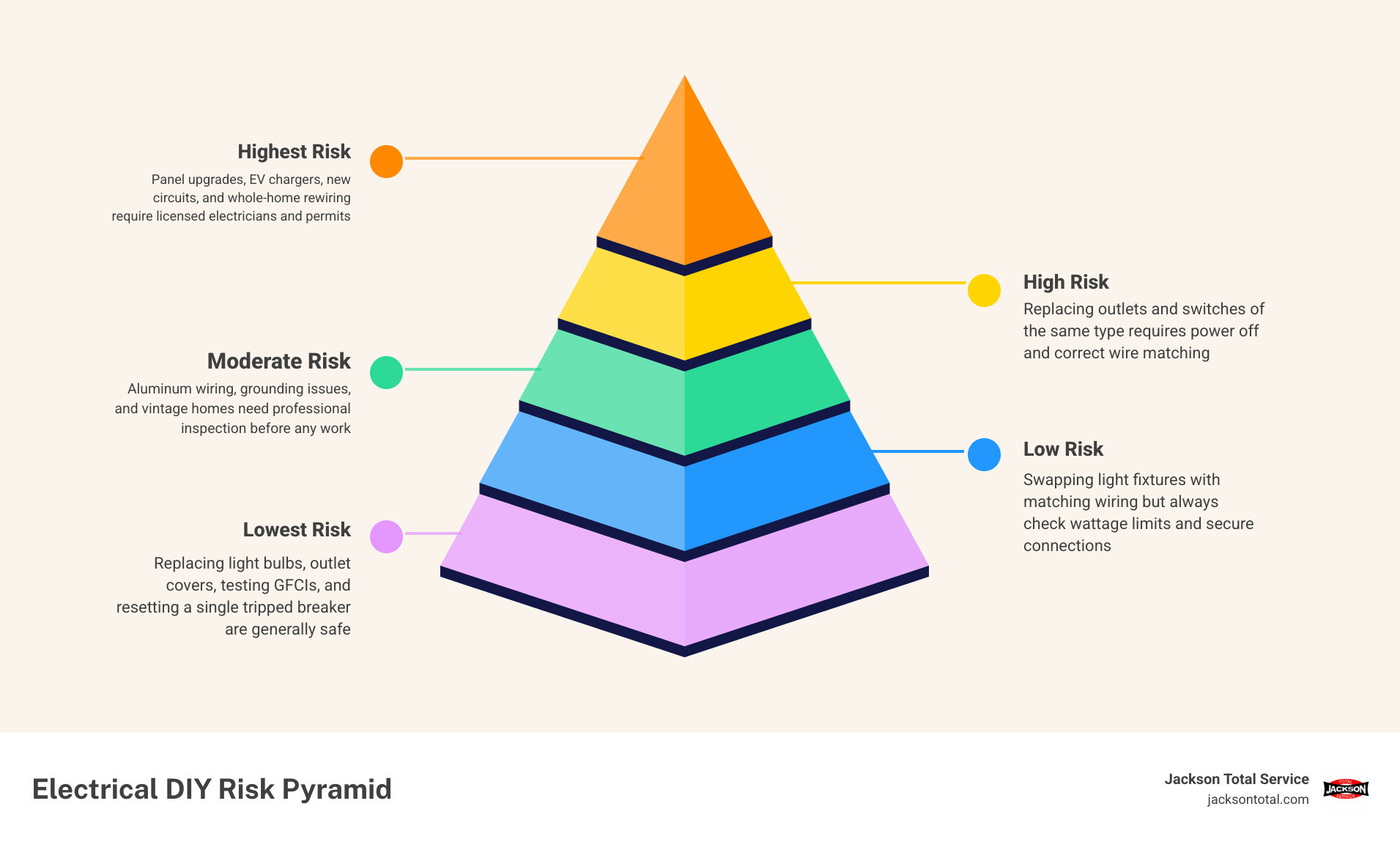
Easy when to call an electrician vs diy word list:
When to Call an Electrician vs DIY: Safe Homeowner Tasks
As homeowners, we all love the satisfaction of fixing things ourselves. It saves time, keeps our hands busy, and gives us a little boost of pride. When it comes to electricity, there are indeed a few tasks that are perfectly safe for a handy homeowner to tackle.
The general rule of thumb for safe DIY electrical work is simple: if it doesn’t involve touching live wires, running new electrical lines, or opening up your main service panel, you are probably safe to handle it.
Here are the most common electrical tasks you can safely manage on your own:
- Changing Light Bulbs: Always check the maximum wattage rating on your light fixture before installing a new bulb. Using a bulb with a wattage that is too high can cause heat buildup, which can melt the socket and lead to a fire.
- Replacing Faceplates and Outlet Covers: If you are painting a room or simply want to update the look of your home, swapping out plastic or metal faceplates is a very safe DIY job. Just be careful not to touch the metal screws inside the box with your screwdriver.
- Testing GFCI Outlets: Ground Fault Circuit Interrupter (GFCI) outlets are designed to cut off power instantly when they detect a ground fault, protecting you from severe shocks. You should test these monthly. Simply press the “Test” button (which should shut off power to anything plugged into it) and then press “Reset” to restore power. If the button doesn’t snap or if the power doesn’t cut off, the outlet has failed and needs to be replaced.
- Resetting a Tripped Breaker (Once): If you run your microwave and a toaster at the same time and suddenly the kitchen goes dark, you have likely overloaded a circuit. Head to your electrical panel, identify the breaker that has clicked to the “off” or middle position, push it fully to the “off” position, and then flip it back to “on.” However, if it trips again immediately, do not keep resetting it. This is a sign of a deeper issue.
Before tackling even these basic home maintenance steps, it is always wise to Stay Grounded with These Essential Electrical Safety Tips to protect yourself and your family.
Replacing Outlets and Switches of the Same Type
If you have a worn-out outlet that no longer holds plugs securely, or a light switch that feels mushy, you can replace them yourself on a “like-for-like” basis. This means you are replacing a standard outlet with a standard outlet, or a single-pole switch with a single-pole switch, without changing the underlying wiring.
To do this safely, you must follow a strict protocol:
- De-energize the Circuit: Go to your breaker panel and turn off the breaker that controls the room you are working in. Never trust a handwritten breaker label blindly. Labels are frequently outdated or incorrect.
- Verify the Power is Off: Use a reliable non-contact voltage tester. Place it directly against the outlet or switch terminals. If it chirps or lights up, the line is still live. Double-check your breakers until your tester confirms there is absolutely zero voltage present.
- Take a Photo: Before you disconnect any wires, snap a clear photo of the existing connections with your phone. This gives you an exact reference for where the hot (usually black), neutral (usually white), and ground (bare copper or green) wires belong.
- Secure the Connections: Wrap wires clockwise around the terminal screws and tighten them securely. Loose connections are a leading cause of electrical arcing and fires. Avoid using “backstabbed” connections (where wires are simply pushed into holes in the back of the device), as these are far more likely to fail over time.
Swapping Existing Light Fixtures
Replacing an old, outdated dining room chandelier with a modern light fixture is a fantastic way to refresh your space. If the existing electrical box is already securely mounted and the wiring is in good condition, this is a highly doable DIY project.
Keep these key safety practices in mind:
- Support the Weight: Ensure the electrical box in your ceiling can handle the weight of the new fixture. Standard boxes are rated for up to 50 pounds. If you are installing a heavy ceiling fan, you must verify that the box is specifically rated for fans.
- Use Proper Wire Nuts: Secure your connections with wire nuts of the correct size, twisting them until they are tight and no bare copper (other than the ground wire) is exposed. Wrap the wire nuts with electrical tape for an extra layer of security.
- Protect Your Eyes: Always wear safety glasses when working on ceiling fixtures. Dust, old insulation, and small plaster fragments can easily fall into your eyes while you are looking upward.
- Respect Wattage Limits: Never exceed the maximum wattage rating of your new fixture, especially when using traditional incandescent or halogen bulbs that generate significant heat.
The Hidden Dangers of DIY Electrical Work
The temptation to save a few dollars by tackling complex electrical work yourself is understandable, but the physical and financial risks are incredibly high. Unlike plumbing, where a mistake results in a wet floor, a mistake in your electrical system can lie dormant behind your drywall for weeks, months, or even years before sparking a catastrophic house fire.
The most immediate danger is electrical shock and electrocution. Many homeowners don’t realize that it doesn’t take high-voltage commercial power to kill. In fact, standard household current (120 volts) is more than capable of delivering a fatal shock. It takes as little as 50 milliamperes (mA) of current to cause heart failure.
Furthermore, improper wiring can cause localized overheating. If wire splices are not properly contained inside an approved junction box, or if wire insulation is nicked during installation, electricity can jump across gaps. This phenomenon, known as arcing, can reach temperatures of several thousand degrees, easily igniting nearby wood framing or paper-backed insulation.
To understand why taking shortcuts with your home’s power grid is a bad idea, read more on Why Florida Homeowners Shouldn’t Play Electrical Roulette and keep your family safe with our guide on how to Don’t Get Zapped with These Home Safety Tips.
When to Call an Electrician vs DIY for Older Homes
If you live in an older home in historic areas of Fort Myers, Naples, or Sanibel Island, your electrical system deserves a high level of caution. Vintage homes built between the 1960s and late 1970s often feature aluminum wiring. During this era, high copper costs led builders to use aluminum instead.
However, aluminum has a major flaw: it expands and contracts at a different rate than copper when heated by electrical current. This causes connections to loosen over time. Additionally, aluminum oxidizes rapidly, creating a high-resistance barrier that generates intense heat, making it a severe fire hazard.
Older homes also frequently suffer from grounding issues. Many vintage houses still have two-prong outlets that lack a dedicated ground wire. Simply replacing a two-prong outlet with a modern three-prong outlet without actually running a ground wire is incredibly dangerous. It creates a false sense of security, exposing your sensitive electronics to damage and your family to severe shock hazards.
If you are wondering about the safety of your classic Florida property, check out our guide: Is Your Vintage Home a Fire Hazard?
When to Call an Electrician vs DIY for Circuit Breaker Issues
Your electrical panel is the brain of your home’s electrical system, and the circuit breakers are its safety guards. Breakers are designed to automatically shut off the flow of electricity when they detect an overload or a short circuit.
If you have a circuit breaker that trips occasionally, it might just be overloaded by too many high-wattage appliances running simultaneously. But if a breaker trips immediately after you reset it, or if it feels warm to the touch, you are dealing with a serious issue like a short circuit or a ground fault.
Do not attempt to replace a circuit breaker yourself. Working inside an electrical panel exposes you to live bus bars that carry hundreds of amps of current. Even if you turn off the main breaker, the incoming utility lines remain fully energized and can cause fatal electrocution instantly. For a deeper look at what is causing your electrical panels to act up, read our expert advice on Circuit Breaker Troubleshooting.
Electrical Projects That Legally Require a Professional
Beyond the physical dangers, there are strict legal boundaries regarding who can perform electrical work in Southwest Florida. Local municipalities in Lee and Collier counties have established rigorous building codes and permitting processes to ensure that all electrical installations meet national safety standards.
In Florida, most electrical projects that go beyond simple “like-for-like” replacements legally require a permit and must be performed by a licensed and insured electrical contractor. Attempting to complete these projects as a DIYer can lead to severe fines, forced removal of the unpermitted work, and massive headaches when you eventually try to sell your home.
Before planning any major updates, read The Ultimate Guide to Electrical Panel Capacity and Modern Home Safety to understand how your home’s infrastructure handles modern power demands.
Panel Upgrades and Service Changes
Your electrical panel distributes power throughout your entire home. Many older Southwest Florida properties still have panels rated for 60 or 100 amps. With modern central air conditioning, pool pumps, electric vehicle chargers, and high-powered appliances, these older panels are easily overwhelmed.
Upgrading your electrical panel to a modern 200-amp service is an intricate process that legally requires a licensed electrician. This job involves:
- Coordinating with your local utility company (such as FPL or LCEC) to disconnect power to the house.
- Installing a new weatherhead, meter socket, and heavy-duty service cables.
- Replacing the entire breaker box and installing new, code-compliant Arc-Fault Circuit Interrupter (AFCI) and GFCI breakers.
- Passing a mandatory safety inspection by a local county or city building inspector before power can be legally restored.
If you are a resident in Lee County, you can find localized help by checking out the Top Electricians for Panel Upgrades in Estero FL or learning more about the process at Best Panel Upgrade Estero FL.
Dedicated Circuits and Major Installations
Whenever you add a major new appliance to your home, it usually requires its own dedicated circuit to prevent it from overloading existing lines. This means running a brand-new, continuous cable from your main electrical panel directly to the new appliance.
You must call a licensed electrician for installations such as:
- Electric Vehicle (EV) Chargers: These require high-voltage, high-amperage dedicated 240V lines that must be installed precisely to prevent heat buildup during long charging cycles.
- Whole-Home Generator Connections: Installing a manual transfer switch or automatic standby generator requires tapping directly into your home’s main power supply. Improper installation can cause “backfeeding,” which sends dangerous electricity back into the utility lines, risking the lives of utility workers repairing local power grids.
- Hot Tub or Pool Wiring: Water and electricity are a deadly combination. Pool pumps and hot tubs require specialized GFCI protection, specific conduit materials, and precise bonding to ensure complete safety.
If you live in the surrounding coastal communities, read about our local services on Don’t Get Zapped: Finding the Best Panel Upgrade Service in Cape Coral or reach out to our team for a Local Panel Upgrade Pine Island FL.
Warning Signs You Need an Electrician Immediately
Some electrical issues can wait for a scheduled service appointment, but others are active emergencies that require immediate professional intervention. If you notice any of the following warning signs in your home, turn off the corresponding breaker immediately and call us for emergency assistance:
- A Burning Smell: If you smell a distinct, fishy odor or the smell of burning plastic near an outlet, switch, or electrical panel, it is a sign that wire insulation is melting due to extreme heat.
- Buzzing or Humming Sounds: Outlets and switches should operate in complete silence. A buzzing or sizzling sound indicates that electricity is jumping between loose connections (arcing), which is a major fire hazard.
- Hot Outlets or Switches: Put your hand against your outlets and switches occasionally. They should never feel warm to the touch. If an outlet is hot, unplug everything from it immediately.
- Flickering Lights: While an occasional flicker during a severe Southwest Florida thunderstorm is normal, constant flickering throughout your entire house suggests a loose neutral wire in your main service panel or an issue with the utility connection outside your home.
To understand how these fluctuations can ruin your appliances, check out What Really Happens to Your Electronics During a Power Surge?. Protecting your home requires a multi-layered approach, which is why we recommend reading The Shocking Truth About Why Your Home Needs Surge Protection and learning Why a Power Strip Is Not a Surge Protector.
Frequently Asked Questions About Electrical DIY
Does home insurance cover damage from unpermitted DIY electrical work?
In most cases, no. Insurance policies generally contain clauses that exclude coverage for damage caused by unpermitted, unlicensed, or negligent work. If a fire starts in a wall where you completed unpermitted DIY wiring, your insurance company can deny your claim entirely. This leaves you personally liable for hundreds of thousands of dollars in property damage and rebuilding costs.
How do I verify if an electrician is licensed and insured?
In Southwest Florida, you can easily verify an electrician’s credentials online through the Florida Department of Business and Professional Regulation (DBPR) website. Always ask the contractor to provide:
- Their State License Number: This proves they have passed rigorous examinations and have thousands of hours of documented field experience.
- Proof of General Liability Insurance: This protects your property in case of accidental damage during the repair.
- Workers’ Compensation Insurance: This ensures that if a technician is injured while working on your property, you are not held legally or financially liable.
What are the consequences of unpermitted electrical work during a home sale?
When you sell a home in Florida, you are legally required to disclose any known unpermitted work. Furthermore, home inspectors are highly trained to spot DIY electrical work, such as non-compliant junction boxes, incorrect wire gauges, or ungrounded three-prong outlets.
If unpermitted work is discovered during a home inspection, it can delay or completely ruin your home sale. You will likely be forced to hire a licensed electrician to tear out the improper wiring, pull retroactive permits, and have the work officially inspected and corrected at a much higher cost than doing it right the first time.
Conclusion
When deciding when to call an electrician vs DIY, it is always best to err on the side of caution. While replacing a light bulb or screwing on a new outlet faceplate is a perfectly safe weekend project, anything involving the inner workings of your home’s electrical grid demands professional expertise.
Since 1964, Jackson Total Service has been providing trusted, comprehensive home comfort solutions throughout Southwest Florida, including Naples, Bonita Springs, Estero, Marco Island, and Fort Myers. As a family-owned business for over 60 years, we provide all of your heating, cooling, plumbing, and electrical services under one roof. Our highly trained, licensed, and insured electricians are always ready to ensure your home remains safe, comfortable, and fully up to code.
Don’t play roulette with your home’s safety. Contact us today for reliable, expert Electrical Services and professional Electrical Repair to keep your family protected.